How can we help people with disabilities? For example, autistic people who see the world differently.*

* This question was posted on another social media site. What follows is my answer.

1) Treat us as people, not as less. An adult or an older child being talked to in a baby voice is not on, regardless of how their disability presents. Talk to us at age appropriate level. If we’re interested in something, get excited about it with us, rather than telling us we’re boring. Sharing our interest is our way of trying to communicate. We love a thing. We’re opening up ourselves to you. It might not be how you’re used to doing a conversation, but it is meaningful communication, and it means we want to share that excitement with you. That’s a big deal. Recognise it.

2) Our diagnosis is none of your business, unless we feel comfortable talking to you about it. It’s really none of your business if we were diagnosed as a kid, an adult, self-diagnosed, or questioning. It’s none of your business if our autism has changed its presentation as we’ve aged. It’s really none of your business if you think you know what autism looks like, and we don’t match up with your preconceptions. And please, if we’re verbal, dressed appropriately, out in public and unattended, it’s not a compliment to tell us how well we’re doing. We’re just as autistic when we’re ‘passing’ as when we really aren’t. Passing for normal is not an achievement, it’s a monumental effort that most of us feel long term health effects from if we have to do it daily. Allowing natural autistic behaviours is something a lot of us have to relearn in adulthood to manage our anxiety. An adult flapping, pacing, tapping, or playing with a stim toy isn’t being babyish or playing at autism, they’re trying to take care of themselves. Don’t stare or tut or tell us we’re embarrassing you. (Telling us our Tangle is awesome and you want one is totally okay, though.)

3) Our sex life is none of your business, unless we’re in a sexual relationship with you. Just because we’re autistic doesn’t mean we can’t consent. That said, if there’s someone being weird and intimate with us when we’re a minor and they’re in a position of authority, make sure we’re okay. Compliance based therapies heavily used with autistic children (like ABA) make autistic children very vulnerable to sexual abuse, because they teach children to do things that are uncomfortable, painful or unnatural to them to please adults for rewards.

4) Make a conscious choice to be okay with difference, be it physical, intellectual, neurological, whatever. This might be harder than it sounds. Disability can come with mobility needs, sensory needs, dietary needs and routine based needs. It might require communication devices or sign language, or a picture-based communication system, even if to you, the person ‘seems’ verbal. It’s rare for an autistic person to have no difficulties with verbal communication, and if you’ve only ever seen them happy or relaxed, you might not know they need to use their phone to communicate when they’re upset or overwhelmed. Also, non verbal autistics might have a couple of words, scripted speech, or echolalic phrases they can use when conditions are right, even though they primarily use AAC or sign. Verbal ability isn’t a fixed thing. It fluctuates. Be patient if we’re struggling. It’s more frustrating for us than for you.

5) Everyone’s disability is unique. No two autistic people are the same. Likes, dislikes, sensitivities, strengths, difficulties. An autistic person might be sensory seeking, non verbal, highly intelligent, low anxiety, highly organised. They might be highly verbal, high anxiety, low executive function, mild intellectual disability, dyslexic, supertaster. They could have any combination of interests and personality traits, and come combined with a whole array of other disabilities. Don’t think because you know one autistic person, you know every autistic person. We’re individuals.

6) Listen to us, not to Autism Speaks or ‘autism moms’. Our experience is unique to us. It cannot be fully understood by a neurotypical bystander, regardless of how close that relationship is. Read books by autistic people (there are a lot). Donate to the Autistic Self Advocacy Network or Autistic Women & Nonbinary Network. Don’t light it up blue, put puzzle pieces on your car, or spread anti-vax rhetoric (which is fake science and basically hinges on the fact that a lot of people would rather have dead kids than autistic ones). Watch documentaries produced by autistic people about their experiences. Check out neurowonderful’s Youtube series Ask An Autistic.

7) Don’t assume we’re straight. Don’t assume we’re cisgender. Don’t assume we don’t understand the complexities of our multifaceted identities. Gender and sexuality variance is present in autistic people, just as it is in neurotypical people. In fact, there’s actually evidence there is a higher proportion of transgender, nonbinary and genderqueer people in the autistic community than in the genpop. Our experience of sexuality and gender is also viewed through our lens of autistic experience, and there are terms created specifically by autistic people to encapsulate this (like gendervague).

8) Don’t assume we can’t have relationships, friendships, and families outside of our parents and siblings. Don’t assume we can’t be awesome parents. Don’t assume we can’t make informed choices about our bodies and procreation. Autistic people have been here as long as people have been here. I’m from a multigenerational family myself, with both male and female autistic people, stretching back at least five generations, anecdotally (further than that, highly probably, but we don’t have the information).

9) Don’t think we’d be better off dead. This is why adults and children are murdered by parents and caregivers every year without legal repercussions. Our lives have value. The next time you see a news article where a parent cries about killing their child, don’t rationalise that ‘it must be so hard’ to be taking care of us. That’s essentially saying we’re responsible for our own murder, and that it was justifiable homicide. MURDER IS MURDER. If you want to campaign for better respite and support in your area, GREAT, but don’t give parents who murder their children a free pass. Parenting is hard, but people have a choice, and we must stop allowing people who make the choice to kill to get away with murder. Whenever it happens, someone else, somewhere, thinks murder is an appropriate solution to the problem of a disabled person needing care in their life, and another irreplaceable, unique person dies.

10) We have the right to exist in public spaces. Yes, that autistic person having a meltdown might be disrupting your shopping and hurting your ears. I can guarantee their life is harder than yours right then. Have some compassion (not pity) and give them some space. We have the right to be in restaurants, in theatres, in libraries and in schools. If you think a person with a disability being in those spaces is going to have a negative effect on your children, maybe you should think about your parenting, rather than about segregation.

thegirlthatdoesntexist:

image

It’s World Mental Health Day! (October 10th.) So I thought it might be useful to compile mental health resources for the Jewish community into one post. If you know of any that aren’t listed, please feel free to add them.

RELIEF – connects/refers Jewish people to therapists and other
mental health resources (focuses mainly on the frum community)

Elijah’s Journey – suicide prevention for the Jewish community (Facebook page)


The Aleph Institute
– provides spiritual support for Jews in
institutional environments such as prison, health facilities, and
rehab


No Shame On U
– aims to de-stigmatize mental illness by providing
comprehensive education


OHEL
– comprehensive services for those facing mental health issues, with professionals fluent in English, Yiddish, and Hebrew

Yad Rachel – for mothers facing postpartum depression, also helps educate family and health providers

Shema Koli – support for victims of abuse

Frum Support Forums – for mental and physical health

(NY) The Jewish Board – provides services for a number of things, including crisis support, supportive housing, and mental health services.

Torah and the Twelve Steps – spiritual-based rehab for those recovering from substance abuse

(UK) Jewish Helpline – 

0800 652 9249

(Mexico) Jewish Crisis Line – 

1118

(The two following aren’t specifically mental health resources, but I still felt they were important to add.)

A list of Jewish LGBT+ organizations

Keshet – Jewish LGBT+ educational resources

Many cities also have Jewish Family Services, which will often be able to refer you to a therapist or other local resources.

Tips for Part-Time Wheelchair users.

nocturnalvisionary:

Since I don’t see this all that often, but part-time wheelchair usage is a thing and these are things I learned as someone who uses a wheelchair part time. (Please add to it if you think of things!)

*Not as many people as you think are watching you get out of your car to walk to where your wheelchair is to get in it.

*Chances are you have only a manual one- this can be hard on your arms. It’s okay to ask for help from someone to push. But it’s just as okay to yell and make a big deal when they push without asking (Then asking them 4 minutes later to push you. Wheelchairs can be emotional things- it’s okay to be emotional.)

*It’s okay to get up from your chair occasional. You don’t have to “pretend” that you can’t get up from your wheelchair. Everyone is different. You don’t owe ANYONE an explanation.

*Don’t be embarrassed about telling family members or friends you need the wheelchair. Chances are they WILL forget. They won’t mean to- but this is new for them and even more part-time for them. It IS okay to insist on bringing the wheelchair. Even on short trips.

* This is an important one I had to learn. IF ITS HARD FOR SOMEONE TO PUSH YOU. Say a hill, or something. DON”T JUST SAY “I feel bad” AND GET UP AND WALK IT. IF ITS HARD FOR THEM TO PUSH YOU. THAT MEANS IT’LL BE JUST AS HARD TO WALK IT. You are in that wheelchair for a reason, don’t feel guilty.

*You are NOT faking. Part-Time wheelchair usage is OKAY to do. You are not exaggerating your symptoms, you are not pretending you are worse than you are. Everyone’s story is different. You do not owe anyone an explanation.

Why “doing something relaxing” does not help your anxiety

clover1982:

damnfool-of-a-took:

systlin:

noriannbraindripshere:

systlin:

tatianathevampireslayer:

lovelyplot:

merrybitchmas91:

A lot of the time when people give advice intended to relieve anxiety, they suggest doing “relaxing” things like drawing, painting, knitting, taking a bubble bath, coloring in one of those zen coloring books, or watching glitter settle to the bottom of a jar.

This advice is always well-intentioned, and I’m not here to diss people who either give it or who benefit from it. But it has never, ever done shit for me, and this is because it goes about resolving anxiety in the completely wrong way.  

THE WORST THING YOU CAN DO when suffering from anxiety is to do a “relaxing” thing that just enables your mind to dwell and obsess more on the thing that’s bothering you. You need to ESCAPE from the dwelling and the obsession in order to experience relief.

You can drive to a quiet farm, drive to the beach, drive to a park, or anywhere else, but as someone who has tried it all many, many times, trust me–it’s a waste of gas. You will just end up still sad and stressed, only with sand on your butt. You can’t physically escape your sadness. Your sadness is inside of you. To escape, you need to give your brain something to play with for a while until you can approach the issue with a healthier frame of mind. 

People who have anxiety do not need more time to contemplate, because we will use it to contemplate how much we suck.

In fact, you could say that’s what anxiety is–hyper-contemplating. When we let our minds run free, they run straight into the thorn bushes. Our minds are already running, and they need to be controlled. They need to be given something to do, or they’ll destroy everything, just like an overactive husky dog ripping up all the furniture. 

Therefore, I present to you: 

THINGS YOU SHOULD NOT DO WHEN ANXIOUS

–Go on a walk

–Watch a sunset, watch fish in an aquarium, watch glitter, etc.

–Go anywhere where the main activity is sitting and watching

–Draw, color, do anything that occupies the hands and not the mind

–Do yoga, jog, go fishing, or anything that lets you mentally drift 

–Do literally ANYTHING that gives you great amounts of mental space to obsess and dwell on things.

THINGS YOU SHOULD DO WHEN ANXIOUS:

–Do a crossword puzzle, Sudoku, or any other mind teaser game. Crosswords are the best.

–Write something. It doesn’t have to be a masterpiece. Write the Top 10 Best Restaurants in My City. Rank celebrities according to Best Smile. Write some dumb Legolas fanfiction and rip it up when you’re done. It’s not for publication, it’s a relief exercise that only you will see. 

–Read something, watch TV, or watch a movie–as long as it’s engrossing. Don’t watch anything which you can run as background noise (like, off the top of my head, Say Yes to The Dress.) As weird as it seems, American Horror Story actually helps me a lot, because it sucks me in. 

–Masturbate. Yes, I’m serious. Your mind has to concentrate on the mini-movie it’s running. It can’t run Sexy Titillating Things and All The Things That are Bothering Me at the same time. (…I hope. If it can, then…ignore this one.) 

–Do math problems—literally, google “algebra problems worksheet” and solve them. If you haven’t done math since 7th grade this will really help you. I don’t mean with math, I mean with the anxiety. 

–Play a game or a sport with someone that requires great mental concentration. Working with 5 people to get a ball over a net is a challenge which will require your brain to turn off the Sadness Channel. 

–Play a video game, as long as it’s not something like candy crush or Tetris that’s mindless. 

THINGS YOU SHOULD DO DURING PANIC ATTACKS ESPECIALLY:

–List the capitals of all the U.S. states

–List the capitals of all the European countries

–List all the shapes you can see. Or all the colors. 

–List all the blonde celebrities you can think of.

–Pull up a random block of text and count all the As in it, or Es or whatever.  

Now obviously, I am not a doctor. I am just an anxious person who has tried almost everything to help myself.  I’ve finally realized that the stuff people recommend never works because this is a disorder that thrives on free time and free mental space. When I do the stuff I listed above, I can breathe again. And I hope it helps someone here too. 

(Now this shouldn’t have to be said but if the “do nots” work for you then by all means do them. They’ve just never worked for me.)

This would’ve been great an hour ago

If your anxiety includes rapid heartbeat for no reason then it may help to exercise! It helps for me because I’m focused on whatever moves I’m doing and breathing, and it gives my heart rate a reason to be that high so that I can start the slow cooking down process and (hopefully) bring that heart rate down with it. Look up a quick cardio workout on YouTube or something and just do it in your room!

This is so, SO true. 

All ‘doing something relaxing’ ever did for me was give my brain MORE free time to FREAK THE FUCK OUT. 

I like how this boil down to grabbing something then tell the brains weasels to GO FETCH YOU PIECES OF SHIT

I mean. 

That’s basically it tho. 

Yeah… One good thing about ADHD, I guess… the brain weasels are as distractable as the rest of me 😀

Of course, sometimes they also unlock hyperfocus mode, but, eh. Could be worse.

This advice is gold.  

bpd-anon:

southernbitchface:

buddhaprayerbeads:

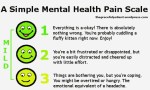
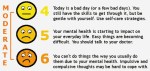
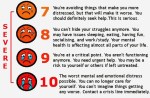
A simple mental health pain scale.

I’m so thankful this exists. I think that many people with mental health issues (myself included) downplay what they’re going through.

I’m an 8 right now. If I hadn’t seen this chart tonight I’d keep denying my struggle. Now I have to face it.

Idk if I’m always at three or five

My baseline is 5-6. It just is. And it spikes to at least an 8 on a semi regular basis.

biandlesbianliterature:

diverse-reads:

Powell’s will always be there to welcome you home. 📚

(In Powell’s City of Books (( @powells )), Oregon)

[image description: an endcap at Powell’s. It has a chalkboard sign with LGBTQ+ YA! written in rainbow. Most of the books have signs under them saying “Powell’s Bestseller” or “New”. Some of the (bi or lesbian) books are Dreadnought and Sovereign by April Daniels, Queens of Geek by Jen Wilde, Little & Lion by Brandy Colbert, 27 Hours by Tristina Wright, Dress Code for Small Towns by Courtney Stevens, and That Inevitable Victorian Thing by EK Johnston]

A complete listing:
Aristotle and Dante Discover the Secrets of the Universe, Carry On, Simon vs the Homo Sapiens Agenda, Unbecoming, History Is All You Left Me, Dreadnought, Sovereign, Queens of Geek, When the Moon Was Ours, Little & Lion, 27 Hours, Vanilla, Grasshopper Jungle, Dress Code for Small Towns, The Gentleman’s Guide to Vice and Virtue, Perfect Ten, Will Grayson, Will Grayson, That Inevitable Victorian Thing, Proxy, Mask of Shadows, Ramona Blue, They Both Die at the End, The Love Interest.

starlightomatic:

For anyone planning any type of school/community/club/activist event or party, the first two nights of Passover this year (2018) are:

Friday night 3/30

Saturday night 3/31

Most Jews won’t be able to attend events on these nights. Passover is one of the most important Jewish holidays, and most Jews will be attending a communal meal with their families or communities on these two nights.

Please avoid scheduling important events then, just as it would be inappropriate to schedule important events on Christmas Eve.

In addition, most Jews avoid products containing wheat, barley, etc during Passover, which begins (as mentioned above) on Friday night 3/30 and ends in the evening of Saturday 4/7. While it is okay (though not ideal) to schedule events during that week, if you are and the main food/drink involves cookies, bread, pasta, flour, cake, beer, etc, please provide an alternate food for Jewish participants.

Please reblog, even if you’re not Jewish yourself! Thank you 💙