domesticwitch:

thewinterotter:

auspisstice:

auspisstice:

science side of tumblr why do all of us mentally ill ppl like storms so much

@revelationed said:
Rain/moving water has negative ions which cause a biochemical reaction that reduces stress. It’s the same reason people feel more at peace on beaches or by waterfalls. We spend most of our lives surrounded by positive ions created by electronics and recirculated air. A study by Columbia University showed that negative ions can have the same affect as antidepressants.

thank u science side of tumblr

ARE YOU SHITTING ME RIGHT NOW

All the more reason for me to start practicing weather magick. ☔⚡

This is all new to me! Thank you Tumblr.

elodieunderglass:

kounttrapula:

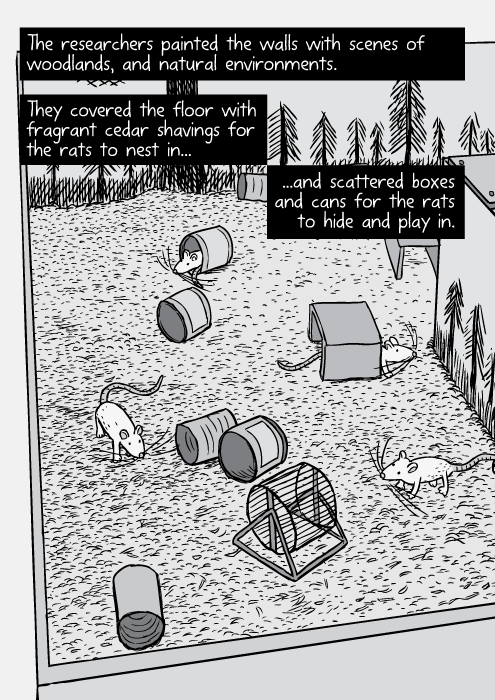
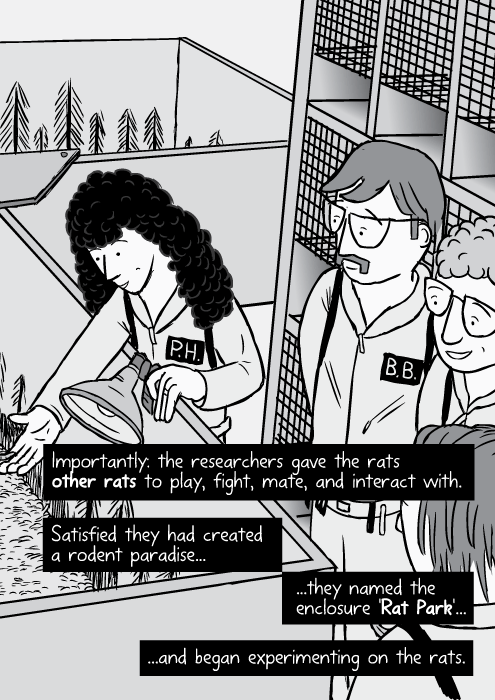
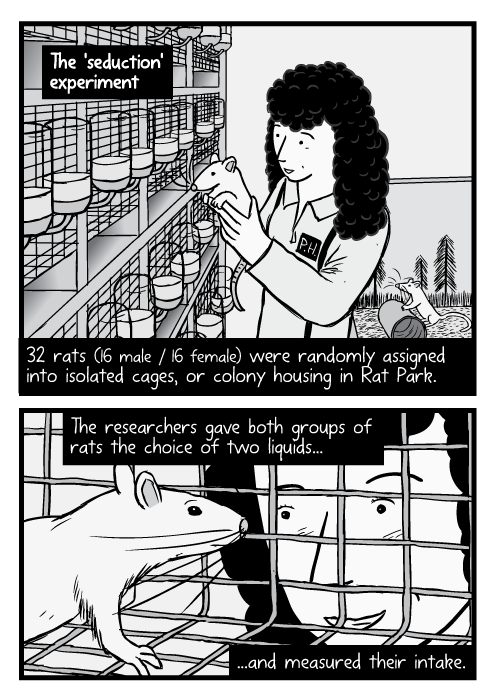
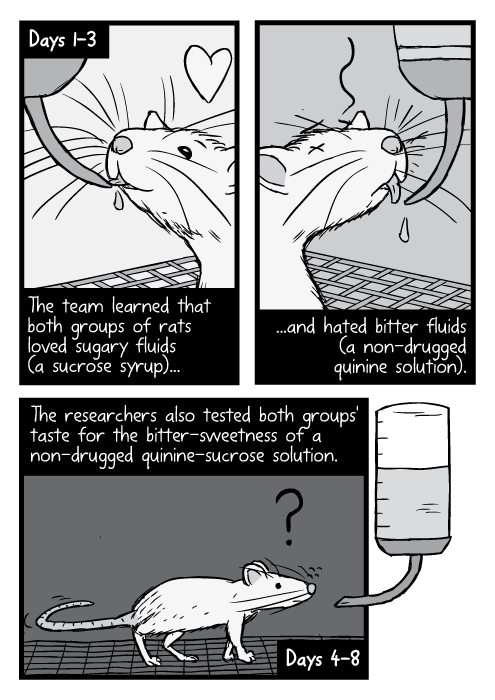
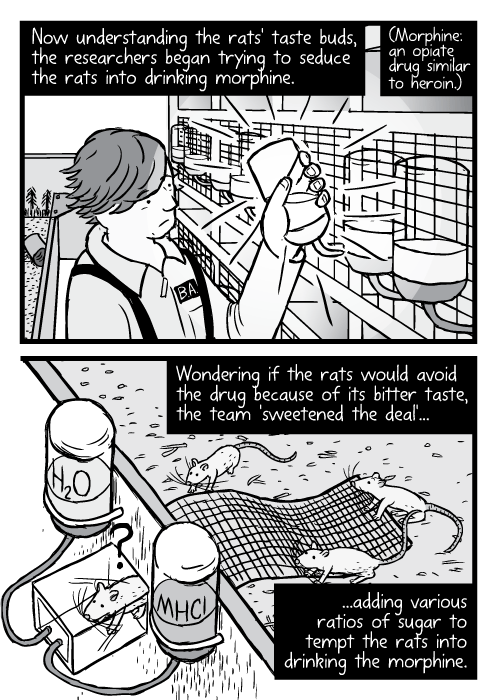
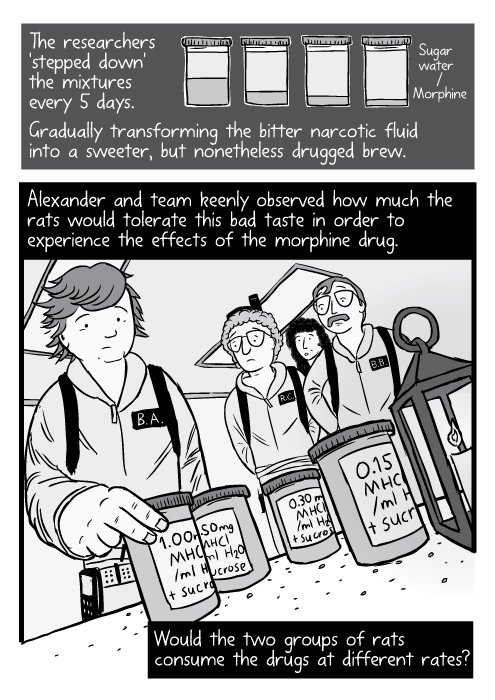
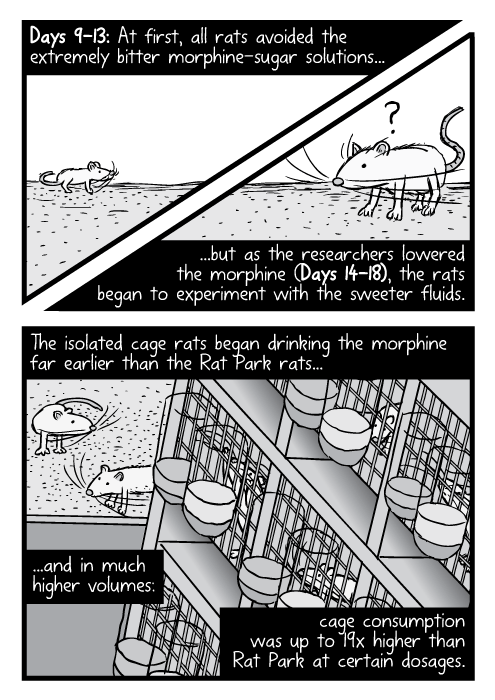
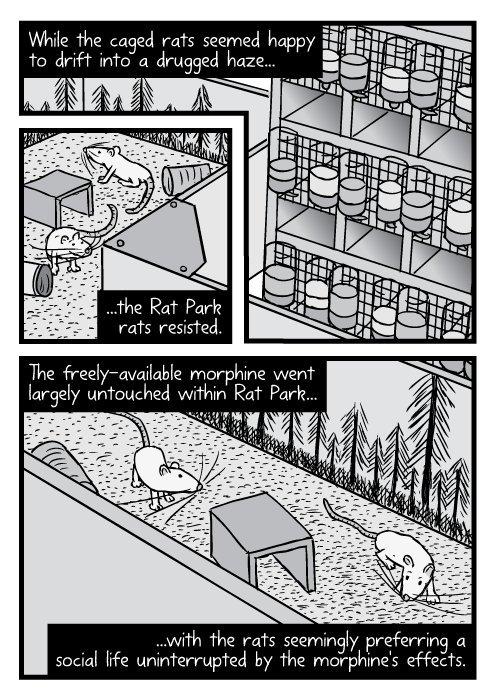
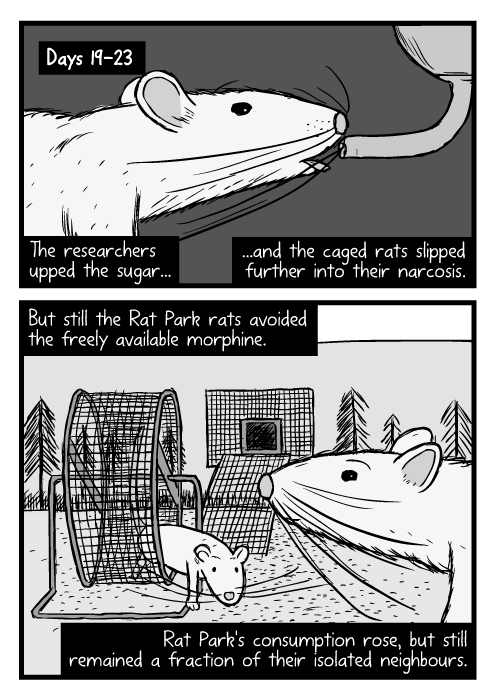
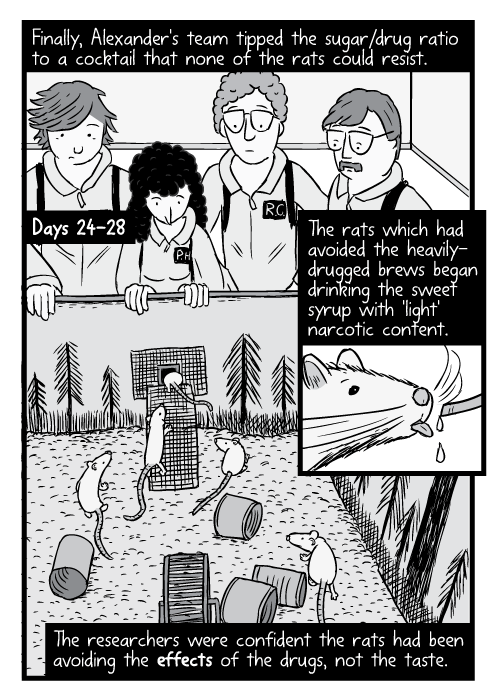
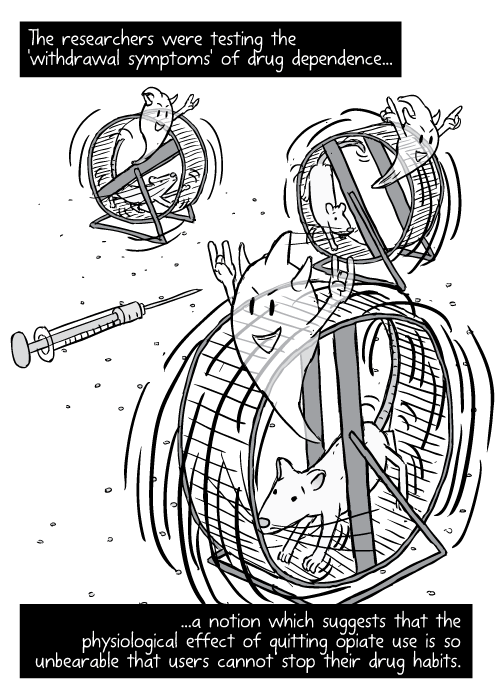
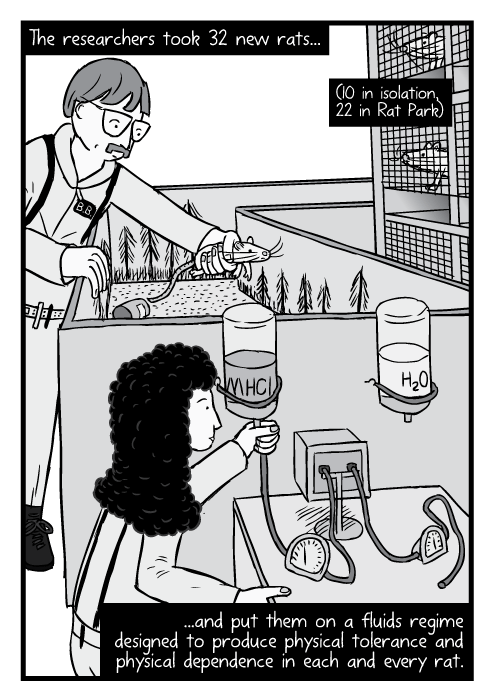
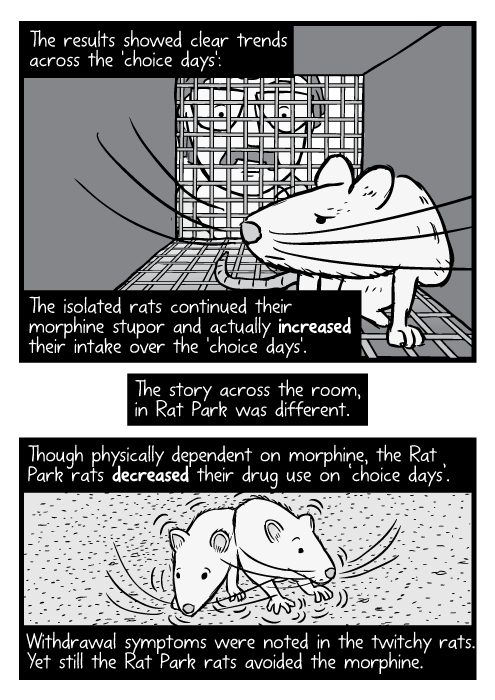
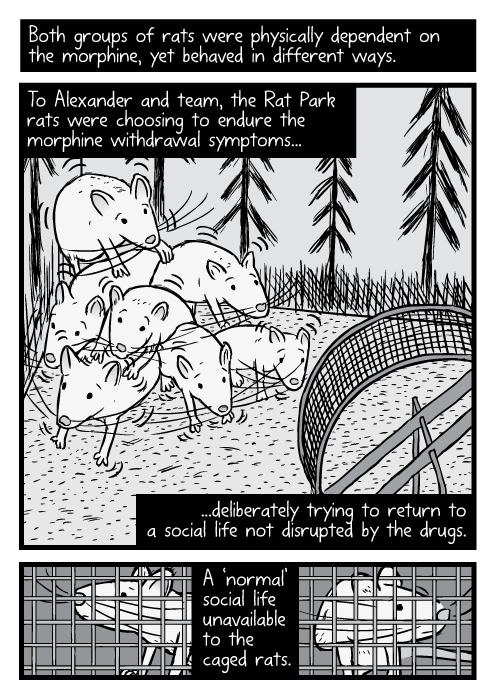
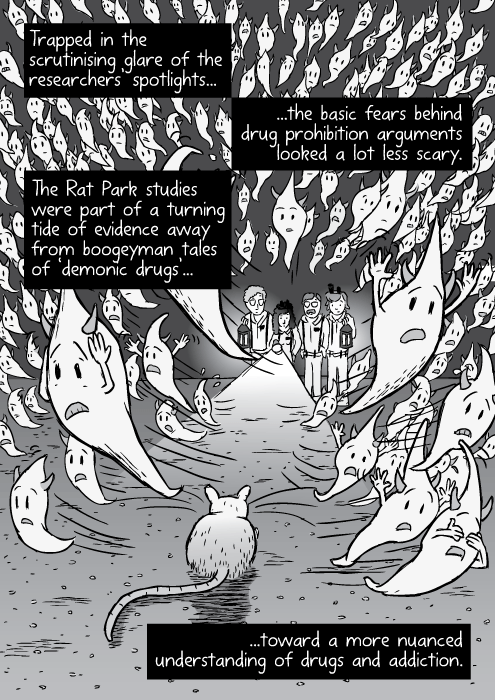
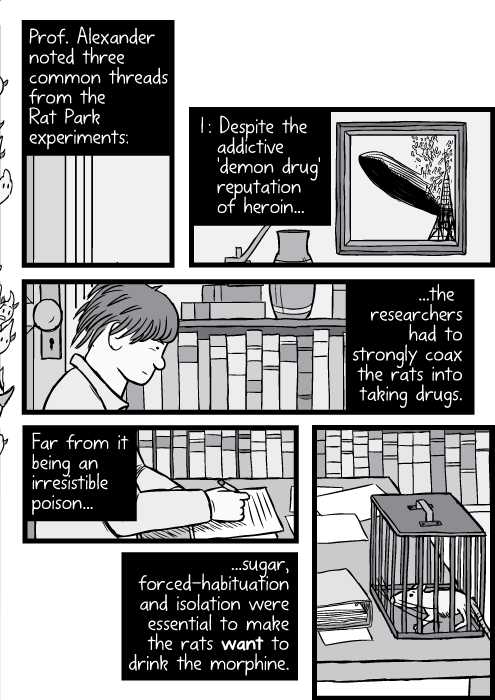
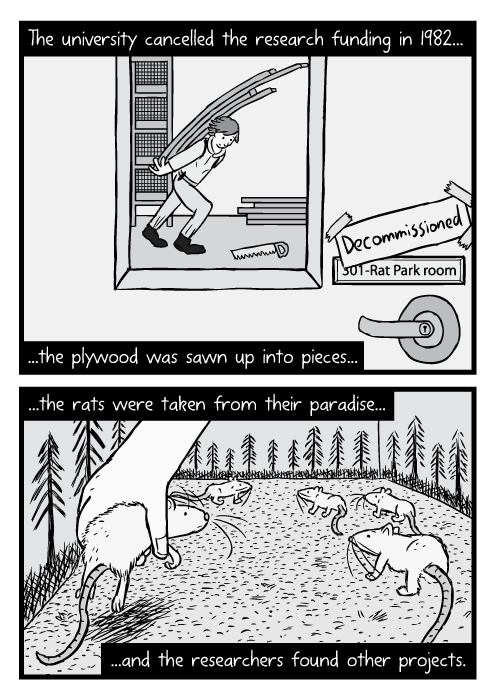
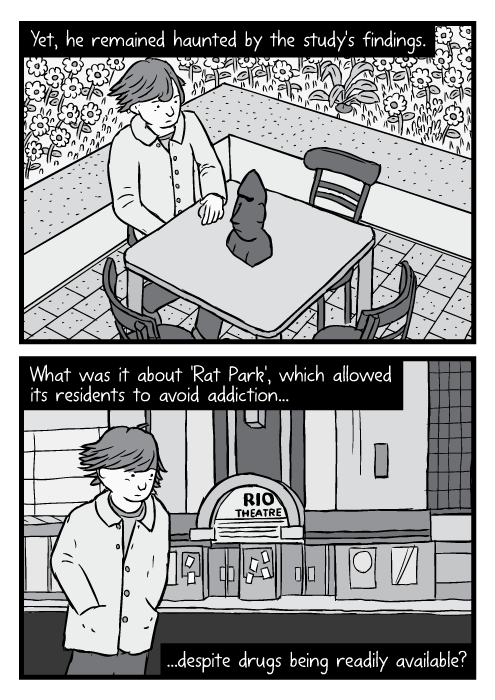
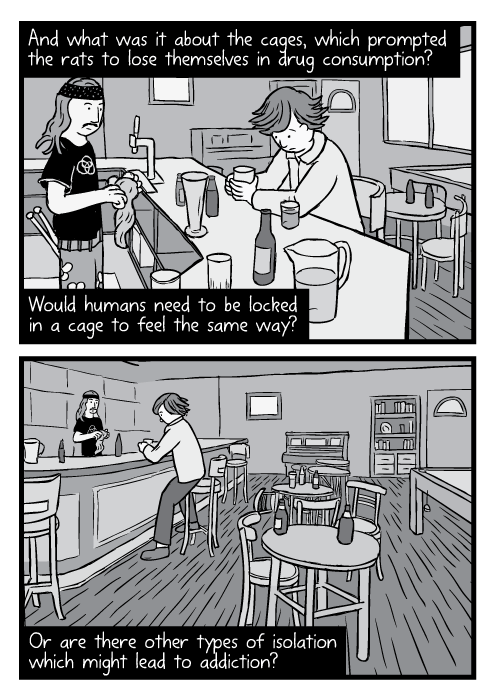
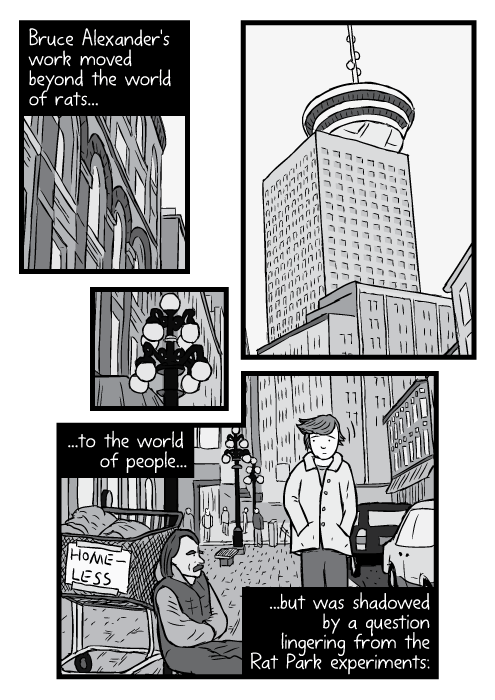
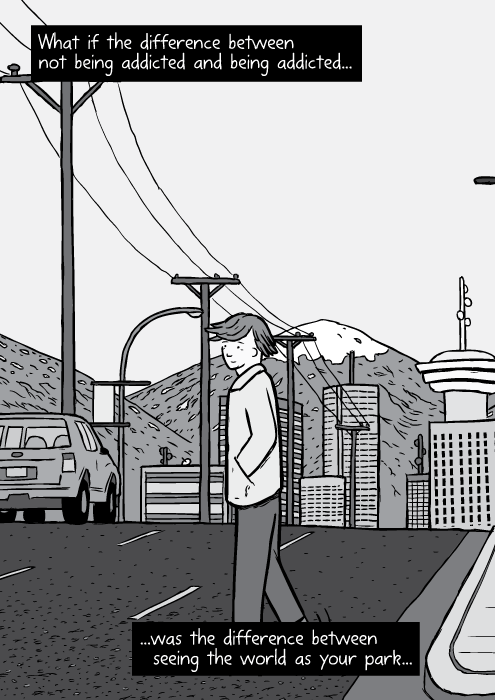
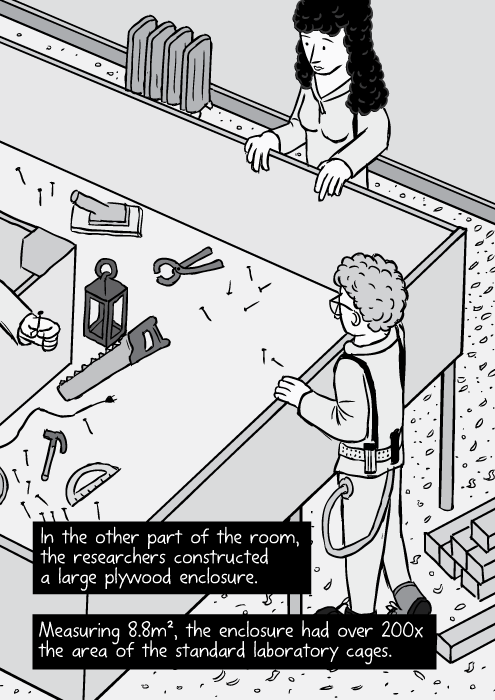
‘Rat Park’ –Stuart McMillen

You’ll never think about drug addiction the same way again after reading this comic.

What I found absolutely impressive and stunning about this comic is the way the artist explained the identification and elimination of the confounding factors in the Rat Park study. This is one of the hardest parts of experiments to explain to the public, and I think it was just brilliantly done.

rhube:

prairie-homo-companion:

this is from a real diary by a 13-year-old girl in 1870. teenage girls are awesome and they’ve always been that way.

Read this – oh my goodness, this girl was wonderful.

Cite your sources! People always want to read the book or article!
From here

DS HOOBLER, DOROTHY Real American Girls Tell Their Own Stories; by Dorothy and Thomas Hoobler. Atheneum, 1999 104p illus. with photographs ISBN 0-689-82083-6 $12.95 R Gr. 4-6 Through excerpts from letters, diaries, and memoirs, readers discover the child- hoods of American girls from a variety of class, cultural, and historical perspec- tives. The voices of twenty-four girls span the eighteenth through twentieth century. Arranged in brief topical sections, “Best Friends,” “School Days,” “In Trouble,” “Just Having Fun,” “Boys,” and “Becoming a Woman,” the excerpts come from primary sources, mostly from the mid to late 1800s. Many readers will recognize Louisa May Alcott and Red Cross founder Clara Barton, but most of the names will be unfamiliar, such as the Winnebago Mountain Wolf Woman or Helen MacKnight, one of the first women doctors in the U.S. The excerpts are humor- ous, distinctive, and implicitly feminist, while covering topics and feelings that will resonate with contemporary readers: “Have come across such a glorious book called ‘Boys Play Book of Science.’ Am going to read it through and see if whether ain’t some experiments Bess and I can try. Won’t it be jolly if we really can? But it takes money money money even for the privilege of blowing one’s self up”- from the diary of Martha Carey Thomas, 1870. The writings range from the girlish voice of a nine-year-old, to Mountain Wolf Woman’s poignant recounting of her first menstruation, to an incident of prejudice recalled by an Asian Ameri- can teenager. The best excerpts are diary entries which engage readers through the immediacy of first person and the specificity of time and place: “I don’t want to be alive when the year 2000 comes, for my Bible teacher says the world is coming to an end then, and perhaps sooner.” Black-and-white photos (unfortunately uncaptioned) and a list of credits accompany the text. This book should find readers among the fans of the American Girl or Dear America series and can serve as a springboard to history and journal writing.

ineffably-crowley:

azzandra:

bidyke:

alex-fulcrum:

shadowfire125:

i’m having an existential crisis

I am so sorry, but this is actually probably true. Plants co evolved to reward us for cultivating and propagating them. It’s called exorphin theory, and plants are pretty much just using us as their means of reproduction. That’s why humans show nearly every sign of species domestication. Have a good night, friend.

Trees are superior and I completely accept this.

I, for one, welcome our arboreal overlords.

We are Groot.

hellomynameisgeek:

johnskylar:

techno-dann:

Today in Computer Scientists You Haven’t Heard Of: Margaret Hamilton

This is Margaret Hamilton, standing next to one of her earlier projects: The Apollo Guidance Computer’s main operating program.

I’m going to let that sink in for a moment. Look at your image of NASA in the Apollo days. Look at miss Hamilton.

Now, I’m sure you’ve heard the story about how the computer crashed on Neil and Mike on their descent, leaving Neil to make the landing by hand. This story has only the barest grounding in reality.

During the descent, a checklist error left the rendezvous radar – normally used for keeping track of the Command Module in orbit – turned on. Radar is a computationally hungry beast, and the computer unhappily told Neil and Mike that it was being overtasked. It kept right on going, even though it was being overworked. It kept the truly important numbers – altitude, descent rate, fuel consumption – up to date perfectly as they descended, which allowed Neil to fly safely above the lunar surface to find a landing site.

So, here you have a computer, easily the most powerful computer for its size ever made as of 1969, controlling a flying machine above the lunar surface, and correctly juggling multiple real-time processing tasks by priority. This is something that modern computers, fifty years later, still struggle with. Margaret built it and got it right at the very dawn of the multi-tasking operating system. It was something done by Serious Computers – fridge-sized monsters with names like PDP-8 and System/360… and a series of tiny boxes that flew to the moon and back.

And then she went on and did other things. Ever heard the term “Software Engineering”? Margaret’s invention. More technically speaking, she’s responsible for parallel and asynchronous computing (which now is key to every supercomputer and major website), priority scheduling, end-to-end testing, and a huge chunk of human-computer interface theory.

She’s still active in software engineering today.

This is what a space wizard looks like.

In her own words:

“Due to an error in the checklist manual, the rendezvous radar switch was placed in the wrong position. This caused it to send erroneous signals to the computer. The result was that the computer was being asked to perform all of its normal functions for landing while receiving an extra load of spurious data which used up 15% of its time. The computer (or rather the software in it) was smart enough to recognize that it was being asked to perform more tasks than it should be performing. It then sent out an alarm, which meant to the astronaut, I’m overloaded with more tasks than I should be doing at this time and I’m going to keep only the more important tasks; i.e., the ones needed for landing … Actually, the computer was programmed to do more than recognize error conditions. A complete set of recovery programs was incorporated into the software. The software’s action, in this case, was to eliminate lower priority tasks and re-establish the more important ones … If the computer hadn’t recognized this problem and taken recovery action, I doubt if Apollo 11 would have been the successful moon landing it was.”

This woman programmed a computer smart enough to prioritize tasks and make sure essential functions were carried out first even if other tasks were going on – she’s the one who made the moon landing possible, more than anyone else. If her programming hadn’t been able to prioritize, the mission would’ve been aborted. 

She’s also published a ton of papers and basically I’m so tired of people never hearing about all the brilliant coding women. Like, when it was first getting off the ground computer programming was a woman’s field – like they specifically looked for and hired women. There were also a ton of female mathematics BS and PhD candidates in the 30s-50s. 

And for the record: all the programmers who created the first general-use computer were women. Wanna know why? The men thought actually building the computer -as in, the design of the machine itself – was more important than programming the computer – as in, actually making it work and telling it how to run, y’know, enabling it to actually be useful.

Men didn’t think programming was important so they relegated it to women, and once they realized programming was the MOST important part of computers they yanked those jobs away, made it a boy thing, and failed to highlight the huge role women played in pioneering the computer age.

On the Winter Soldier’s arm:

buckycamehome:

arlennil:

buckycamehome:

I keep reading jokes and text about the metal arm being removable.  This bothers me for a variety of reasons.  The way that he is able to use the arm in CA: WS is, frankly, amazing.  He is able to utilize it as though it were an organic part of his body, and not just in ways that a real armwould work.  For example, we see multiple occasions where hydraulics kick in to force the arm forward, but (as far as I can tell – please let me know if you noticed something I did not) there is no preceeding visible command.  In fact, the only time that I can remember a gesture that may have been a physical cue was when he was forced to recalibrate following Black Widow’s EMP attack: he sort of spreads his fingers, and even that could simply be to check function rather than an actual command.

So how does the arm work?  Obviously he has spacial recognition.  This means that there has to be some form of sensation involved.  However, it is reasonable to assume that he does not feel pain in that limb like the typical human would; imagine the intense pain he would feel in the following image otherwise?

image

Speaking of this scene: If the Winter Soldier’s arm could be unattached, it would have at that moment.  The amount of force being exerted is more than enough to rip a normal human arm right out of its socket.   In fact, this scene is pretty good proof that he’s had a great deal of his skeletal system replaced / reinforced.  If they only reinforced the shoulder, the force would rip the entire altered section away from weaker natural bone.  Therefore, he’s likely been modified along the entirely of his upper torso (from shoulder to shoulder) as well as down his rib cage.  I’m not even going to get into his knee or toes in this scene… 

My guess is that he can feel pressure, but nothing as complex or possibly incapacitating as pain/pleasure or hot/cold.  Pressure is pretty important in his position: squeezing a trigger, not crushing things when he picks them up, etc.  

In order to have any sensation, however, the arm has to be wired into his nervous system.  So, somewhere in his shoulder they have connected the arm to not only his muscular and skeletal systems, but also the nervous.  At some point Hydra would have had to reconstruct his entire shoulder, not only to deal with the original damage and atatching the new prosthetic, but to fortify the joint and surrounding bone in order to support the extra weight and stand up to the extreme amount of wear and tear.

image

Furthermore, the Winter Soldier is able to accomplish things with extreme precision.  The scene where he catches Steve’s shield shows just how flawlessly he can use his arm.  Being able to move that accurately would be impressive for a natural appendage, but considering that this is a prosthetic?  Medically we’ve come a long way with modern prosthetics, to the point where the user can flex their fingers and grasp, but to accomplish anything complicated they must keep their eyes on the task at hand (that wasn’t meant as a pun, I swear).  And yet, the Winter Soldier manages to snag the shield at exactly the right moment reflexively.  

You can see a lot of examples showing how aware the Soldier is of the arm’s position in space.  See how he is able to grab the weapon without looking in the following gif:

image

He doesn’t have to look or even focus, he just snags it as he walks by.  

image

Alright, now let’s talk anatomy.  Take a look at the above image to see where he metal meats skin, and then take a look at this link for some nifty muscle references.  Look at how many muscles are involved in allowing an arm full range of motion here (hint: it’s a lot).  In order for the arm to work so seamlessly, they’d have to attach it to (or replace) the trapezius, the pectorals major, the coracobrachialis, the subclavius, the pectorals minor, and the teres major in the front.  In the back it’d be the trapezius, rhombi major, infraspinatus, and the teres major and minor.   With as low as the metal bits are positioned, you’re looking at something that’s been locked in at the ribs, clavicle, and the scapula – unless they’ve completely replaced them, of course.  Which is quite possible, considering how much abuse the Winter Soldier puts his body through.

image

There are plenty of other (unanswered) questions concerning the arm, such as how he’s able to move so well without chafing and how the the skin-to-metal boundary works.  I have guesses for these, also, but I’ll save those for later.  The message for now is: Bucky’s arm is staying right where it is without some major work.

Thanks to @100yearpatriot for the references and your magnificent brain.

Well… in at least one of the comics it does come off. I remember seeing the scene here on tumblr, somewhere. But yes, in the movie it wouldn’t make sense. Also kudos for detailed information! 🙂

(For some reason I couldn’t get it to reblog with this response, so I finally had to C&P)

I’ve also read a comic – can’t remember which volume or anything – where Bucky mentions that Fury gifted him with technology that allowed him to go through airport security.

Which makes no sense because he was regularly going through security as the Winter Soldier in the past (they used him since he was American-passing).  Of course, that’s not unusual for comics… There are just too many of them, spanning too many years, not to find incongruities.

On the Disney Wiki for CA: tWS they mention that his arm is detachable which, again, makes no sense when you take actual physiology into account.  Not even “super neat Marvel science” would account for this.  It just isn’t feasible on the human form.  Not even on an enhanced human form.

Even after a significant amount of time considering his arm, my previous conclusions remain my head canon, and make the most sense as far as I can tell.  My opinion is that he has neural control over the arm, much as a natural appendage would be.  I would imagine that it’s a combination of the electric impulses given off by his brain and the muscular contractions from the surrounding shoulder-area.

This isn’t anything too out there.  Prosthetics are already being made with some of this capability:

Gah, this is just all too fascinating.

unexplained-events:

A monument to lab mice

Built in park near the Institute of Cytology and Genetics in Novosibirsk, Russia.

There is so much to love about this. It’s comical, poignant and respectful all at once. It’s a cartoon mouse knitting a double helix of DNA, which is charming but also a reminder that scientific discovery owes a lot to animals, without which most discoveries in medicine and biology would not have been made.

Applying my biology boner to Steve Rogers and the super serum: What this shit might actually have changed

puppysteeb:

caladblog:

puppysteeb:

This is for actualmenacebuckybarnes, becase this shit is way too long for an ask.

Okay, so what we know the serum did:

  1. Put on muscle and bone mass.
  2. Increased his metabolism by 4, according to the Marvel Guide Book
  3. Gave him increased endurance and strength, super healing and increased natural faculties
  4. Cured him of all his illnesses

To address 1 and 4, I think the serum was mostly a growth hormone that triggered stem cell growth throughout his body.  In a normal human, stem cells are found only during fetal development and very early childhood, resulting in cell differentiation.  If this is triggered en mass in an adult, it would cue mass cell turnover, effectively allowing the manipulation of very specific disorders, such as Steve’s scoliosis and color blindness and coupled with a growth hormone not unlike ones they have today, this could also lead to drastic increases in muscle and bone mass.  This would also lead to new neurons, making his brain larger and opening new pathways.

For number 2, metabolism is really controlled by one organ, the thyroid.  In humans,over or under active thyroids lead to pretty gross side effects including severe mental retardation, but given a perfect case, altering the thyroid’s behavior could lead to increased need for food, partially explain his increase in mass, and increases in endurance.

Speaking of endurance, the serum would have had to change the way he sweats to result in increased heat tolerance, change the way he digests to get more nutrients out of food, and things that aren’t food but still could be eaten.  (Steve has eaten some really gross stuff in canon to little effect.)  He also would have more efficient lungs and oxygen transfer, reducing physical stress and load on his body even during high physical activities.

There is a good chance the PH buffers in his body also changed to have a higher threshold for pain and injury, and increased healing would probably be related to the stem cells I mentioned earlier, plus enhanced metabolism leading to faster cell turn-over.

And if we’re going with a stem cell theory, this would probably not drastically alter his genetics, though things like metabolism could need to be altered at a genetic level, which explains why a super soldier breeding program would be unlikely to work very well.

!!!!!

applying my biology boner to your biology boner (it’s not gay if our science dweeb balls don’t touch??)

Actually, they’ve found stem cells in adult humans, the only specific place i can remember is in the hippocampus (one of the deep brain structures implicated in the formation of long-term memories!) (goes on a long bucky ramble about if the serum rly bumps up yr stem cells, and how it might affect his memory after having the ever-loving shit zapped out of him!)

I like the stem cell + growth hormone hypothesis because you can solve a lot of sci fi problems by throwing stem cells at em

I don’t get the cell turnover —> fixed scoliosis connection though? from what little i know of scoliosis and bones in general, rapid cell death & regrowth wouldn’t do much in the short term to change the structure of his spine. it’s more likely that his spine was literally pulled back into shape when the muscles supporting it were suddenly strengthened. that’s the general treatment for adults w/ scoliosis today—exercise to strengthen your back, torso, and leg muscles, plus pain management, plus maybe a brace in severe conditions

colorblindness also wouldn’t be fixed w/ cell turnover, because it’s generally caused by your retinal cells not producing the photopigments that chemically detect different wavelengths of light. the cells literally don’t have the genes that instruct your RNA to make those pigments. your retinal cells are already replaced about once a day! part of me is wondering if steve is really actually colorblind, or if it’s just something they threw out there to pad his list of conditions, because it was only briefly on screen and never mentioned by any of the characters. was he colorblind in the comicsverse?

having more neurons or a bigger brain (not mutually inclusive things) does not actually lead to increased intelligence/reflexes/aptitude/whatever! because neurons are hungry little fucks, they use up a LOT of glucose & oxygen, so adding a bunch of them all at once would just starve out the whole lot. intelligence and reflexes come from the synchronization of neuronal firing, from the pathways you set down through repetition. you actually had about twice as many neurons as an infant than you do today— all those neurons grew and divided rapidly and threw down connections with everything the could get their grubby little dendrites on, and the ones that didn’t make enough connections, or didn’t connect in useful enough ways, were killed off mercilessly. i don’t actually know how they’d improve his reflexes or heighten his senses just using some mystery serum. still tryna work that one out.

the metabolism thing is a bit tricky, cause there’s a couple different ways of defining metabolism. if we’re just talking about energy+oxygen usage, there’s a really simple explanation: he’s bigger. he’s got more muscle mass, so he burns more glucose, no thyroid fuckery necessary. the increased metabolism would be a side effect of the serum, in this case.

if we’re defining metabolism as the ability to extract nutrients from things, or as the ability to metabolize poisons and toxins that would lay out a normal man [side note: alcohol is technically a toxin. steve can’t get drunk in the mcu. thus, the serum at least caused the second thing], then yeah they’d have to fuck with his entire digestive system somehow. especially the liver. i basically don’t know shit about the liver, i’ll have to research this & get back to you

yes to the more efficient lungs thing, apart from increasing his muscle & bone mass the serum mostly seems to have made all his organs more efficient. how did they do this? SCIENCE. i have no fucking idea abt the specifics

rapid cell turnover WOULD lead to more rapid healing. i can’t decide if this would make him more or less likely to get cancer, though?? because turnover includes cell growth AND cell death, and if his cells are dividing more often than normal that means there’s more opportunities for potentially-tumor-causing mistakes to be made when copying the DNA, but if you’re also bumping up the rate of natural programmed cell death then that would also kind of kneecap any tumors that tried to get off the ground? maybe ???

could the op explain the pH buffer-pain tolerance connection, please? idgi

i’m leaning more towards the stem cell/growth hormone cocktail theory rather than the genetic-alteration theory if only because widespread genetic alteration wouldn’t produce immediate or reliable results. the state of our CURRENT gene therapy is ridiculous, basically you chuck a bunch of programmed viruses at a cell culture and hope they correctly rewrite the DNA there, and then you hope the DNA change is correctly read by the RNA, and then you hope the DNA change produces the altered proteins you thought it would, and then you hope the DNA change is passed on to the daughter cells when your altered cell splits or else all of this was completely useless. the chances of all of the serum’s changes working on steve the first time, and not leaving him a bag of tumors & various defects, are ASTRONOMICAL.

 As for Ph buffers, they prevent chemical reactions in blood and cell fluids because they absorb acids and bases.  So having a stronger, more adaptable buffer in your body means you’d have a higher tolerance for acids, bases and the chemical effects of temperature.  So things that would be damaging for a normal human like acids, heat or any chemical that attacks cells, would do a lot less damage.  (I just realized that this is not quite the same thing as pain tolerance.)

Part of why I think stem cells would be a big part of fixing a lot of the chronic injury is that new cells would be much easier to realign than existing ones, and coupled with the massive growth would be much more elastic for differentiated growth.  Also, seeing as there are forms of colorblindness that are caused by an absence or reduction in certain vision cells, it is possible that a mass triggering of stem cell growth would also fix his eye issues.  (This would be dependent on the cause of his color blindness.)

And you’re right to point out that an increase in brain size alone wouldn’t lead to increased ability for sure, but it would almost guarantee increased emotional response thanks to growth in the hippocampus and amygdala and the rest of the limbic system along with potential for enhanced memory.  (We Steve remember a HYDRA map perfectly after just a glance, so his memory is pretty photographic after the serum.)

As far as the liver, increased liver function would have to be a change in enzymatic functions, which would also bear out changes in blood, including increased red blood cell turnover potentially enhancing the body’s ability to carry oxygen.

Fun fact:  Captain America would probably pee more than the average person.
historicallyaccuratesteve:

maxistentialist:

Maciej Cegłowski:

In 1952, an American attaché in Moscow was innocently fiddling with his shortwave radio when he heard the voice of the American ambassador dictating letters in the Embassy, just a few buildings away. He immediately reported the incident, but though the Americans tore the walls out of the Ambassador’s office, they weren’t able to find a listening device.

When the broadcasts kept coming, the Americans flew in two technical experts with special radio finding equipment, who meticulously examined each object in the Ambassador’s office. They finally tracked the signal to this innocuous giant wooden sculpture of the Great Seal of the United States, hanging behind the Ambassador’s desk. It had been given as a gift by the Komsomol, the Soviet version of the Boy Scouts.

Cracking it open, they found a hollow cavity and a metal object so unusual and mysterious in its design that it has gone down in history as ‘The Thing’.

‘The Thing’ had no battery, no wires, no source of power at all. It was was just a little can of metal covered on one side with foil, with a long metal whisker sticking out the side. It seemed too simple to be anything.

That night the American technician slept with ‘The Thing’ under his pillow. The next day they smuggled it out of the country for analysis.

The Americans couldn’t figure out how ‘The Thing’ worked, and had to ask the British for help. After a few weeks of fiddling, the Brits finally cracked The Thing’s secret.

That little round can was a resonant cavity. If you shone a beam of radio waves at it at a particular frequency, it would sing back to you, like a tuning fork. The metal antenna was just the right length to broadcast back one of the higher harmonics of the signal.

The resonator sat right behind a specially thinned piece of wood under the eagle’s beak. When someone in the room spoke, vibrations in the air would shake the foil, slightly deforming the cavity, which in turn made the resonant signal weaker or stronger.

As the attaché discovered, you could listen to this modulated signal on a radio just like a regular broadcast. ‘The Thing’ was a wireless, remotely powered microphone. It had been hanging on the ambassador’s wall for seven years.

Today we have a name for what ‘The Thing’ is: It’s an RFID tag, ingeniously modified to detect sound vibrations. Our world is full of these little pieces of metal and electronics that will sing back to you if you shine the right kind of radio waves on them.

But for 1952, this was heady stuff. Those poor American spooks were up against a piece of science fiction.

Today I want to talk about these moments when the future falls in our laps, with no warning or consideration about whether we’re ready to confront it.

Another amazing talk by the creator of Pinboard. I first heard Maciej speak at XOXO, he blew me away. This transcript of his Webstock talk was also amazing.

Technically outside the scope of this blog, but this was way too interesting/cool not to share.