This Book Is Gay by Juno Dawson

So, pretty much, don’t read this? I started out reading it and thought, wow, this has not aged well, and then I read the verso, which said the date of publication was… four years ago. Which was pretty much when my internal voice went, ‘Oh… no. This is going to get worse, isn’t it?’. Spolier: it did.

Did not finish. Really exclusionary of pretty much anyone but cis gay males, pretty much every quote on bisexuality is about not liking labels or actually identifying as something OTHER than bi, either because of being being mislabeled or discriminated against (page 27-28), gender essentialist ‘lesbians like vaginas’ ‘gay men like… big hairy men with big willies’ ‘penis? check! …gay men are.. male’(page 51), ‘lesbians like vaginas’ (page 67), transphobic (so many pages), ‘intersex is not so much an identity, as you can’t really choose it’ (page 37), conflates homophobia and transphobia as basically the same thing without mentioning the transphobia rampant in the broader queer community (pages 72-92). Noped out after genuine anti-semitism on page 111 ‘Not being funny, but these guys (Jewish people) kinda started it’ (about religious homophobia).

To eliminate any confusion bout the author’s name, the author came out as transgender after publication, so the first name on the cover is one that shares the initial J with the author’s preferred name, Juno. My reaction to discovering this development was thinking that I really hope Juno works through the utterly pervasive transphobia that is inescapable in this work. Carrying that is toxic. But the fact that the author has come out as transgender doesn’t make this work any less transphobic. In fact, it’s worse, because it makes it harder to argue the damage this book can do when it’s coming from a now-out transgender person, something I will be doing with my library system shortly.

In summary – this book would have been revolutionary ten or fifteen years ago, because nothing like this existed. It still would have been toxic. Time and correct terminology has moved on, but at its core, this would have always been a work that placed more emphasis on trying to be crude and cool to appeal to young people, which is a tragic mistake. Anything that tries this hard is never going to be cool in the eyes of a teenager. Add to that the spadefuls of misinformation, glossing over of history and hate crimes, erasure, exclusion, and casual super gross misogyny for the sake of jokes (‘Lesbians like vaginas. They don’t even want blokes watching. I KNOW, how INCONSIDERATE.’ – page 67), and this is a book that doesn’t even come close to matching the promise of its beautiful, bold, inclusive, balanced cover.
biandlesbianliterature:

diverse-reads:

Powell’s will always be there to welcome you home. 📚

(In Powell’s City of Books (( @powells )), Oregon)

[image description: an endcap at Powell’s. It has a chalkboard sign with LGBTQ+ YA! written in rainbow. Most of the books have signs under them saying “Powell’s Bestseller” or “New”. Some of the (bi or lesbian) books are Dreadnought and Sovereign by April Daniels, Queens of Geek by Jen Wilde, Little & Lion by Brandy Colbert, 27 Hours by Tristina Wright, Dress Code for Small Towns by Courtney Stevens, and That Inevitable Victorian Thing by EK Johnston]

A complete listing:
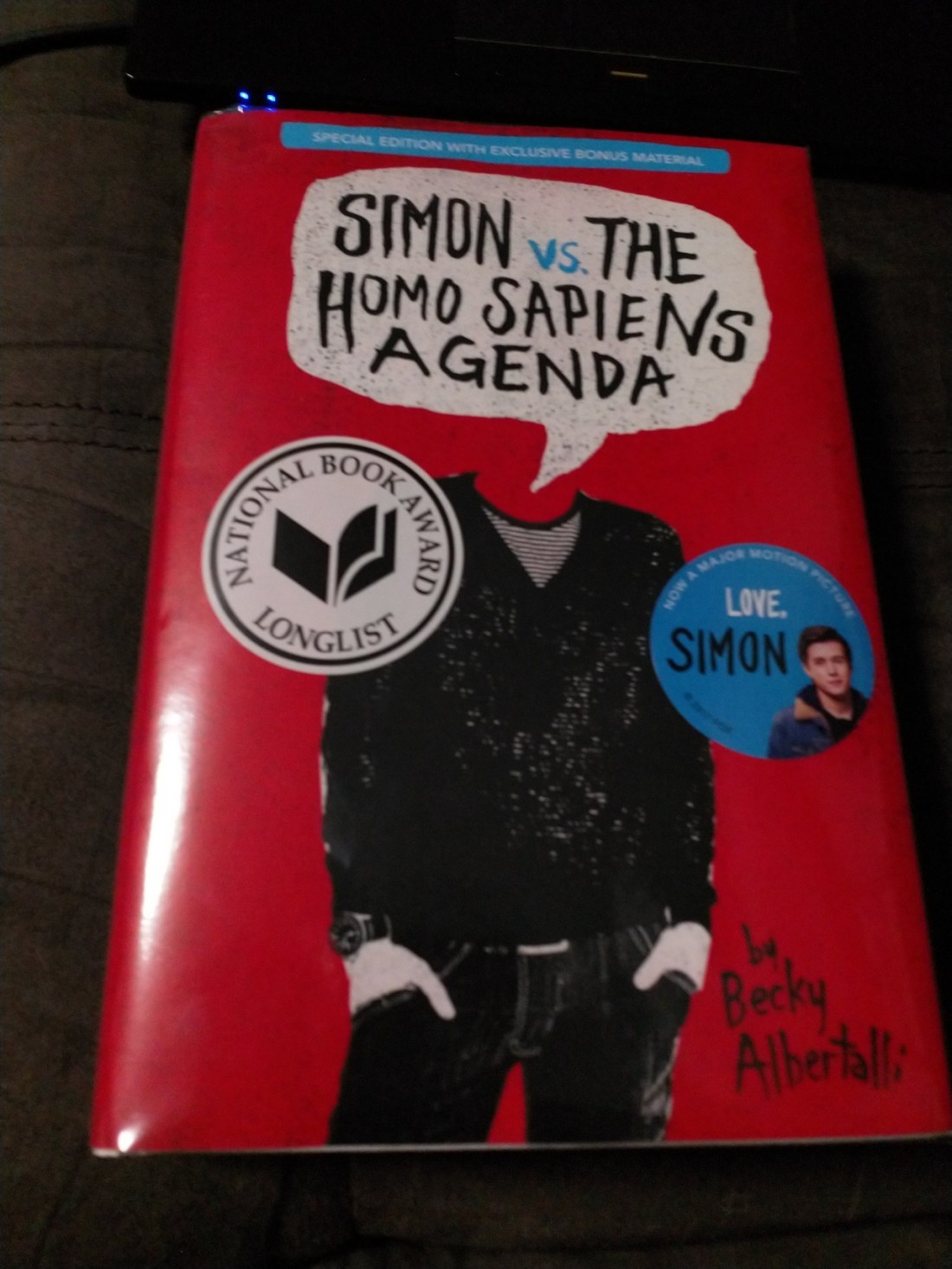
Aristotle and Dante Discover the Secrets of the Universe, Carry On, Simon vs the Homo Sapiens Agenda, Unbecoming, History Is All You Left Me, Dreadnought, Sovereign, Queens of Geek, When the Moon Was Ours, Little & Lion, 27 Hours, Vanilla, Grasshopper Jungle, Dress Code for Small Towns, The Gentleman’s Guide to Vice and Virtue, Perfect Ten, Will Grayson, Will Grayson, That Inevitable Victorian Thing, Proxy, Mask of Shadows, Ramona Blue, They Both Die at the End, The Love Interest.

The importance of Autoboyography – a personal perspective

I’m from the position where I didn’t grow up in Provo or a town like it, I grew up in Australia, where Mormons are a Christian minority, but that separateness still dictates everything. Everything is about us and them and the line between. I don’t think I had a single teacher that my mother didn’t make me give Books of Mormon to. Every friend that visited my home, my mother pressured me to bring to church. LDS members buy from other members, hire other members, socialise with other members, and glory in that isolation. But at the same time, there’s the incredibly toxic fishbowl of church culture. If your parents separate, for example, shunning is a very real thing. I had mothers refuse to let me touch their babies, as though family dysfunction was catching. And I was a child at the time.

Nothing was secret, either. I was abused, and all my school teachers were quietly informed, so that I was given an easier time of things. All but one. Why? He was a church member, and my mother knew that if he knew, his wife knew, and if his wife knew, the ward and even the stake knew. Anything told to the bishop was told to his wife and circulated through the congregation. Women, in particular, were ruthlessly policed, not only by the men but by each other. Anyone who couldn’t keep up with church callings, work, home and family while keeping a permanent smile pasted in place was obviously sinning somehow. All you had to do was trust in God, and that was easy, right? I read somewhere that Mormon states in the US have the highest per capita anti-depressant use. I don’t know how legit it is, but I believe it. I was medicated by sixteen, and no matter how hard I tried, I was never enough. We had one pregnancy in my high school in my age group, out of 150 kids. Our young women’s group, 25 girls aged 12-18, had about a 50% teen pregnancy rate. Hypocrites and liars and smile, smile, always smile.

And that isn’t even touching on the unspoken spectre of what would happen if you were anything but cishet/straight. In Australia, there wasn’t Evergreen, but there was always the understanding that kids who were wrong went somewhere to be fixed. I read Saving Alex last year, and all I could think was that this was what the new face of cure culture was. I knew someone online years ago who’d been through Evergreen. Out of the dozen or so who were there at the same time, he was the only one who hadn’t yet killed himself.

I read Josh and Lolly Weed’s divorce post today, and there was a part where he said,

“For me, though, it all came down to the people I met with–the actual human beings who were coming to my office. They would come and sit down with me, and they would tell me their stories. These were good people, former pastors, youth leaders, relief society presidents, missionaries, bishops, Elder’s Quorum presidents, and they were … there’s no other way to say this. They were dying. They were dying before my eyes. And they would weep in desperation—after years, decades, of trying to do just as they had been instructed: be obedient, live in faith, have hope. They would weep with me, and ask where the Lord was. They would sob. They would wonder where joy was. As a practitioner, it became increasingly obvious: the way the church handled this issue was not just inconvenient. It didn’t make things hard for LGBTQIA people. It became more and more clear to me that it was actually hurting them. It was killing them.”

And yes, that’s what Church policy is meant to do, it’s what it’s always been meant to do. It’s meant to kill us. If we die, then we’re a sad story, designed to spread a message. We were weak, God meant for it to be, and isn’t it better this way?

The only way to win is to stay alive. Eat your anger and let it burn in your belly. Stand in that field without walls and scream long and loud, and don’t smile for anyone else’s comfort. Wear rainbows like armour and love like you’re throwing grenades. Survive, and seek happiness, and prove the bastards wrong. And that, that is why this book is so important. It’s a story so normal, so sweet and simple, about two people finding love and finding themselves, and the happy ending isn’t the one the church says is the only way. There are many roads to happiness. You might have to look long and hard to find them, but it isn’t one-size-fits-all. It isn’t predetermined. It’s individual, and unique, and beautifully, wonderfully average. That’s what the church doesn’t want queer kids to know. That’s what this book reveals, so beautifully. And I’m just so blown away that it exists, in my lifetime, and that I got to read it. It’s wonderful.

Using my powers for good

thequietestlilbucket:

seananmcguire:

iamshadow21:

Just requested five purchases from my local library: Autoboyography, Beneath the Sugar Sky, When the Moon was Ours, Not Your Sidekick, and Dreadnought.

They bought Tell Me Again How a Crush Should Feel and Down Among The Sticks and Bones for me last year, so. *fingers crossed*

Reminder that you can request items for purchase, and then, not only do you get to read them if the library buys them, but you’re making them available for others, for example, closeted queer kids who can read them at the library under the guise of study if their home isn’t a safe space. Be the change you wish you had when you were a kid.

❤ ❤ ❤

Wait, Dreadnought by April Daniels?! It’s so good! I mean, gonna warn you that it has hella transphobic characters (including an emotionally abusive father) that you’re supposed to hate, but it’s really good if that’s not an issue for you.

I actually own it already – I bought a second hand copy from BetterWorldBooks – and I love it and think it’s super important. I know the transphobia in it is hard to read, but it’s not sugar-coated and it’s an #ownvoices writer describing a very common transgender experience through the lens of science fiction. I don’t think there’s anything quite like it in my library’s YA collection yet. Thanks for the warning, though.

Using my powers for good

Just requested five purchases from my local library: Autoboyography, Beneath the Sugar Sky, When the Moon was Ours, Not Your Sidekick, and Dreadnought.

They bought Tell Me Again How a Crush Should Feel and Down Among The Sticks and Bones for me last year, so. *fingers crossed*

Reminder that you can request items for purchase, and then, not only do you get to read them if the library buys them, but you’re making them available for others, for example, closeted queer kids who can read them at the library under the guise of study if their home isn’t a safe space. Be the change you wish you had when you were a kid.