I’ve been trying to think of a good term for the “weepy movies about tragic queer people aimed at straight audiences” subgenre, and I think I’ve got it:
dead gays for the straight gaze
eh? eh??
queers die for the straight eye
SO YOOOO who wants to learn why this is a thing because the history is actually really fascinating and ties into some of my favorite shit ever?
Okay, so like, back in the mid-twentieth century, when being queer was still totally a crime everywhere in the United States, queer writers started working in pulp fiction–starting with Vin Packer (she is awesome)–and writing pulps to tell our stories.
So one day over lunch, her editor asks her, “Hey, Vin, what’s the story you most want to write?”
And she goes, “Well, I’d like to write a love story about lesbians because I’m, you know, gay.”
He says, “Hey, that’s awesome, I will publish it. One thing, though, the homosexuality has to end badly and the main character has to realize she was never gay in the first place. We can’t seem to support homosexuality. I don’t actually think that’s cool, but the government will literally seize our book shipments and destroy them on the basis of the books being ‘obscene’ if you don’t, so if we want this story actually out there, and not burning in a bonfire somewhere, it’s what you gotta do.”
So Vin goes home and writes Spring Fire, the book that launched the entire lesbian pulp genre. And while one character ends up in an insane asylum and the other ends up realizing she never loved her at all, it’s massively successful, and queer women everywhere snap it up and celebrate quietly in their closets across the nation because HOLY SHIT THERE’S A BOOK ABOUT ME? I’M NOT ALONE and it starts a huge new genre.
But: every publisher is subject to those same government censorship rules, so every story has to end unhappily for the queer characters, or else the book will never see the light of day. So, even though lesbian pulp helps solidify the queer civil rights movement, it’s having to do so subversively or else it’ll end up on the chopping block.
So blah blah blah, this goes on for about twentyyears, until finally in the seventies the censorship laws get relaxed, and people can actually start queer publishing houses! Yay! But the lesbian pulps, in the form they’d been known previously, basically start dying out.
MEANWHILE, OVER IN JAPAN! Yuri, or the “girls love” genre in manga, starts to emerge in the 1970s, and even starts dealing with trans characters in the stories. But, because of the same social mores that helped limit American lesbian pulp, the stories in Japan similarly must end in tragedy or else bad shit will go down for the authors and their books. Once more: tragic ends are the only way to see these stories published rather than destroyed.
The very first really successful yuri story has a younger, naive girl falling into a relationship with an older, more sophisticated girl, but the older girl ends up dying in the end, and subsequent artists/writers repeated the formula until it started getting subverted in the 1990s–again, twenty years later.
And to begin with cinema followed basically the same path as both lesbian pulps and yuri: when homosexuality is completely unacceptable in society, characters die or their stories otherwise end in tragedy, just to get the movies made, and a few come along to subvert that as things evolve.
But unlike the books and manga before them, even though queer people have become sightly more openly accepted, movies are stuck in a loop. See, pulps and yuri are considered pretty disposable, so they were allowed to evolve basically unfettered by concerns of being artistic or important enough to justify their existence, but film is considered art, and especially in snooty film critic circles, tragedy=art.
Since we, in the Western world, put films given Oscar nods on a pedestal, and Oscar nods go to critical darlings rather than boisterous blockbusters (the film equivalent of pulps, basically), and critics loooove their tragedy porn, filmmakers create queer stories that are tragic and ~beautiful~ that win awards that then inspire more queer stories that are tragic and ~beautiful~ until the market is oversaturated with this bullshit.
The Crying Game? Critical darling, tragic trans character.
Brokeback Mountain? Critical darling, tragic queer (? not totally sure if they’d consider themselves gay or bi, tbh?) characters.
And so on and so on VOILA, we now have a whole genre of tragedy porn for straight people, that started out as validation for us and sometimes even manages to slip some more through the cracks occasionally, but got co-opted by pretentious ~literary~ types. While tragic ends made these stories more acceptable to begin with, and in the mid-to-late nineties that started getting subverted a little bit (Chasing Amy, But I’m a Cheerleader), eventually that became the point, as more straight audiences started consuming these narratives and got all attached to the feels they got from the ~beauty of our pain~.
Hi! It’s been a long time since I’ve been on Tumblr, so thanks if you’re still following me!
Today is the paperback release of my second book, Little & Lion (how beautiful is that new cover?), and since a few people have asked about my Stonewall speech, this seemed like the perfect time to post it! I forgot to have someone record it, so you don’t get to see me cry, but I’m posting the text below. Thanks for reading!
It is such an honor to be here. Thank you to the Stonewall committee for this award, which is such a highlight of my life and career.
People often ask why authors write the books that we do, and the answers always vary. I wrote this book for several reasons, but I asked myself a few times why I was writing a queer character when I myself do not identify on the LGBTQ spectrum.
I was born and raised in Springfield, Missouri, a conservative town in a conservative state with a population that is overwhelmingly white, Republican, and Christian. I was raised in one of the few black families in our town; I’ve written and talked about the history of racism in Springfield, but suffice to say I was no stranger to the intolerance that wove its way through the southwest pocket of the state. Most places I went, I was seen as “different”—constantly reminded of my darker skin and tightly curled hair.
The first time I remember seeing someone “different” from me was when I met a girl named Kathy Z in first grade. Kathy was a sweet girl with white-blond hair and a gap between her two front teeth. She was also born with a congenital hand deformity. When I went home that day, I immediately asked my parents about Kathy’s hand. I wanted to know if it was okay to hold her hand at recess like the rest of the girls and I did. My parents exchanged a glance before they told me that her difference didn’t mean anything other than that—her hand was different from mine.
My parents made it very clear that “different” wasn’t synonymous with bad. And they told me plainly that I wasn’t better than anyone else, and that was no one was better than me. I’ve never forgotten that.
But it also became clear from a pretty early age that most people in our town didn’t think that way. I grew up fielding assumptions based on my skin color from people who didn’t know me, and from people who should have known better. And I wasn’t the only one.
Queerness wasn’t something that was accepted or openly discussed where I grew up. Homosexuality wasn’t decriminalized in Missouri until 2003, when the Supreme Court case Lawrence v. Texas invalidated sodomy laws in the remaining fourteen states that upheld them. Conversion therapy is still legal in Missouri, and one of the current US senators from the state proudly voted against marriage equality.
This is the environment I grew up in. It is the sort of environment that likes to constantly remind you of what you are if you are not straight, cisgender, white, and able-bodied.
I don’t recall the first time I recognized queerness, but I watched a lot of television as a small child in the ’80s, MTV in particular, so I’m pretty sure it was George Michael in the video for “Wake Me Up Before You Go Go.” I also went to a black Baptist church every Sunday, and it was there that I learned queerness was considered a sin in the Bible. That never sat right with me, even before I was old enough to truly understand what it meant. There were not-so-quiet rumors swirling through the church about the man who played piano for the gospel and youth choirs. He brought such joy to the congregation each week with his music, but even if he hadn’t, I didn’t understand how he could be more of a sinner than everyone else simply because of whom he loved.
I worked at a hardware store throughout high school and college, and one of my favorite coworkers was a man named Kyle. He was funny, charming, and the first openly gay person I’d ever known. I was eighteen years old. We became fast friends, and, shortly after, his boyfriend, Fred, began working there. They were eventually married in a civil union that was, of course, unrecognized by the state of Missouri in the late 1990s. For years, I was the only black person to work in our store of more than two hundred employees, and Fred and Kyle were the only openly queer people there. I always felt a camaraderie with them. Maybe it was because we were all considered “different” in our small town and in that big store. Maybe it was because no matter how “different” the three of us were, we always demanded respect from our coworkers and customers, and in most cases, we received it.
I continued to live in Springfield throughout college, and less than a month after graduating with a journalism degree, I packed up my things and moved across the country to Los Angeles. In Little & Lion, Suzette is sure that she witnesses Lionel falling in love at first sight with her crush Rafaela. I am certain if someone had captured the look on my face when my U-Haul touched down in Los Angeles, they would have seen that same expression.
I was instantly smitten with L.A. Of course the weather was perpetually gorgeous, the city was surrounded by beaches and mountains, and sixteen years later, I still can’t get over the palm trees. But what struck me the most was how everyone in Los Angeles was allowed to just be. There were people all different shades of brown, speaking different languages and not drawing strange looks because of it. There was a neighborhood predominantly populated by Orthodox Jews, and there was Boyle Heights, Chinatown, Little Tokyo, Koreatown, and Leimert Park, all ethnic neighborhoods celebrating long histories of strong cultural identity. My mouth dropped open the first time I spotted a police car in the city of West Hollywood. I couldn’t believe what I was seeing: Their cruisers all have rainbow flags emblazoned on the side. Los Angeles felt so good to me because you didn’t stand out for being different—everyone was different, and those differences were celebrated.
I’ve heard that some readers believe Little & Lion is “too diverse.” I write to reflect the world around me, and my world in Los Angeles is incredibly diverse and rich with various cultures. To imply that a story is unbelievable because it depicts a bisexual Jewish black girl falling for a pansexual Latina and a half-Korean half-black boy is insulting to the very people living those lives.
I was once a little black girl in a very white town, dying to read about someone who looked like me. To validate my existence. I was in college before I saw myself in books, and it instantly made me feel less alone. As an author, it is a privilege to write books that can serve as a mirror. But Suzette is not me. I have, sometimes to my great consternation, always been a bit “boy crazy.” I don’t know what it’s like to be a bisexual girl, and I was worried I’d overstepped my bounds in writing her story, despite the work I put into making her experience read as authentically as possible. I can empathize through my experiences living with racism, but I’m well aware they aren’t the same experience.
By the time the Stonewall committee called to share the good news earlier this year, I’d convinced myself that I should not have written this book. I don’t think anyone was more shocked than me, though, when statistics were released on the number of books published with black girl protagonists written by black women in 2017. The numbers were bleak, but even bleaker was the fact that Little & Lion was the only one of those books to feature LGBTQ content.
It’s my wish that in the very near future, there are so many books about queer black girls—hopefully written by queer black authors—that we don’t have to count them. And it is my lifelong hope that we remember to love and respect each other, and continue to celebrate everyone’s differences and identities. I truly cannot wait for the day that “diversity” isn’t a buzzword or an initiative, and when inclusivity is an integral part of publishing and the world.
I am extremely honored to receive this recognition for Suzette’s story, particularly during LGBTQ Pride month. Thank you to the Stonewall Award committee for recognizing my work, especially in a year that saw so many beautiful, groundbreaking books published about teens spanning the LGBTQ spectrum. I am so grateful to my editors, Alvina Ling and Kheryn Callender, who gave me the smart and honest feedback I needed to make Little & Lion the book it is today. And I would not be standing here without the incredible support and love of my agent, Tina Dubois, who championed this book in its early stages and encouraged me to write what was in my heart.
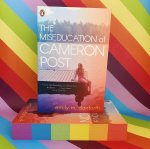
[image description: a photo of the movie cover of The Miseducation of Cameron Post by emily m. danforth against a rainbow background. There is another copy underneath, with the page edges facing out. The page edges are rainbow! The second image is a tweet from @penguinplatform that reads “The special edition of The Miseducation of Cameron post has landed! It’s a stunning book with equally stunning sprayed rainbow edges. #PrideBookClub
This looks really gorgeous. Looks like QBD has it listed in their online store, for Australians who don’t want to give money to Amazon during the strike/boycott, or, y’know, ever.
Idk if anyone else has noticed this, but in this scene of Love, Simon you can see that Simon has the book More Happy Than Not on his shelf. Coincidentally, More Happy Than Not also features a boy struggling with his sexuality, so whether this was planned or that Becky Albertalli is just friends with Adam Silvera, it’s still a cool feature because it implies that Simon read it and maybe helped him figure out himself.
I TOTALLY SPOTTED THIS IN THE MOVIE THEATRE! Adam Silvera’s not my favourite author – his books just didn’t speak to me, nbd – but I know they’re really important to a lot of people, and that the people dressing the set took the time to put queer books on Simon’s shelf meant a lot to me. I just wish we had a great front-on shot so that we could see the other books, because I’d put money on there being more queer titles up there. Bless this set dresser, they did good.
Give a shoutout to your favorite LGBTQIAP+ book! 🌈📚
Everyone NEEDS to read I’ll Get There. It Better Be Worth the Trip. by John Donovan. First young adult novel with LGBT themes, published spring of 1969 by a gay New Yorker (the proximity to Stonewall is amazing), and it would be a beautiful, amazing book worth reading even if it weren’t historically important.
I’ve never heard of this one! Sounds like a great read for Pride Month!
not my favorite, but my first gay book was A Boy’s Own Story by Edmund White. it’s set in the 1950s, so it’s got some historical context. also, my high school english teacher gave it to me before i had come out to anyone, and that was honestly such a read
I love that I’m hearing about all of these older LGBTQ+ books that we don’t often hear about anymore! Thank you for sharing!
If we’re going older books, I think more people need to know about Peter McGehee and Doug Wilson’s trilogy of autobiographical novels. They’re devastating, beautiful, and burn bright with life and humour in the midst of dying, at the height of the AIDS crisis. They do have sexual content and difficult subject matter, so they’d be for mature readers who are ready for that, but I think they’re important, and most people don’t know they exist. I read them first in my very early twenties, and they will never leave me or my bookshelf.
Welcome friends! For Pride Month, I’m hosting an LGBTQ+ literature giveaway!
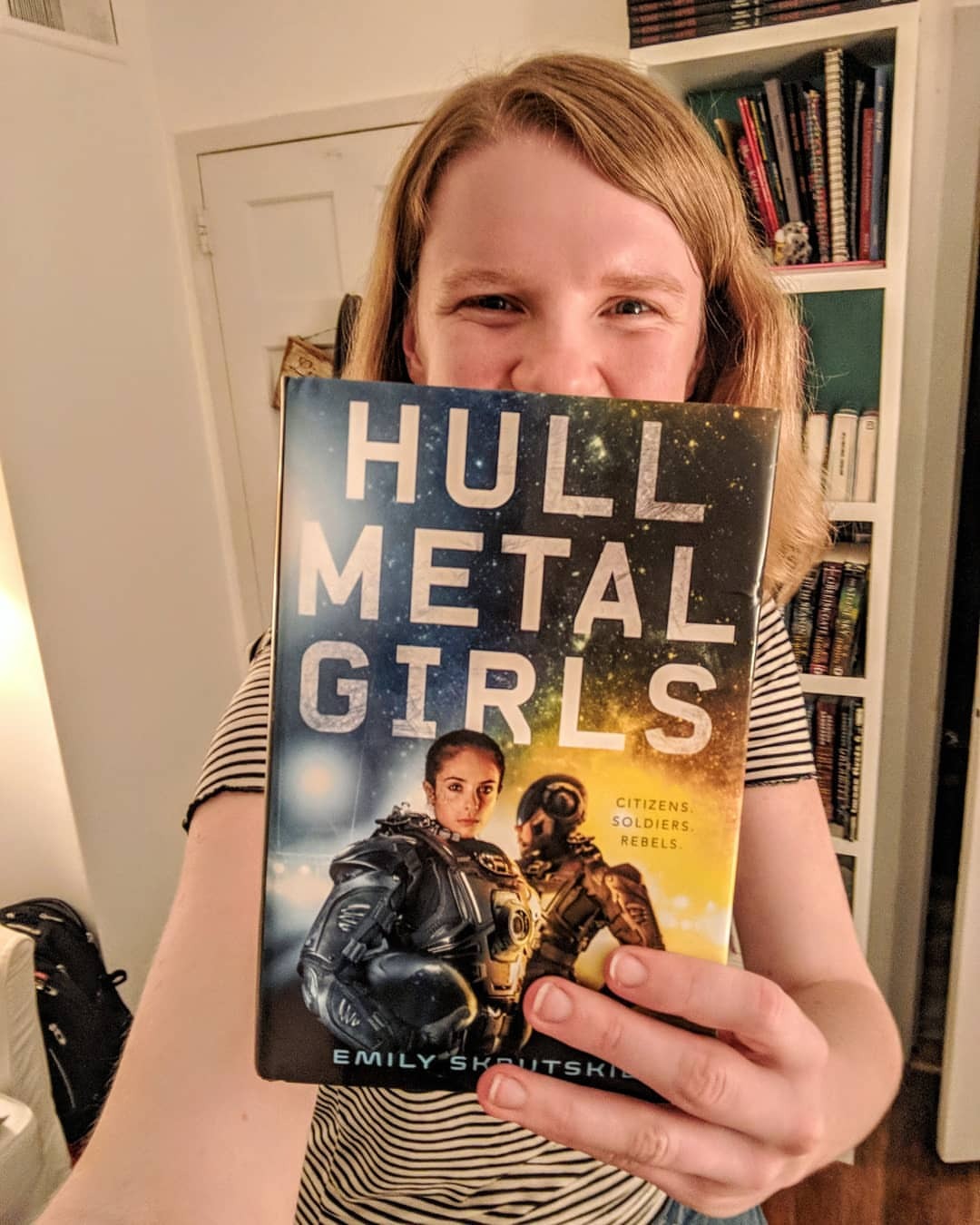
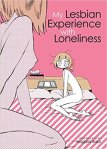
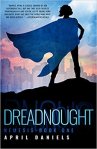
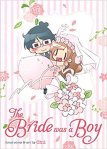
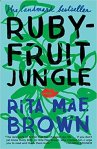
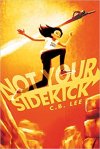
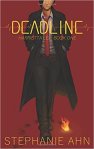
What can you win? Any THREE LGBT books that tickle your fancy, PLUS a copy of Stephanie Ahn’s DEADLINE. (Books shown are books I’d like to read or would like others to read, but if there’s an LGBTQ+ book YOU want to read that’s not on here and you win, hit me up with it! Let’s discuss it! There are many other options out there!)
How can you enter? Follow me (this is a giveaway to celebrate my 600 milestone, too!) and reblog this post. Likes do not count, but you’re free to like the post for reference. Giveaway ends on July 1, at midnight, when we usher in the next month of twentygayteen: Gayly.
Rules:
No TERFs, no truscum, no exclusionists, and no generally nasty people allowed; if you win and you’re one of those kinds of people I will silently draw another name.
This giveaway is for LGBTQ+ people only! If you’re an ally reblogging to signal boost, please tag your reblog as such so I can count you out!
Must be 18+ or have permission to give me your shipping address. If you are closeted and need the books sent somewhere else, to a friend’s house or your workplace, let me know. We will work something out.
Some of these books contain sexual themes, if you are a minor or uncomfortable with sexual content, let’s discuss the books beforehand so that we can figure out some appropriate literature for you.
If you’re only following me for the giveaway and plan to leave later, that’s fine, but I hope you’ll stick around to talk about writing with me!
INTERNATIONAL USERS: I am US-located and shipping, especially for books, gets expensive fast. If you are located outside of the US and win, I will buy you a $35USD giftcard to a bookstore of your choosing in your country, or Amazon! I hope you will use it to buy LGBTQ+ literature!
Ends July 1 at the stroke of midnight! (mountain time.)
Who am I? Why am I doing this? I reckon I’m just a frog working on my own novels! This is my Writeblr! I hope to someday be published so that you’re all forced to see my books on shelves at your local bookstores!
If you have any questions about the giveaway or how to enter, please send me a pm or ask off anon!






 knitting in the dark