Happy Pride Month Eleanor Roosevelt was queer, the Little Mermaid is a gay love story, James Dean liked men, Emily Dickinson was a lesbian, Nikola Tesla was asexual, Freddie Mercury was bisexual & British Indian, and black trans women pioneered the gay rights movement.
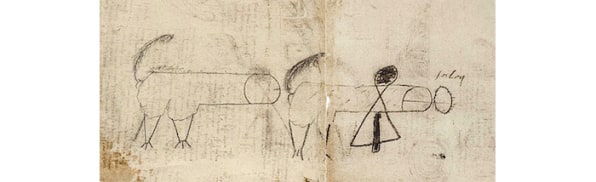
Florence Nightingale was a lesbian, Leonardo da Vinci was gay, Michelangelo too, Jane Austen liked women, Hatshepsut was not cisgender, and Alexander the Great was a power bottom
Freddie Mercury is well known for his attraction to men but was also linked to several women, including Barbara Valentin whom he lived with shortly before he died. Friends have talked about being invited into their bed and walking in on them having sex (documentary Freddie Mercury: The Great Pretender)
Marsha P. Johnson and Sylvia Rivera are two of the best-known activists who fought in the Stonewall riots
Having separate flags is good bcos it’s good to have a symbol for your particular identity to embrace but it also important to remember the rainbow flag unites us all. All LGBT+ people can use it. I feel like it’s somehow become assumed by a lot of younger lgbt+ people that it’s only fr gay men, which it isn’t and never has been
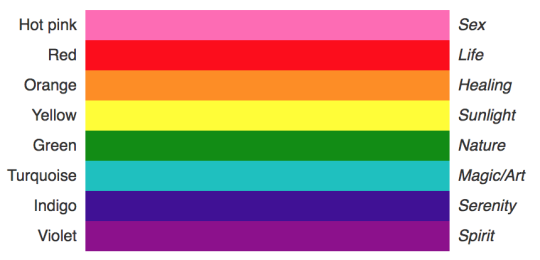
The rainbow flag when originally created by Gilbert Baker in 1978 actually contained 8 stripes that were assigned values and specific meanings that were meant to show what unites us and what we value as a community,
It took 30 people to hand dye AND hand stitch the first 2 pride flags- 30 people of various identities came together to create the first symbol of pride. Hot pink was removed due to fabric shortages and turquoise was mixed with indigo to have the darker blue we have today.
Having individual flags is great to show your identity but I think we shouldn’t forget that the rainbow flag isn’t reserved for gay men, it was created to show what we all have in common regardless of identity.
BTW, the high five was invented in 1977 which means your parents probably didn’t grow up with it.
For real though Glenn Burke, inventor of the high five was a gay black player in the 70s, and the Dodgers tried to get him to marry a beard and their manager got mad when he befriended the manager’s gay son before being traded to the Athletics, probably for being gay. In Oakland, the rumors of homosexuality followed him and manager Billy Martin started using homophobic slurs in the clubhouse and homophobic behavior from other players lead to an early retirement for the promising young star at 27. After retiring from baseball he introduced the high five to the Castro district of San Franscio where the high five became a symbol of gay pride and identification. ESPN wrote a long form piece about it which I recommend reading, it’s got some homophobic slurs in it although not presented positively.
A few appendices:
Although he was unceremoniously drummed out of Major League Baseball, Burke became the star shortstop for the local Gay Softball League, and even dominated in the Gay Softball World Series, as well as medaling in the 100 and 200 meter sprints in the inaugural 1982 Gay Games. Unfortunately, Burke also picked up a cocaine habit and had his leg and foot crushed in an accident. He spent much of his final years homeless in the Castro, and died from AIDS complications in 1995, but he was in the first class of inductees to the Gay and Lesbian Sports Hall of Fame, and his High School retired his jersey number.
The Dodgers Manager in question was Tony Lasorda, whose son “Spunky” died of AIDS complications in 1992 although Lasorda maintains that it was cancer. Likewise, despite the High Five becoming a symbol of the 1980 Dodgers team, Lasorda maintained and continues to this day to maintain to not know its origin. It’s possible that this isn’t a deliberate slight to Burke, but given his homophobia in other matters that’s a hard benefit of the doubt to give.
The Athletics have, in the years since, attempted to make up for some of the wrongs they committed in this story. When Glenn revealed publicly that he was living with AIDS, the As moved in and helped him financially. Burke was honored publicly at Pride Night at the park in 2015 and his brother was invited to throw the first pitch.
Burke was happy to see the high five catch on, spilling out of sports and into the small joys of every day life. He died believing that the high five was his legacy. Next time you high five your friend, remember that the high five came from Glenn Burke.
Npr has a dope story on it
What? Cool! Maybe I can find some of his baseball cards?
In today’s guest post you get to learn a bit about Lisa Jenn Bigelow, the author of middle grade f/f novels Starting From Here and newly released Drum Roll, Please, and about her experience growing up and becoming a writer.
Drum Roll, Please: How an F/F Tween Novel Was Born, Grew Up, and Came Out of the Closet By Lisa Jenn Bigelow
1995
Senior year of high school. After two years of questioning, I’d decided I was gay. Probably. Aside from a trip to the mall with a skater boy, I’d never dated. Everything felt hypothetical.
I’d scoured libraries and bookstores for queer books. (This was before I had Internet access.) Those I found were mostly about gay men, mostly about AIDS. Nothing for teens. There was a lesbian bookstore downtown. I’d read about it in the paper, seen its rainbow flag flying. I mustered the nerve to go in. There, I found a flyer for an LGBTQ teen support group. The group had its own library, packed into a Styrofoam picnic cooler. There was Annie on My Mind, by Nancy Garden. Tales from the Closet, by Ivan Velez, Jr. Queer YA existed after all.
I wish I’d discovered these books earlier, before I started to question myself. I wish there had been more of them. I wish they’d all had happy, or at least hopeful, endings. My life today is still shaped by those early years of feeling alone, afraid, and inferior. I was fortunate to feel confident of my parents’ and closest friends’ support, whenever I came out. But school was a homophobic environment. The local paper regularly printed homophobic letters to the editor.
Day after day, the headlines debated whether gay people deserved the same rights as straight people. President Clinton passed “Don’t Ask, Don’t Tell” and the Defense of Marriage Act. Homosexuality was technically a crime in many states.
I didn’t think I’d ever be allowed to marry. I didn’t think I could ever have children. But those books in the cooler were a ray of hope.
activists at barnard college providing “labels”, photographed by susan rennie and published in off our backs: a women’s newsjournal vol. 3 no. 6, february 1973
Black an white photo of two women, one standing, one seated.
Behind them is a hand-written sign reading,
“YEA – It’s a heavy trip. BUT! This is a chance to CHOOSE YOUR OWN LABEL instead of having someone else do it for you:
I’ve been trying to think of a good term for the “weepy movies about tragic queer people aimed at straight audiences” subgenre, and I think I’ve got it:
dead gays for the straight gaze
eh? eh??
queers die for the straight eye
SO YOOOO who wants to learn why this is a thing because the history is actually really fascinating and ties into some of my favorite shit ever?
Okay, so like, back in the mid-twentieth century, when being queer was still totally a crime everywhere in the United States, queer writers started working in pulp fiction–starting with Vin Packer (she is awesome)–and writing pulps to tell our stories.
So one day over lunch, her editor asks her, “Hey, Vin, what’s the story you most want to write?”
And she goes, “Well, I’d like to write a love story about lesbians because I’m, you know, gay.”
He says, “Hey, that’s awesome, I will publish it. One thing, though, the homosexuality has to end badly and the main character has to realize she was never gay in the first place. We can’t seem to support homosexuality. I don’t actually think that’s cool, but the government will literally seize our book shipments and destroy them on the basis of the books being ‘obscene’ if you don’t, so if we want this story actually out there, and not burning in a bonfire somewhere, it’s what you gotta do.”
So Vin goes home and writes Spring Fire, the book that launched the entire lesbian pulp genre. And while one character ends up in an insane asylum and the other ends up realizing she never loved her at all, it’s massively successful, and queer women everywhere snap it up and celebrate quietly in their closets across the nation because HOLY SHIT THERE’S A BOOK ABOUT ME? I’M NOT ALONE and it starts a huge new genre.
But: every publisher is subject to those same government censorship rules, so every story has to end unhappily for the queer characters, or else the book will never see the light of day. So, even though lesbian pulp helps solidify the queer civil rights movement, it’s having to do so subversively or else it’ll end up on the chopping block.
So blah blah blah, this goes on for about twentyyears, until finally in the seventies the censorship laws get relaxed, and people can actually start queer publishing houses! Yay! But the lesbian pulps, in the form they’d been known previously, basically start dying out.
MEANWHILE, OVER IN JAPAN! Yuri, or the “girls love” genre in manga, starts to emerge in the 1970s, and even starts dealing with trans characters in the stories. But, because of the same social mores that helped limit American lesbian pulp, the stories in Japan similarly must end in tragedy or else bad shit will go down for the authors and their books. Once more: tragic ends are the only way to see these stories published rather than destroyed.
The very first really successful yuri story has a younger, naive girl falling into a relationship with an older, more sophisticated girl, but the older girl ends up dying in the end, and subsequent artists/writers repeated the formula until it started getting subverted in the 1990s–again, twenty years later.
And to begin with cinema followed basically the same path as both lesbian pulps and yuri: when homosexuality is completely unacceptable in society, characters die or their stories otherwise end in tragedy, just to get the movies made, and a few come along to subvert that as things evolve.
But unlike the books and manga before them, even though queer people have become sightly more openly accepted, movies are stuck in a loop. See, pulps and yuri are considered pretty disposable, so they were allowed to evolve basically unfettered by concerns of being artistic or important enough to justify their existence, but film is considered art, and especially in snooty film critic circles, tragedy=art.
Since we, in the Western world, put films given Oscar nods on a pedestal, and Oscar nods go to critical darlings rather than boisterous blockbusters (the film equivalent of pulps, basically), and critics loooove their tragedy porn, filmmakers create queer stories that are tragic and ~beautiful~ that win awards that then inspire more queer stories that are tragic and ~beautiful~ until the market is oversaturated with this bullshit.
The Crying Game? Critical darling, tragic trans character.
Brokeback Mountain? Critical darling, tragic queer (? not totally sure if they’d consider themselves gay or bi, tbh?) characters.
And so on and so on VOILA, we now have a whole genre of tragedy porn for straight people, that started out as validation for us and sometimes even manages to slip some more through the cracks occasionally, but got co-opted by pretentious ~literary~ types. While tragic ends made these stories more acceptable to begin with, and in the mid-to-late nineties that started getting subverted a little bit (Chasing Amy, But I’m a Cheerleader), eventually that became the point, as more straight audiences started consuming these narratives and got all attached to the feels they got from the ~beauty of our pain~.
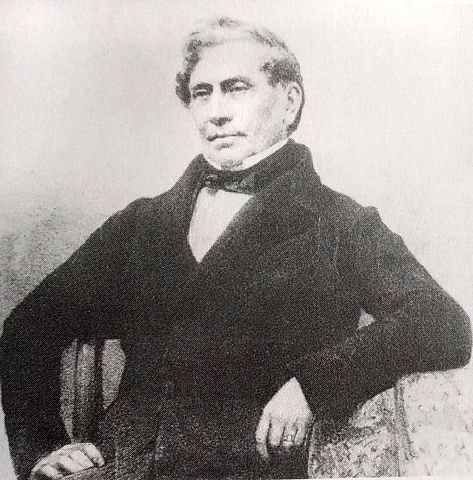
Dr James Barry, the first doctor to perform a successful C section wherein both mother and child survived, was a huge champion of handwashing at a time when most doctors didn’t wash their hands. For this reason, many of the chilldbirths he delivered resulted in healthier babies and mothers. He was also a gay trans man, who specifically wrote that upon his death he wished for his body to be taken in its nightshirt, wrapped in his sheets as a shroud, and placed into the coffin so that nobody would see his body. His wishes were not respected, and as a result he was outed at his death.
i’ve also been informed he had a poodle. He named his poodle Psyche. I’d just like to congratulate him on being an excellent human being, who not only pioneered modern medicine but also had good taste in dogs. that is all.
types of responses to this post
i thought this was fake but it’s not
here’s the sawbones episode about him
cis people
He was also reportedly quite the ladies’ man, and he’d apparently carried a child to term and gave birth.
he’s one of my favorite historical figures and ive read a lot on him including the biography Scanty Particulars by Rachel Holmes. a lot of the details of his life are difficult to figure out, partly cause he was very private and partly cause he had so many rumors surrounding him. here are some of my fave facts about him:
-he was very concerned with protecting poor people, women and people of color, aka all the people most of upper class british society at the time cared the least about. he worked to reform prisons and hospitals in south africa at risk to his own career, and also improved the conditions under which poor enlisted british soldiers and their families lived
-he was kind of a known hothead. he was rumored to have fought at least one duel (probably not true though). florence nightingale hated him even though they had similar ideas about medicine because they had such a clash of personalities in the brief time they worked together
-he was a vegetarian and took a goat with him on sea voyages so he could always have fresh milk
-even though he had an abrasive personality and made a lot of enemies, his patients, especially the women, really loved him because they felt like he knew what he was doing and actually cared about their health
-he died poor because the british army ripped him off >:/
edit i almost forgot the best thing. he didn’t just have one poodle named psyche. he had a bunch. when one died he would get a new poodle and name that one psyche too







 knitting in the dark