The belief that someone might be faking it means they don’t deserve help is one of the greatest social ills put upon us as a society.
Let me explain:
With every charity there will be at least 5% of people (more or less depending) that look like they don’t deserve to benefit from the charity due to their clothes, phone, ability to walk, looking cis or het, looking white or any outwards sign of privilege that they might seem to show.
In actuality, about 0.01% of these people either do not qualify for the charity in question or actually have the privilege that they look like they have.
An example:
You are at a food bank. Mrs. White come up in a shiny Escalade with 4 kids all piled in the back. She comes in to get food for her, her husband, and her 4 kids. Immediately after they leave, you hear one of the other volunteers criticizing the fact that these “obviously well off individuals” are coming in for food.
In reality: Mrs. White’s husband was in a car accident that cost him his ability to walk for long periods of time, the car, and his ability to work. The insurance company paid for the escalade (a dream car of the husband’s) and disability allows them to keep the house, but Mrs. White is barely able to work part time to take care of her husband and the kids. They rely on the donations at the food bank to get by.
Another example:
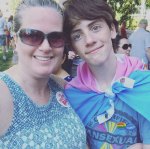
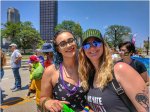
You see a pair of people walking in the pride parade that look cis and het and are being affectionate at Pride. You hear someone snarl about invaders.
In reality: They are both trans or Bi and this is their first Pride being out.
Another example:
A person on the internet talks about their experience with Autism and how it means they have a hard time working. They’re self-diagnosed.They’ve gotten jeering comments about how they’re faking it and making it hard for real Auties.
In Reality: They’re autistic but can’t afford a professional diagnosis because they have a hard time working and they showed atypical traits as a kid.
I could go on and on.
I’ve heard it all. From just about anyone. But mostly? Mostly I hear it from people who think that if you don’t fit the stereotype you don’t deserve help. That you must be in the very lowest place you can be before you get help. But that’s simply not how it should be.
We should reach kids before they’re on the verge of death, someone before they’re on the street, a person before they’re grasping at the end of their rope. And if we were able to do this, maybe more people would feel comfortable asking before they had no other option than to beg for the scraps that society can leave them.
Society’s greatest illness isn’t those who fake need, but those who think that that tiny bit of people who don’t need the help asking for it is worth forsaking everyone else who does.
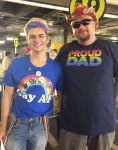
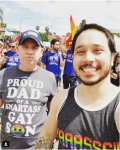
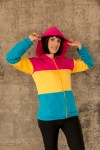
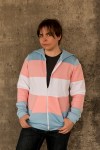
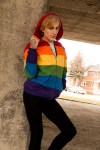
Here is a little more story for people interested! Yes, all my models are what they’re showing. It was important for me to represent not only the flag, but the varied people who want to show their pride. 🙂 They’re also friends from various groups, and one is my cousin! I don’t often have an occasion to include my family in these projects, so I’m glad I could this time! Also I want to give a big, special thanks to Bahamut Night Photography for snapping us so perfectly!
For every hoodie sold, I will give 2$ to Fondation Émergence! They’re the founders of the International Day against homophobia and transphobia (May 17th) and are very active locally. I may also give more to Amnesty International or All Out when they need to answer some urgent situation around the world. I want these hoodies to do some good, and not just be a cool piece of clothing.
I will try to make more flags to add to this collection ASAP! So far on the list is Aromantic, Poly-sexual and Demi-ace. Don’t hesitate to ask me for a new flag, if I get asked a few times I will add it to the shop, and if it’s very rare/unique, I can make it as a custom order. 😉
I LOVE THESE
yall. yall if you got money buy these. support this business
1.) one or both of people you see as a “straight couple” could be pan/bi/poly/ace
2.) one or both of them could be trans or non binary
3.) you could be misgendering someone
4.) They could be there to give moral support to a queer friend or family member who didn’t want to go alone.
Number four is important
5. They could be there because they support the cause stop fucking gatekeeping
6. They could be there in memory of a loved one, don’t forget Pride used to be a memorial as well as a celebration. I know a good number of straight people who go to Pride to celebrate the lives of friends and family who have died because they want to remember them as they lived, happy and joyful and surrounded by a community that loved them.
ALL OF THE FUCKING ABOVE.
7. They could be questioning or closeted about their gender and/or sexuality, or not ready to question their gender and/or sexuality, but still want to attend pride, either to experience being around people like themselves or to ‘test the waters’ in an open event that doesn’t have the loaded weight of walking into an explicitly queer space like a club, social group or community centre. These people might be closeted or questioning forever, or attending pride as a ‘passing straight’ person might be their first step into a deeper community engagement.
8. Open events are so important for this segment of our community for reasons of safety, too. People who CANNOT be open in their personal life can watch a parade or go to a park event without it being as implicitly indicative of their identity. Very important for vulnerable people (teens, disabled people, etc.) who are dependent on carers who might be unaccepting of their gender or sexuality.











 knitting in the dark