I am reading scholarly works about Jane Austen and having hearteyes about obscure details in the Pemberley chapters of P&P that indicate Mr. Darcy’s sustainable land management praxis.
Okay, let’s talk about Pemberley!
Austen, as a rule, doesn’t spend many paragraphs describing locations. There’s often information to be gleaned from their names (Sense and Sensibility is full of lurking references to sexual scandals and Mansfield Park to slavery), but Longbourn just means “long stream” or “long boundary,” Netherfield means “lower field,” and Rosings’ original owner was a redhead. Meryton, a pun on “merry town,” is kind of fascinating, given the installment of the militia and the threat to stability and serenity they represent. Partying and shenanigans. Possibly a Shakespeare ref.
Longbourn barely gets any description at all. From the get-go, everyone who lives there is obsessed with other places, with getting out (except Mr. Bennet, who never wants to leave his library, never mind the house). Lady Catherine deems it small and mildly uncomfortable, which is in keeping with the theme of confinement, but also it’s Lady Catherine talking. Netherfield can’t tell us much about Bingley, who is only a tenant. Rosings is expensively, ostentatiously modern and gaudily furnished, though it has a handsome park that Lady Catherine and her stifled daughter never set foot in but Elizabeth and Darcy both frequently escape to during their stays.
So it’s notable and wonderful that Austen goes out of her way to describe Pemberley as an old-fashioned, highly successful, working estate. Its practical old Anglo-Saxon name means “Pember’s clearing.” A pember is a man who grows barley. Darcy most likely still does. As Elizabeth and the Gardiners approach and tour the house, they notice and admire its beautiful surrounding woods, and then when they wander outside, the specific word Austen uses is coppice woods. A coppice is a woodland filled with tree species that grow new shoots from their stumps when you chop them down. Darcy probably has oaks on a fifty-year cycle as well as faster-growing species such as hawthorn and hornbeam for firewood, timber and cattle fodder. Coppice forestry is functional and sustainable, and provides habitat for beasts and birds.
Darcy is the anti-John Dashwood (Dashwood, srsly), the brother in Sense and Sensibility who inherits Elinor and Marianne’s childhood estate of Norland, whose wife immediately starts making plans to hack down trees (not even coppice trees, but big, gorgeous, venerable hardwoods) to make way for a folly. Jane Austen hated follies. Also, it ought to be noted that timber was so valuable in Britain at the time that estates often had inheritance clauses that detailed who was and wasn’t allowed to chop down what.
Darcy’s a food producer and land conservator, prefers nature over fussy, ornamental landscape design, his servants and tenants like him, he gives money to the poor… and… he’s a trout fisherman! He shoots, too, as do Bingley and Hurst and Mr. Bennet, but it’s a particular mark in his favour that Austen singles him and Mr. Gardiner out as anglers. It’s a pastime that signifies a taste for contemplation and quietness and appreciation of nature, as blissfully described in The Compleat Angler; or, The Contemplative Man’s Recreation, a hugely popular travel book first published in the 1600s and reprinted often for 18th C libraries. The plot of The Compleat Angler is about the conversion of a hunter (pastime of the ultra-rich) to a fisherman who learns to love the peaceful sport. We receive ample evidence elsewhere that Darcy is a man capable of swift, decisive action and formidable effectiveness. But at Pemberley, Austen takes care to show us how he’s balanced.
Most of the information in this post comes from Margaret Doody’s Jane Austen’s Names.
I didn’t know any of this! I always thought it was a bit odd how her viewing the estate changed her views of the man himself, as if it was about how big the place was. Instead it was how he cared for the land / people. Fascinating! Completely missed that.
It’s literally his character reference! Most women at the time had to marry for financial security, yet marriage was horribly risky, because divorce was almost impossible. If you married someone you didn’t know well, and he turned out to be lazy, irresponsible, or abusive, you were stuck.
This is why so many Austen heroes are mature, almost frumpy men the heroines have known for years. Local fellows with family ties. They don’t offer breathless romances; the happy endings they offer are happy because they are safe.
Darcy is not a local boy.
Darcy is not a fully formed, baggable Austen hero when he proposes at Hunsford, not just because he’s rude af, but because Lizzy doesn’t know him well enough yet. She has no real way of knowing how he would treat her. Austen sends Lizzy to Pemberley not to dazzle her with Darcy’s wealth, but to provide her with good, hard evidence of his treatment of the people under his protection, including his tenants, his sister, and the intelligent, dignified housekeeper who has known him since he was a toddler.
Character references established, we may proceed with the romance.
(n.b. He doesn’t know her either, until she’s rejected him. He proposes, despite his giant pile of reservations, because he’s so horny for her he can’t stand it (at least, to his credit, he’s turned on by her brains as much as her hot little bod), but only after her refusal does he realize how completely he has failed to understand this woman or make himself worthy of her. He falls in love for real only after she has demanded that he live up to his own high standards. Refreshing, ain’t it?)
Tag: pride and prejudice
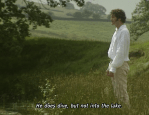

i’ve been thinking about it but no caption could possibly make this any funnier
I feel like I know at least three people for whom this post would totally ruin their memories of their adolescent sexual awakening.
Maybe for those three it would, but for those of us who were instead fixated on Elizabeth having pants feelings for the first time, this is just funny. :DDD
ALERT ALERT
Apparently, Brave New World of Toil and Trouble, the Austen fic I bemoaned not being able to put on my bookshelf two days ago… was self-published by the author in 2012. She renamed it Goodly Creatures, which is why I didn’t know about it, and I absolutely recommend buying it. Most of the negative reviews on Goodreads seem to be people thinking books should have content warnings, so, reminding people, this book contains rape and the aftermath thereof. It’s an incredibly good treatment of that, but it’s pivotal to the entire book, and there is no reading around it.
Brave New World of Toil and Trouble
I am posting this as a wholehearted rec because I ADORE this story and I have no one in my life I can talk about it with because no one I talk to regularly about fannish things is into Austen/has read this fic. It’s a what if? AU which those who know me KNOW is my one true love of fan fiction. It’s detailed, it’s long, it’s plotty, it’s complete, and it has gorgeous character development for all involved, both canon and original players. It’s talking about rape culture and feminism and fighting for the people you love, but also about taking a terrible thing and making something amazing from it.
Heed the warnings. If non-con of any kind is a problem for you, this is not the story for you. But if, like me, you gain a great catharsis from reading characters you love endure, and more, evolve from something devastating and triumph, you will love this fic.
Beth AM crafted something amazing that I wish I could have a physical copy of on my shelf right next to Austen’s originals. I don’t say that about many fan fictions, though I’ve read a lot. Katie Forsythe/wordstrings’s Sherlock Holmes fic. copperbadge’s Cartographer’s Craft. shuofthewind’s The Making of Monsters. domarzione’s Freezer Burn. Not Easily Conquered by WhatAreFears and dropdeaddream. I’m sure there are a few more I’m forgetting, but all told, it’s not a long list out of the thousands of fics I’ve read over decades in fandoms. This is one of them.
Read it. Love it. Thank the imagination and the dedication of the author that it exists. And then sigh that because it’s on a web page archive, not Ao3, you can’t leave kudos to let the author know how wonderful it is, and resort to telling Tumblr instead. That’s what I did, anyway.
 knitting in the dark