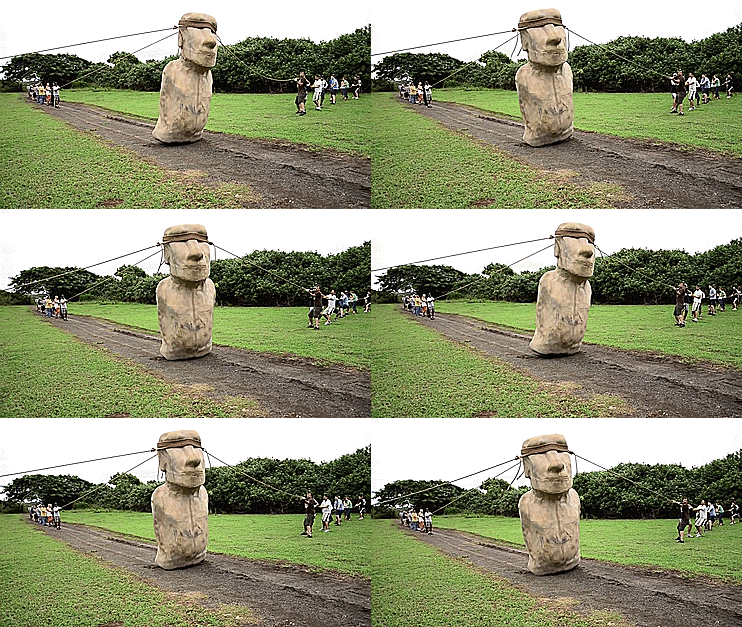
What’s really wild is that the native people literally told the Europeans “they walked” when asked how the statues were moved. The Europeans were like “lol these backwards heathens and their fairy tales guess it’s gonna always be a mystery!”
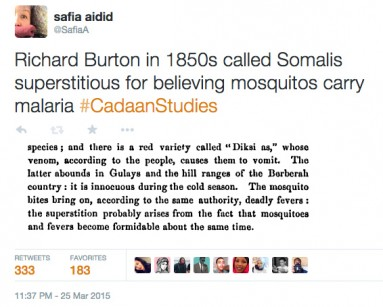
Maori told Europeans that kiore were native rats and no one believed them until DNA tests proved it
Roopkund Lake AKA “Skeleton Lake” in the Himalayas in India is eerie because it was discovered with hundreds of skeletal remains and for the life of them researchers couldn’t figure out what it was that killed them. For decades the “mystery” went unsolved.
Until they finally payed closer attention to local songs and legend that all essentially said “Yah the Goddess Nanda Devi got mad and sent huge heave stones down to kill them”. That was consistent with huge contusions found all on their neck and shoulders and the weather patterns of the area, which are prone to huge & inevitably deadly goddamn hailstones. https://www.facebook.com/atlasobscura/videos/10154065247212728/
Literally these legends were past down for over a thousand years and it still took researched 50 to “figure out” the “mystery”. 🙄
Adding to this, the Inuit communities in Nunavut KNEW where both the wrecks of the HMS Erebus and HMS Terror were literally the entire time but Europeans/white people didn’t even bother consulting them about either ship until like…last year.
“Inuit traditional knowledge was critical to the discovery of both ships, she pointed out, offering the Canadian government a powerful demonstration of what can be achieved when Inuit voices are included in the process.
In contrast, the tragic fate of the 129 men on the Franklin expedition hints at the high cost of marginalising those who best know the area and its history.
“If Inuit had been consulted 200 years ago and asked for their traditional knowledge – this is our backyard – those two wrecks would have been found, lives would have been saved. I’m confident of that,” she said. “But they believed their civilization was superior and that was their undoing.”
“Oh yeah, I heard a lot of stories about Terror, the ships, but I guess Parks Canada don’t listen to people,” Kogvik said. “They just ignore Inuit stories about the Terror ship.”
Schimnowski said the crew had also heard stories about people on the land seeing the silhouette of a masted ship at sunset.
“The community knew about this for many, many years. It’s hard for people to stop and actually listen … especially people from the South.”
Indigenous Australians have had stories about giant kangaroos and wombats for thousands of years, and European settlers just kinda assumed they were myths. Cut to more recently when evidence of megafauna was discovered, giant versions of Australian animals that died out 41 000 years ago.
Similarly, scientists have been stumped about how native Palm trees got to a valley in the middle of Australia, and it wasn’t until a few years ago that someone did DNA testing and concluded that seeds had been carried there from the north around 30 000 years ago… aaand someone pointed out that Indigenous people have had stories about gods from the north carrying the seeds to a valley in the central desert.
it’s literally the oldest accurate oral history of the world.
Now consider this: most people consider the start of recorded history to be with the Sumerians and the Early Dynastic period of the Egyptians. So around 3500 BCE, or five and a half thousand years ago
These highly accurate Aboriginal oral histories originate from twenty thousand years ago at least
Ain’t it amazing what white people consider history and what they don’t?
I always said disservice is done to oral traditions and myth when you take them literally. Ancient people were not stupid.
I still think Moana deserved an Oscar for this part
To me, the moral of Moana is that only women can help other women heal from male violence.
The movie starts with the idea that the male god who wronged Te Fiti must be the one to heal her. This seems to make a certain sort of intuitive sense in that I think we all believe that if you do something wrong you should try to make it right. But how does he try to right it? Through more violence. Of course that failed.
It was only when another woman, Moana, saw past the “demon of earth and fire” that the traumatized Te Fiti had become (what a good metaphor for trauma, right?) and met her with love instead of violence that she was able to heal. Note that they do the forehead press before Moana restores the heart, while Te Fiti is still Te Kā. Moana doesn’t wait for her beautiful island goddess to appear in all her green splendor before greeting and treating her as someone deserving of love.
Moana is only able to restore the heart because Te Kā reveals her vulnerability and allows Moana to touch her there. Maui and his male violence could only ever have resulted in more ruin.
This is a touching anaylisis but it’s extremely racist as
not only have you completely ignored the whole point of Maui’s character, but
have managed to incriminate a man of color on a tumblr wide scale.
First of all, Maui’s character does not represent male
violence—it represent human greed. Maui did not take the heart because he is a
man, and Te-Fiti is a woman. He took it because the humans asked him to. The humans asked Maui to do everything for them,
not caring how greedy or selfish their requests were and in the end it was Maui
who suffered for it. Maui is supposed to show the flaw of humanity.
This has nothing to do with sexism, it has everything to do
with the fact that Maui gave and gave to the humans who could never stop being
greedy. Moana giving the heart back wasn’t supposed to be her “making up” for
the male violence that Maui represents. It was her making up for the greed she
and her people represent. It was touching however because yes it was an
important moment between two women, but you missed the point and you’ve come off
racist and very disrespectful to a culture at that.
Yes, Moana is an empowering movie for women, especially
women of color. But the last thing this is about is Maui being an abuser/rapist
or whatever. That is not the point of Maui’s character.
And to assume so is racist. You are a white woman completely
dehumanizing a man of color and ruining his image because of how you see him. And other white girls here
on tumblr have happily picked up that image and interpretation and rolled with
it. Maui’s character is now seen as an abuser or as someone who is violently
because of white girls here on tumblr—which it doesn’t surprise me. (an in a
historical context this is even MORE racist because white women would always
make Maui’s people out to be savages and abusers etc., simply because of the
color of their skin and their culture so yea, this is bad).
You can see the morality of the movie however you want, but
do not be disrespectful toward a character and in this case a culture.
@i-want-cheese Please don’t write this off as another “butthurt comment” or
“male guilt”, because this is really messed up. I see how you’re brushing off
some other people’s comments and I honestly hope that you don’t see mine the
same way because this is an issue I think you need to face/realize. You are
being racist and brushing it off isn’t going to change that.
the
@visibilityofcolor THANK YOU FOR THIS. As a Polynesian woman, reading that post and other replies painting Maui and even Tui as aggressive and violent men had me feeling some type of way, especially since White people have always regarded Polynesian men in such a manner.
I’ve thought about replying because I’m tired of seeing these kind of “Moana is a feminist movie” posts collect hundreds of notes despite the fact that these posts always conveniently fail to mention Pasifika people, but it always stressed me out, so thank you.
As an aside, Maui taking Te Fiti’s heart and Moana restoring it was symbolic of environmental preservation. Because the people who inspired Moana–Pasifika people, not just Polynesian–are always affected first when the environment is threatened. Our way of life is greatly influenced by the ocean and we believe that if you take care of the ocean, she will take care of you.
You’re very welcome.
This is insight for me as well (as I wasn’t aware that the movie also came fro the culture of the Pasifika people), and does give a very important perspective. I do agree with you, this movie is about environmental restoration, not some white fem bullshit.
I tried over and over again to explain to I-want-cheese about how she was being racist, but she responded by blocking me and other poc who called her out (even other polynesian people). People to this day are still trying to explain that she is being racist and culturally insensitive but she ignores us.
I’ve made a few posts about this, hoping that people realize how problematic it is to agree with i-want-cheese. Explaining to her racist white ass that this was problematic was like explaining to a bird. She wouldn’t listen and neither would have of her racist friends.
Sorry you’ve had to see this on your dash every so often, but I’m glad my portion of the post is starting to get around. (reblogged to the wrong blog at first lols)
Also i-want-cheese is a transphobe and means trans women when she says male violence. All around bad post i-want-cheese and bless you ppl for giving us more cultural context for this.
Honestly, I was touched by
i-want-cheese’s post the first time I read it, but I admit, I had a hard time imagining Maui as essentially… a rapist… I never once imagined him as anything but someone who endlessly tried to please everyone, striving constantly to create a perfect impression of himself (much like many men of color I’ve met in my life). As a white person I also admit I have no context for Polynesian culture outside of what very, very little I researched after seeing this movie, but I recognize solid character writing, and Maui was just as much of a victim in this movie as
Te Fiti
was. I’ll always reblog this when it hits my dash.
What’s more the point falls apart when you identify the fact that the films frames no one as an antagonist. Tamatoa would meet this point traditionally since he’s a ‘bad guy’ but doesn’t play a big enough role in the film for it to really count. The three characters who fit the role of a typical antagonist (those who oppose the goals of the protagonist (the person who’s actions push the narrative forward)) would be Chief Tui on the Island, Maui in the opening scene, and Te Kā for the majority of the film. Even Maui after he steals Moana’s boat. However, each of them is misrepresented in some way. Tui just wants to ensure the safety of his people long into the future. Maui wants to be loved. Te Kā wants what was stolen. And ultimately each becomes resolved. There are no bad people in Moana, just conflicting motivations. And even in the case of
Te Kā, I don’t think her actions were voluntary.
Which I ultimately believe is the basis for the story outside of Moana’s know yourself. Moana is about the inter connectivity and complexity of growing up. Its about learning that the people who you think fit into simple archetypes don’t. Be it your parents, you heroes, or a literal God. There is complexity to everything.
The use of Antagonist as a trope in film is used as a representation of a child’s perception of evil. But the film allows for nuance to be discovered as the film continues. And through Moana and the kindness and freedom she represents, each ‘antagonist’ is able to move on from their struggle and find their own piece.
So its absolutely unfair to label anything that happens in the film as a metaphor or symbol of male violence, because nothing that takes place in purely violence. Or something that isn’t resolved through complex characterisation. Maui didn’t take the heart knowing what it would do. He wanted to help the people who revered him and gave him the only validation he could get. But when we did realise it the error of his ways and found that validation within himself, he did everything in his power to make up for that mistake.
 knitting in the dark