As you may know, the word ‘Sioux’ is considered to be a slur amongst members of the Oceti Sakowin. It is not our word for ourselves, but rather a name given to us by another nation and perpetuated by the Europeans / Euro-Americans.
You also may have noticed that our official tribe names often contain the word ‘Sioux’ (‘Oglala Lakota Sioux Tribe’ for example.) The reason for this is entirely legal. When our treaties were drafted, they were written as an agreement between the US Government and the ‘Sioux Nation.’ For this reason, we cannot fully abandon the name. However, when we’ve had opportunities, we’ve dropped the name in places we can (’Oglala Lakota County,’ for example, a name chosen by the rezidents.)
Simply put, members of the Oceti Sakowin generally don’t refer to themselves as ‘Sioux’ and, if we can’t change it legally, at least we can continue to assert our identity on our terms. So, if you choose to respect that, here’s a quick Oceti Sakowin education guide:
Oceti Sakowin (Seven Council Fires)
Oceti Sakowin (encompasses all language dialects) is the simplest and broadest replacement for ‘Sioux.’ You can use this term if you aren’t aware of the specific language group to which ‘Sioux’ refers. Within the Oceti Sakowin are three main groups, which are further divided into seven subgroups:
(Mnikiwoju/Mniconjou) – Swamp Plant (Cheyenne River Reservation)
Itazipcola
(Itazipco) – No Bow (Cheyenne River Reservation)
Owohe Nunpa
(Oohenunpa)
– Two Paunch Boiler (Cheyenne River Reservation)
Sihasapa – Black Feet (Cheyenne River Reservation, Standing Rock Reservation)
Hunkpapa – End of Horn (Standing Rock Reservation)
*modern terminology
*In the past, the term Nakota has been applied to the Yankton, but this is a mistake. The Yankton speak Dakota. Nakota speakers are Assiniboine / Hohe and Stoney, who broke off from the Yankton at a time so long ago their language is now nearly unrecognizable to Lakota and Dakota speakers.
No one is allowed to have an opinion about this post until they have carefully read the “Ethnic groups in Russia” Wikipedia page
Nobody really familiar with Russia or the USSR (who isn’t a racist) would blink an eye that she could be Tatar or Bukharan Jewish or whatever else you could ask for here
There weren’t many ethnic minorities in the KGB but it makes sense for minority groups to be targeted for physical reconditioning and brainwashing and so on, especially if it meant they couldn’t have children due to the Soviet Russian strategy of flooding regions with ethnic Russians in order to drown out the indigenous non-Russian populations, so who really cares
Plus her patronymic – meaning she has a part in her name that means ‘the daughter of Alian’ – isn’t Russian, Alian is definitely not a Russian name. I think her father has an Arabic name (according to googling around on runet it’s from Arabic) and many Muslims in Russia are Asian. Whoever her father was he wasn’t 100% ethnic Russian and his family did not identify with Russian culture.
In fact if I were told I was going to meet someone called Natalia Alianovna I would actually expect an Asian (or someone like Azerbaijani) to walk out
(Although I wouldn’t really be surprised by someone who is white passing either, people from Asian groups in Russia can look very diverse – but if she were played by an Asian actor it wouldn’t be pandering or erasure or nonsensical)
(yeah some ethnicties like Bukharan Jewish are extremely small in population but my opinion on this is if a single person could fit the bill it’s completely normal to have such a character)
This is a really cool and informative addition to this post, thank you!
Since this stuff doesn’t bother me too much, I went through the tag and reported as many posts as I can.
Unfortunately, as I’ve discovered when searching for stim toys online, stim is used in a pornographic sense to refer to electric stimulation so we may continue to see porn infiltrating the tag.
I would suggest finding other tags to use
This is an unfortunate case of dual usage, not an appropriation, so please don’t give hate to porn or adult blogs over this. It’s been a word commonly used in the kink communities for at least a decade, probably longer. It’s something to be aware of, but not a territory where there can only be one. Kink has an equal claim. Tag your stuff accordingly.
Ursula K. Le Guin in 1976: “‘He’ is the generic pronoun, damn it, in English.”
Ursula K. Le Guin in 1988: “Until the sixteenth century the English generic singular pronoun was they/them/their, as it still is in English and American colloquial speech. It should be restored to the written language, and let the pedants and pundits squeak and gibber in the streets.”
(from this fascinating 1988 annotation of a 1976 essay on pronouns in her classic 1969 novel, Left Hand of Darkness)
One of the most powerful moments I experienced as an ancient history student was when I was teaching cuneiform to visitors at a fair. A father and his two little children came up to the table where I was working. I recognised them from an interfaith ceremony I’d attended several months before: the father had said a prayer for his homeland, Syria, and for his hometown, Aleppo.
All three of them were soft-spoken, kind and curious. I taught the little girl how to press wedges into the clay, and I taught the little boy that his name meant “sun” and that there was an ancient Mesopotamian God with the same name. I told them they were about the same age as scribes were when they started their training. As they worked, their father said to them gently: “See, this is how your ancestors used to write.”
And I thought of how the Ancient City of Aleppo is almost entirely destroyed now, and how the Citadel was shelled and used as a military base, and how Palmyran temples were blown up and such a wealth of culture and history has been lost forever. And there I was with these children, two small pieces of the future of a broken country, and I was teaching them cuneiform. They were smiling and chatting to each other about Mesopotamia and “can you imagine, our great-great-great-grandparents used to write like this four thousand years ago!” For them and their father, it was more than a fun weekend activity. It was a way of connecting, despite everything and thousands of kilometres away from home, with their own history.
This moment showed me, in a concrete way, why ancient studies matter. They may not seem important now, not to many people at least. But history represents so much of our cultural identity: it teaches us where we come from, explains who we are, and guides us as we go forward. Lose it, and we lose a part of ourselves. As historians, our role is to preserve this knowledge as best we can and pass it on to future generations who will need it. I helped pass it on to two little Syrian children that day. They learnt that their country isn’t just blood and bombs, it’s also scribes and powerful kings and Sun-Gods and stories about immortality and tablets that make your hands sticky. And that matters.
it is really cool that there is now an official maori word for autism, created with input from autistic maoris, and it was specifically coined to be nonjudgmental
quote from article:
“In my experience, people with autism tend to have their own timing, spacing, pacing and life-rhythm, so I interpreted autism as ‘takiwatanga’, meaning ‘his or her own time and space’,” [Keri Opai] told government-funded Maori Television.



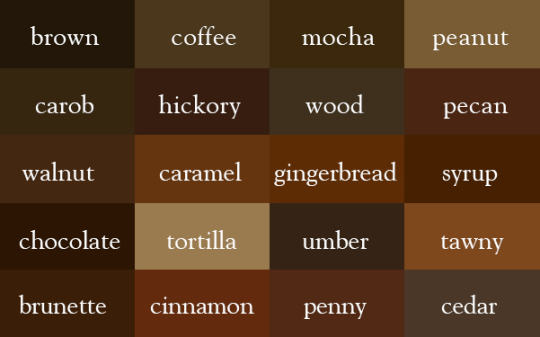
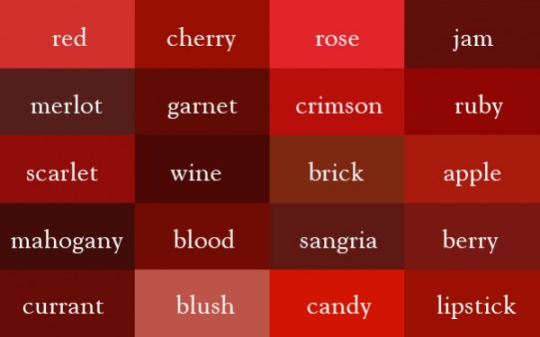
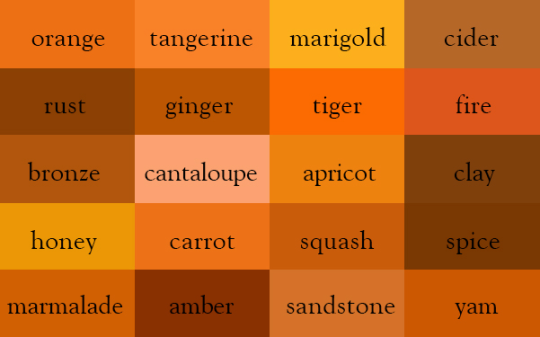
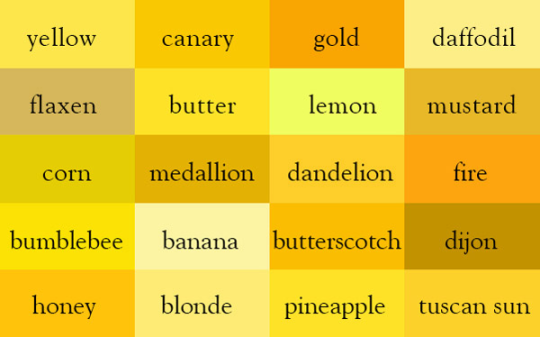


 knitting in the dark