as we all celebrate adam rippon and his brilliant performance this past week for the figure team competition at the winter olympics in pyeongchang, i want to remind the universe of the fabulous rudy galindo, a latinx HIV positive gay man who queered the figure skating world more than 20 years ago.
after winning a few junior championships, rudy got a taste of national success skating with kristi yamaguchi, when they won the US national championships in both 1989 and 1990. their partnership soon ended as kristi began her very successful career as a solo skater. rudy’s solo skating career was quite the opposite.
although surviving extreme poverty, rudy’s family had sacrificed everything to support his dream as a figure skater. during the late 80s and early 90s, rudy struggled personally as two of his coaches and his brother George succumbed to HIV. his sister laura became his coach.
after taking 8 months off from competing, the 1996 US championships were taking place in his hometown of san jose, california. rudy decided to give his skating dream one more shot and decided to compete. he would skate one of the most beautiful and most remembered long programs ever.
with thousands of people cheering for him, rudy became the oldest US national champion. he became the first out national champion. he became the first mexican-american national champion. that night, rudy became a gawd damn legend!
rudy would go on to win the bronze medal at the world championships. he retired from competing soon after but still skated professionally and chyle, he gave you performances! in april of 2000, he disclosed that he was living with HIV. he skated to “ soon in the clowns” soon after.
“HIV/AIDS is not a death sentence. you can go out there and do what you want.” rudy galindo. he has become an HIV advocate and now coaches kristi yamaguchi’s daughter. and despite not initially having the support of the skating world, rudy is now celebrated as a pioneer.
fun fact: when i was in the hospital w/ a t-cell count of 100, the woman i shared a room with, in an attempt to make me feel better, said, “you know who rudy galindo is? he is so lovely. like you, so lovely.” that shit still stays with me. “if he can survive this, so can you”
much like rudy, i survived and found that place over the rainbow to shine.
One of the largest autism journals has opted to remove the puzzle piece from their cover.
This editorial is really good. It’s been written with great care and respect and openness to a future where autistic and non-autistic people collaborate equally in the future, and #ownvoices will be heard.
I’m from the position where I didn’t grow up in Provo or a town like it, I grew up in Australia, where Mormons are a Christian minority, but that separateness still dictates everything. Everything is about us and them and the line between. I don’t think I had a single teacher that my mother didn’t make me give Books of Mormon to. Every friend that visited my home, my mother pressured me to bring to church. LDS members buy from other members, hire other members, socialise with other members, and glory in that isolation. But at the same time, there’s the incredibly toxic fishbowl of church culture. If your parents separate, for example, shunning is a very real thing. I had mothers refuse to let me touch their babies, as though family dysfunction was catching. And I was a child at the time.
Nothing was secret, either. I was abused, and all my school teachers were quietly informed, so that I was given an easier time of things. All but one. Why? He was a church member, and my mother knew that if he knew, his wife knew, and if his wife knew, the ward and even the stake knew. Anything told to the bishop was told to his wife and circulated through the congregation. Women, in particular, were ruthlessly policed, not only by the men but by each other. Anyone who couldn’t keep up with church callings, work, home and family while keeping a permanent smile pasted in place was obviously sinning somehow. All you had to do was trust in God, and that was easy, right? I read somewhere that Mormon states in the US have the highest per capita anti-depressant use. I don’t know how legit it is, but I believe it. I was medicated by sixteen, and no matter how hard I tried, I was never enough. We had one pregnancy in my high school in my age group, out of 150 kids. Our young women’s group, 25 girls aged 12-18, had about a 50% teen pregnancy rate. Hypocrites and liars and smile, smile, always smile.
And that isn’t even touching on the unspoken spectre of what would happen if you were anything but cishet/straight. In Australia, there wasn’t Evergreen, but there was always the understanding that kids who were wrong went somewhere to be fixed. I read Saving Alex last year, and all I could think was that this was what the new face of cure culture was. I knew someone online years ago who’d been through Evergreen. Out of the dozen or so who were there at the same time, he was the only one who hadn’t yet killed himself.
“For me, though, it all came down to the people I met with–the actual human beings who were coming to my office. They would come and sit down with me, and they would tell me their stories. These were good people, former pastors, youth leaders, relief society presidents, missionaries, bishops, Elder’s Quorum presidents, and they were … there’s no other way to say this. They were dying. They were dying before my eyes. And they would weep in desperation—after years, decades, of trying to do just as they had been instructed: be obedient, live in faith, have hope. They would weep with me, and ask where the Lord was. They would sob. They would wonder where joy was. As a practitioner, it became increasingly obvious: the way the church handled this issue was not just inconvenient. It didn’t make things hard for LGBTQIA people. It became more and more clear to me that it was actually hurting them. It was killing them.”
And yes, that’s what Church policy is meant to do, it’s what it’s always been meant to do. It’s meant to kill us. If we die, then we’re a sad story, designed to spread a message. We were weak, God meant for it to be, and isn’t it better this way?
The only way to win is to stay alive. Eat your anger and let it burn in your belly. Stand in that field without walls and scream long and loud, and don’t smile for anyone else’s comfort. Wear rainbows like armour and love like you’re throwing grenades. Survive, and seek happiness, and prove the bastards wrong. And that, that is why this book is so important. It’s a story so normal, so sweet and simple, about two people finding love and finding themselves, and the happy ending isn’t the one the church says is the only way. There are many roads to happiness. You might have to look long and hard to find them, but it isn’t one-size-fits-all. It isn’t predetermined. It’s individual, and unique, and beautifully, wonderfully average. That’s what the church doesn’t want queer kids to know. That’s what this book reveals, so beautifully. And I’m just so blown away that it exists, in my lifetime, and that I got to read it. It’s wonderful.
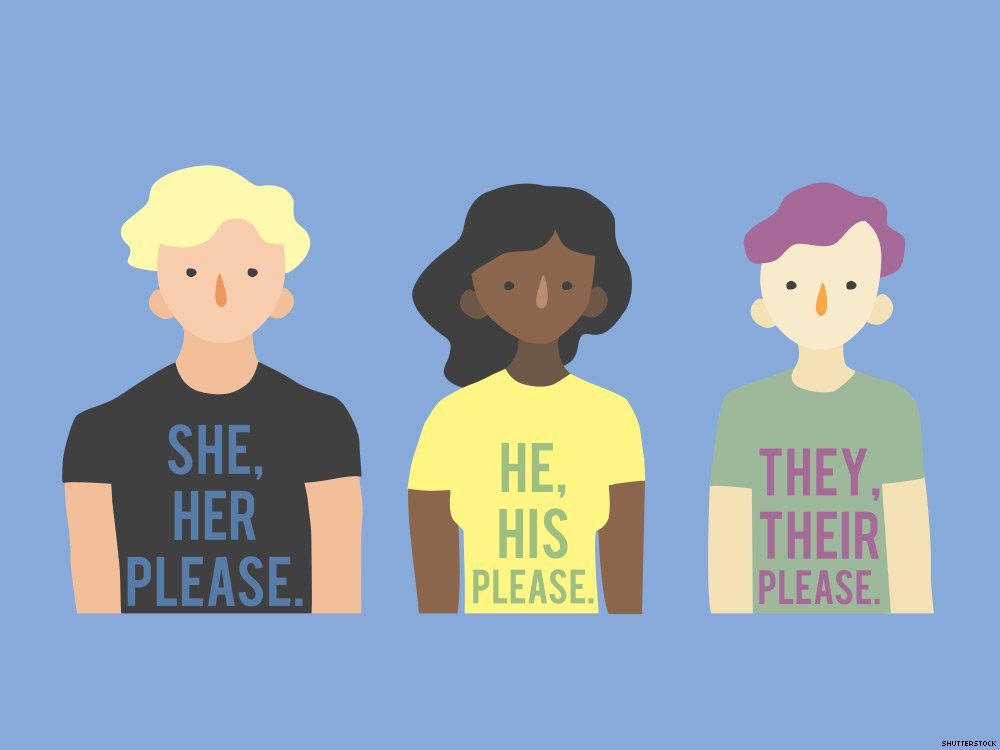
So, recently you’ve found out some big news about somebody you care about. Maybe they came out to you as transgender and/or non-binary, maybe they’ve told you that they’re changing their name and/or that they’d like to be referred to by a different set of pronouns. Maybe—hopefully!—you want to be supportive of them but you’re worried you’re going to mess up (which is an understandable fear)!
Coming out is hard and the fact that they came out to you is a big deal! You should be proud of them for taking this big step and being honest with you about who they are. Changing the way you think about someone is a process, and you will mess up at some point! However, if you really love and respect this person, you will keep trying, and eventually it will become second nature to you.
As someone who has changed my own name and pronouns, here are some things that I feel are important to keep in mind as you’re getting used to this change.
1. Use the new, correct name and pronouns all the time—even when they’re not there to hear you, even when you’re just thinking about them in your head. This is because the end goal of this process shouldn’t be to retrain yourself to call them a certain thing, it should be to think of them in a certain way. By coming out to you and asking you to use their new name and pronouns, your loved one has shared with you something very real about who they really are. You should be trying to retrain your brain to know them by this name, because it’s their real name—much realer than the one they were being forced to use before.
2. Correct yourself when you get it wrong, even if they don’t say anything. It might be tempting to hope that it just slipped through the cracks and they didn’t notice your mistake. But trust me, they noticed. Being called by the wrong name or pronouns is jarring and painful, but sometimes it’s hard to stand up for yourself and say something.
3. Don’t over-apologize when you mess up! Apologize once, correct yourself, and move on. Apologizing over and over just brings more attention to it than they probably want, and going on and on about how bad you feel for getting it wrong puts pressure on them to comfort you, when this should really be about them and how they feel.
4. Correct other people too! Like I said, it can be very hard to muster the courage to correct people, especially over and over, so having allies in my life who are willing to do that work for me is a godsend. This is a really simple way to take on a little sliver of your loved one’s burden while they’re transitioning. Even a very simple reminder like, “Please don’t forget, Jamey uses they/them pronouns!” can be super helpful and take a lot of pressure off.
5. Be sensitive not to “out” them to people they’re not out to! (This is a caveat to #1 and #4, by the way, because you have to ask them if they’re comfortable with you using their new name and pronouns in front of others.) Coming out is a nerve-racking experience and it’s common not to come out to everyone in your life at once. Outing someone before they’re ready is a terrible, stressful, and sometimes dangerous position to put someone in. Ask who they’re comfortable being out to and be very careful to respect that.
6. Be patient if they change their mind on what they want to be called. It’s really tough to figure out what name and pronouns fit you best and feel the most comfortable without “trying them on” and seeing how it feels when other people use them. Experimentation is an important part of that! If someone changes their name a few times in a row trying to find something that fits, or changes their pronouns but then changes them back, that’s just a natural part of that experimentation.
7. Remember that they’re going through something very personal. Their transition is all about them and what makes them comfortable—not about you and what you think is best. If you don’t think their new name fits them, or if you don’t think the singular they is grammatically correct, or if you think trying to remember their new name and pronouns is too hard… those are all thoughts you should keep to yourself!
Again, coming out is really tough! If your loved one has gathered the strength to come out to you, trust that this is important to them. They know best about what they need to be called to be comfortable and happy. Do your best to put their needs first when it comes to this change and before long, hearing their old name and pronouns will sound almost as wrong to you as it does to them!
When trans women are mocked and made into jokes in the media, I get very upset, and I am often told “Kay, you can’t go through life getting offended every time someone makes a joke.” And I sputter and object but they don’t hear me. So I want to be clear for once, about why the jokes make me angry.
I learned to hate myself for being transgender before I knew I was transgender. I laughed at the jokes in stand up comedy routines, and prime time sitcoms, and animated comedy shows, and in the movies, and in books, and in games, laughing at trans women for existing, about “men in dresses”, about people who “got their dicks chopped off”, and I learned to think that was worthy of ridicule.
And then a day came when I felt a pang of envy at what my female classmates were wearing and I repressed it, and felt guilty, and a day where I felt incomplete because I had no breasts and I repressed it and I felt disgusting And a day when I realized the only images of romance that made me feel anything showed two women together and I repressed it and I felt like a monster And a day when I realized I felt sick when I looked at myself in the mirror after every shower before work and couldn’t bear to look at my own face, and I hated myself. And then there came a day when I hated myself so much, and I thought I could never understand why, and so I just wanted it all to end. And it was just a miracle that I swerved my car back into my lane in time.
And all of it started with a joke that I heard on TV, and then kept hearing from all the voices from the ether, over and over and over, worming an idea into my mind before I was old enough to realize I was absorbing it, the idea that a man in a dress is funny, and that changing your body parts makes you a freak, and that women who have penises instead of vaginas are liars and hurt men. And they’re still making these jokes. And somewhere out there right now, just like all those years ago, there is a little girl in a t-shirt and cargo shorts with buzzed off hair watching the TV, hearing that joke and absorbing it without knowing it, who will someday have to pry herself apart to tear it out of her head, just like I did.
That is, if she doesn’t kill herself first.
I know this is a really heavy post but if you read it and you appreciated it, I’d appreciate it in return if you reblogged it. This is really important to me and I want people to read it and understand it. Thank you.
1,000,000x this. Read it. Then read it again.
I know it’s about racism, but it applies just as well here:
You’ve got to be taught
To hate and fear,
You’ve got to be taught
From year to year,
It’s got to be drummed
In your dear little ear
You’ve got to be carefully taught.
You’ve got to be taught to be afraid
Of people whose eyes are oddly made,
And people whose skin is a diff’rent shade,
You’ve got to be carefully taught.
I haven’t been active on here for what feels like so long, and this post is still pissing off little racists and uplifting poc and allies. Fucking love it. ❤️
From the United Nations Office of the High Commissioner for Human Rights:
“The autism spectrum should be understood from a broader perspective, including in research. We call for caution about enthusiastic attempts to find the causes of autism and ways to ‘cure’ autism through sophisticated but not necessarily ethical research. Autism as a condition is a critical challenge for modern health systems, in which we
need to ensure that the practice and science of medicine is never again
used to cause the suffering of people.
More investment is needed
in services and research into removing societal barriers and
misconceptions about autism. Autistic persons should be recognized as
the main experts on autism and on their own needs, and funding should be
allocated to peer-support projects run by and for autistic persons.”










 knitting in the dark