I was delighted to have my second comic published on The Nib yesterday! The script for this one is by Josh Trujillo, and the art is me. You can read my other Nib comic here. You can find more of my work on instagram, patreon and my website.
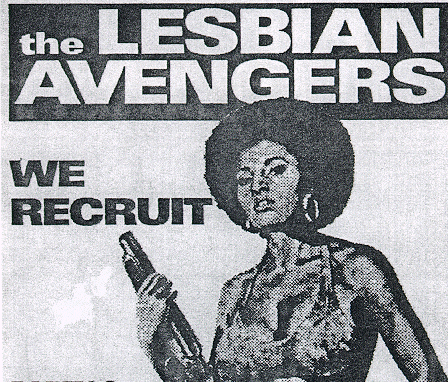
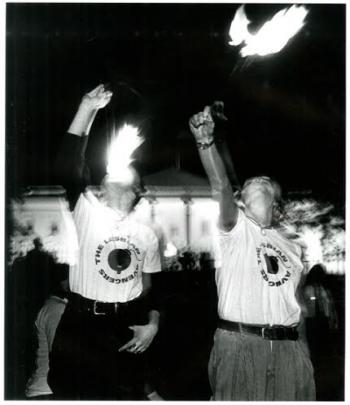
You have to read about these amazing, badass ladies. Fire eating became their symbol, here’s a blurb on its origin.
[It] grew out of tragedy. Last year, a lesbian and a gay man, Hattie Mae Cohens and Brian Mock, burned to death in Salem, Ore., after a Molotov cocktail was tossed into the apartment they shared. A month later, on Halloween, at a memorial to the victims in New York City, the Avengers (then newly organized) gave their response to the deaths. They ate fire, chanting, as they still do: “The fire will not consume us. We take it and make it our own.”
Alnwick Poison Gardens. The gardens were established in 2005 by the Duchess of Northumberland who’s affinity for the apothecary gardens inspired the collection of nearly 100 deadly and hallucinogenic plants.
I got dressed in my traditional Indian regalia, but there was a man, he was the producer of the whole show. He took that speech away from me and he warned me very sternly. “I’ll give you 60 seconds or less. And if you go over that 60 seconds, I’ll have you arrested. I’ll have you put in handcuffs.”
– Sacheen Littlefeather in Reel Injun(2009), dir. Neil Diamond.
They were MAD, CONFUSED AND PRESSED that Marlon Brando would betray White Supremacy in this way.
To this very day, they are TWISTED over this.
And when Littlefeather got up there and READ THEM FOR FILTH, they GAGGED. For eons.
So I imagine there are people like me out there who’ve never even heard of Marlon Brando and are extremely confused over why this is important.
Marlon Brando was the Don in The Godfather, and in 1973, he was nominated for and won an Academy Award for it. However, he was also a huge Natives rights activist, and boycotted the ceremony because he felt that Hollywood’s depictions of Native Americans in the media led to the Wounded Knee Incident (which I was always taught as “the second massacre at Wounded Knee” but apparently that’s not the real name). He sent Sacheen Littlefeather, an Apache Native rights activist, in his stead. Wikipedia’s article on her explains the rest:
Brando had written a 15-page speech for Littlefeather to give at the ceremony, but when the producer met her backstage he threatened to physically remove her or have her arrested if she spoke on stage for more than 60 seconds.[5] Her on-stage comments were therefore improvised. She then went backstage and read the entire speech to the press. In his autobiography My Word is My Bond, Roger Moore (who presented the award) claims he took the Oscar home with him and kept it in his possession until it was collected by an armed guard sent by the Academy.
That is what this gifset is about.
You have GOT to read up on this. The Wounded Knee Incident, Marlon Brando and Sacheen Littlefeather, Anna Mae Aquash. ALL OF IT.
Today in Computer Scientists You Haven’t Heard Of: Margaret Hamilton
This is Margaret Hamilton, standing next to one of her earlier projects: The Apollo Guidance Computer’s main operating program.
I’m going to let that sink in for a moment. Look at your image of NASA in the Apollo days. Look at miss Hamilton.
Now, I’m sure you’ve heard the story about how the computer crashed on Neil and Mike on their descent, leaving Neil to make the landing by hand. This story has only the barest grounding in reality.
During the descent, a checklist error left the rendezvous radar – normally used for keeping track of the Command Module in orbit – turned on. Radar is a computationally hungry beast, and the computer unhappily told Neil and Mike that it was being overtasked. It kept right on going, even though it was being overworked. It kept the truly important numbers – altitude, descent rate, fuel consumption – up to date perfectly as they descended, which allowed Neil to fly safely above the lunar surface to find a landing site.
So, here you have a computer, easily the most powerful computer for its size ever made as of 1969, controlling a flying machine above the lunar surface, and correctly juggling multiple real-time processing tasks by priority. This is something that modern computers, fifty years later, still struggle with. Margaret built it and got it right at the very dawn of the multi-tasking operating system. It was something done by Serious Computers – fridge-sized monsters with names like PDP-8 and System/360… and a series of tiny boxes that flew to the moon and back.
And then she went on and did other things. Ever heard the term “Software Engineering”? Margaret’s invention. More technically speaking, she’s responsible for parallel and asynchronous computing (which now is key to every supercomputer and major website), priority scheduling, end-to-end testing, and a huge chunk of human-computer interface theory.
She’s still active in software engineering today.
This is what a space wizard looks like.
In her own words:
“Due to an error in the checklist manual, the rendezvous radar switch was placed in the wrong position. This caused it to send erroneous signals to the computer. The result was that the computer was being asked to perform all of its normal functions for landing while receiving an extra load of spurious data which used up 15% of its time. The computer (or rather the software in it) was smart enough to recognize that it was being asked to perform more tasks than it should be performing. It then sent out an alarm, which meant to the astronaut, I’m overloaded with more tasks than I should be doing at this time and I’m going to keep only the more important tasks; i.e., the ones needed for landing … Actually, the computer was programmed to do more than recognize error conditions. A complete set of recovery programs was incorporated into the software. The software’s action, in this case, was to eliminate lower priority tasks and re-establish the more important ones … If the computer hadn’t recognized this problem and taken recovery action, I doubt if Apollo 11 would have been the successful moon landing it was.”
This woman programmed a computer smart enough to prioritize tasks and make sure essential functions were carried out first even if other tasks were going on – she’s the one who made the moon landing possible, more than anyone else. If her programming hadn’t been able to prioritize, the mission would’ve been aborted.
She’s also published a ton of papers and basically I’m so tired of people never hearing about all the brilliant coding women. Like, when it was first getting off the ground computer programming was a woman’s field – like they specifically looked for and hired women. There were also a ton of female mathematics BS and PhD candidates in the 30s-50s.
And for the record: all the programmers who created the first general-use computer were women. Wanna know why? The men thought actually building the computer -as in, the design of the machine itself – was more important than programming the computer – as in, actually making it work and telling it how to run, y’know, enabling it to actually be useful.
Men didn’t think programming was important so they relegated it to women, and once they realized programming was the MOST important part of computers they yanked those jobs away, made it a boy thing, and failed to highlight the huge role women played in pioneering the computer age.
Sir Nicholas Winton is a humanitarian who organized a rescue operation that saved the lives of 669 Jewish Czechoslovakia children from Nazi death camps, and brought them to the safety of Great Britain between the years 1938-1939.
After the war, his efforts remained unknown. But in 1988, Winton’s wife Grete found the scrapbook from 1939 with the complete list of children’s names and photos. Sir Nicholas Winton is sitting in an audience of Jewish Czechoslovakian people who he saved 50 years before.
In 1952, an American attaché in Moscow was innocently fiddling with his shortwave radio when he heard the voice of the American ambassador dictating letters in the Embassy, just a few buildings away. He immediately reported the incident, but though the Americans tore the walls out of the Ambassador’s office, they weren’t able to find a listening device.
When the broadcasts kept coming, the Americans flew in two technical experts with special radio finding equipment, who meticulously examined each object in the Ambassador’s office. They finally tracked the signal to this innocuous giant wooden sculpture of the Great Seal of the United States, hanging behind the Ambassador’s desk. It had been given as a gift by the Komsomol, the Soviet version of the Boy Scouts.
Cracking it open, they found a hollow cavity and a metal object so unusual and mysterious in its design that it has gone down in history as ‘The Thing’.
‘The Thing’ had no battery, no wires, no source of power at all. It was was just a little can of metal covered on one side with foil, with a long metal whisker sticking out the side. It seemed too simple to be anything.
That night the American technician slept with ‘The Thing’ under his pillow. The next day they smuggled it out of the country for analysis.
The Americans couldn’t figure out how ‘The Thing’ worked, and had to ask the British for help. After a few weeks of fiddling, the Brits finally cracked The Thing’s secret.
That little round can was a resonant cavity. If you shone a beam of radio waves at it at a particular frequency, it would sing back to you, like a tuning fork. The metal antenna was just the right length to broadcast back one of the higher harmonics of the signal.
The resonator sat right behind a specially thinned piece of wood under the eagle’s beak. When someone in the room spoke, vibrations in the air would shake the foil, slightly deforming the cavity, which in turn made the resonant signal weaker or stronger.
As the attaché discovered, you could listen to this modulated signal on a radio just like a regular broadcast. ‘The Thing’ was a wireless, remotely powered microphone. It had been hanging on the ambassador’s wall for seven years.
Today we have a name for what ‘The Thing’ is: It’s an RFID tag, ingeniously modified to detect sound vibrations. Our world is full of these little pieces of metal and electronics that will sing back to you if you shine the right kind of radio waves on them.
But for 1952, this was heady stuff. Those poor American spooks were up against a piece of science fiction.
Today I want to talk about these moments when the future falls in our laps, with no warning or consideration about whether we’re ready to confront it.
Another amazing talk by the creator of Pinboard. I first heard Maciej speak at XOXO, he blew me away. This transcript of his Webstock talk was also amazing.
Technically outside the scope of this blog, but this was way too interesting/cool not to share.
As new cases of autism have exploded in recent years—some form of the condition affects about one in 110 children today—efforts have multiplied to understand and accommodate the condition in childhood. But children with autism will become adults with autism, some 500,000 of them in this decade alone. What then? Meet Donald Gray Triplett, 77, of Forest, Mississippi. He was the first person ever diagnosed with autism. And his long, happy, surprising life may hold some answers.
This article was written 2010 and some questionable language terminology is used, but it is an interesting read despite that.
“As new cases of autism have exploded in recent years—some form of the condition affects about one in 110 children today—efforts have multiplied to understand and accommodate the condition in childhood. But children with autism will become adults with autism, some 500,000 of them in this decade alone. What then? Meet Donald Gray Triplett, 77, of Forest, Mississippi. He was the first person ever diagnosed with autism. And his long, happy, surprising life may hold some answers.”
In honor of the 45th anniversary of the Stonewall riots and LGBT Pride Month (in the US), here’s a fascinating article about lesbians during World War II, focusing on those in the Women’s Army Corps (WAC). It also includes an annotated bibliography for further research – always a bonus for history nerds like us.
/o Didn’t mean for you to get given such a hard time for a poster.
I mean, sure, it smells like smoke, but it comes by it honestly. All Australian eucalyptus burnt in my fireplace, not from toking up.
Oh god, no, it’s not your fault. They do this to me with every package I get, regardless of what it is. It didn’t smell at all! I was just like, this is a poster tube, what the FUCK do you think is inside?
Also, way too light to be packed with anything actually solid.
Hope you like it, anyway. It’s a print of an actual poster, not a mock-up. The guy who financed the mine that found that nugget went into patent medicine, and every time they reprinted the ads/posters they added a bunch more it supposedly cured. Apparently the main ingredient was actually valerian, so, not completely bogus and useful for some minor things, but certainly not the cure-all it was marketed as. Even then, people knew it was rubbish – when he tried his hand at politics, he was openly mocked for it by his peers. The State Library has an article and a picture of one of the original posters from their collection HERE.

 knitting in the dark