THE AIR SMELLS OF DELICIOUSNESS TINGED WITH SORROW
One of the few conversations I had with my Grandma after her stroke (she was affected psychologically, not physically) was about her time in London. She was a nurse in the East End during the Blitz. She said, “I remember when they hit the sugar factory. It smelt beautiful.” She drew that last word out as if transported, as if it was one of the most amazing things she’d ever experienced, in the midst of the horror she saw daily at one of the most bombarded hospitals in Britain.
And because of the internet, I know the exact date. Grandma said it burnt for at least two days before it was extinguished, sugar being a very flammable substance.
She talked about this a few days after her stroke, when the light still hurt her eyes so much she couldn’t open them, and before the psychosis developed. The sense-memory of that caramel smell was enough for her to talk to me for some minutes, coherently, about something she’d never even mentioned to her own children. (And it came about because I asked her about the Windmill Theatre, somewhere she never would have gone but would have been aware of the existence of, because I’d just seen Mrs Henderson Presents.)
Sometimes the most horrific destruction produces something hauntingly beautiful, a sense-memory you’ll retain forever.
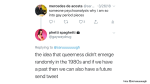
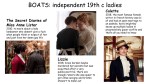
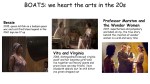
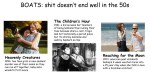
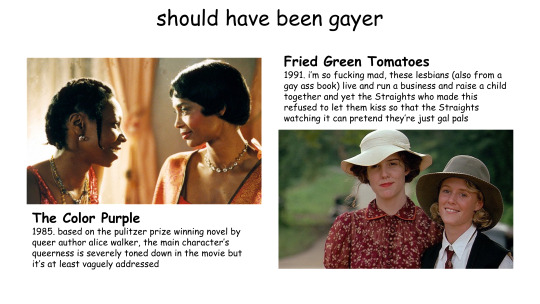
I’d like to add the English language films of Sarah Waters (Tipping The Velvet, Affinity, Fingersmith, The Night Watch) to various time periods ranging from 19th century through to 1940s, and Bend It Like Beckham to should’ve been gayer because the original endgame was Keira Knightley and Parminder Nagra as a happy sporty dyke couple and the studio said no.
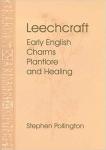
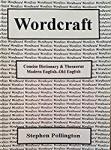
Stephen Pollington has been writing books on Anglo-Saxon England for two decades. His many published titles include works on the Old English language, military culture, healing and herblore, runes and feasting in the ‘meadhall’. He has recorded a double CD of readings in Old English.
He has lectured widely on aspects of Anglo-Saxon culture since 1991, from local history to the details of verse metre, from theories of the origins of the Germanic runes to the handling of Anglo-Saxon weaponry.
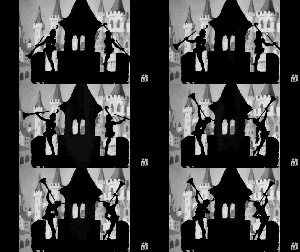
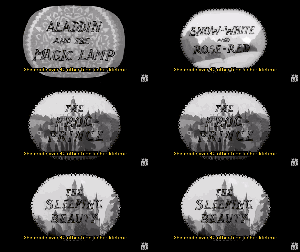
If you think Walt Disney was the first person to create a feature length animated film you’re wrong. The first person to do it was a woman – Lotte Reiniger. See more about how her silhouette stop motion worked.
I want more girl byronic figures, I want more reckless self-important girl libertines leaving a string of broken men in their wake while dashing off poems and getting into obscene wagers. I want girl characters that are just on the charming mercurial side of unlikeable arseholes and definitely morally questionable, but always game for a revolution.
You need a biopic of Jane Digby, is what you need. That woman was all kinds of awesome.
She was born into a rich Georgian family, renowned as a great beauty, married a well-known lord and politician when she was still a teenager, and was no more than a few years into her marriage when she caused scandal by eloping with an Austrian prince. She divorced her husband in a case that shocked the entire British establishment, moved to Germany and became the lover of the Bavarian King after her prince abandoned her. She then married a Bavarian baron before embarking on an affair with a Greek count. The baron and the count fought a duel over her, before the baron let her go, and they remained friends to the end of their lives.
Jane then later divorced her Greek count, had an affair with the Greek king (who was the son of the Bavarian king she had earlier had an affair with), took up with a Thessalian bandit general, left him when he was unfaithful to her with her maid – and ran away to Syria, with the maid still in service. Because men come and go, but a good lady’s maid is forever, right?
Then whilst travelling in the Middle East she fell in love with a Bedouin Sheik half her age, married him and lived with him to the end of her days, passionately in love, half the year living in goats-hair tents in the desert and half in a palatial villa in Damascus. She was fluent in nine languages, lived as an independent wealthy woman, beholden to no-one, and flaunted the values of society with impunity – and not one of the men she was involved with seemed to think of her with anything less than affection, even after she’d loved ‘em and left ‘em.
What she means: I understand the Chronicles of Narnia was at its heart a fairytale with theological analogies for children. But why did Lewis never address how they had to adapted to life on Earth again. Why does no one talk about how the Pevensies had to grow up with a kingdom of responsibilities on their shoulders, only to return to Earth and be children. Take Lucy, she was youngest and perhaps she adapted more quickly-but she had the memories and mind of a grown woman in an adolescent body. Edmund literally found himself in Narnia, he went from a selfish boy to mature and experienced man. He found a purpose and identity through his experiences to come back as just Edmund, Peter’s younger brother. Did people wonder why the sullen, sour boy came back, carrying himself like a wisened king? Did his mother wonder why he and Peter suddenly got along so well, why they spent so much time together now? And Susan, the girl of logistics and reason came back with a difference in her. She learned how to be a diplomat and ambassador, Susan the Gentle had to live to endure not-so-gentle circumstances. She had the respect she wanted, only to be just another teen girl. And Peter, he entered the manhood and maturity he so wanted. He earned the responsibility and stripes he yearned for. He learned to command armies and conduct the menial tasks demanded of a king to rule a nation. But he came back, appearing to be just anther glory-hungry boy. Not to mention the PTSD they must have struggled with. Especially Edmund. How often did he wake up in a sweat, screaming a sibling or comrade’s name? His parents believe it’s the war, but it’s an entirely different one he has nightmares about. How often did he have trouble with flashbacks and mood swings? And how many times did he and Peter sit over a newspaper or near the radio listening to reports on the troops. How often did they pour over lost battles and debate better strategies. Did their parents ever wonder why they seemed to understand flight war so well? How long was it before they stopped discussing these things in front of people? Why does no one talk about this???
Why am i fucking crying
Why does no one talk about how the Pevensies had to grow up with a
kingdom of responsibilities on their shoulders, only to return to Earth
and be children
It’s not addressed because it’s understood. It was the shared experience of the generation. You are describing coming home from World War One, battle wearied and aged beyond belief, but walking around in the body of a youth. C S Lewis went to the front line of the Somme on his nineteenth birthday and went back to complete uni in 1918 after demob.
Not seen it with this very very pertinent addition before
Your players are faced with an ancient Sumerian curse! However, since the early ancient Sumerian language was only used for recording tax debts, it turns out to actually be an ancient Sumerian bill.
and therefore they need to get hold of some ancient Sumerian coinage and bring it to the ruins of the ancient Sumerian tax office, because the Sumerians had a pleasingly direct way of preventing tax evasion, namely horrifying curses.
well I don’t have any coin but I have these copper ingots, lovely copper ingots, from a very reputable merchant, never heard a word said against him, very thorough with his paperwork, anyway they’re guaranteed pure copper and proper weight, so can I pay my tax with those?
I just want everyone to take a step back for a second and really think about how we’re using the most powerful knowledge tool in history to make jokes about a specific dude who lived almost 4000 years ago.
it’s fuckin wonderful, is what it is.
Ea-nasir has been dead for 4700 fraudy fraudy years.
“I remember the turning point moment. I was watching an episode of Buffy the Vampire Slayer with my roommates, and it went into a backstory flashback set in high medieval Germany. ”Why are you sighing?” one asked, noticing that I’d laid back and deflated rather gloomily. I answered: ”She’s not of sufficiently high social status to have domesticated rabbits in Northern Europe in that century. But I guess it’s not fair to press a point since the research on that hasn’t been published yet.” It made me laugh, also made me think about how much I don’t know, since I hadn’t known that a week before. For all the visible mistakes in these shows, there are even more invisible mistakes that I make myself because of infinite details historians haven’t figured out yet, and possibly never will. There are thousands of artifacts in museums whose purposes we don’t know. There are bits of period clothing whose functions are utter mysteries. There are entire professions that used to exist that we now barely understand. No history is accurate, not even the very best we have.”
PSA to all you fantasy writers because I have just had a truly frustrating twenty minutes talking to someone about this: it’s okay to put mobility aids in your novel and have them just be ordinary.
Like. Super okay.
I don’t give a shit if it’s high fantasy, low fantasy or somewhere between the lovechild of Tolkein meets My Immortal. It’s okay to use mobility devices in your narrative. It’s okay to use the word “wheelchair”. You don’t have to remake the fucking wheel. It’s already been done for you.
And no, it doesn’t detract from the “realism” of your fictional universe in which you get to set the standard for realism. Please don’t try to use that as a reason for not using these things.
There is no reason to lock the disabled people in your narrative into towers because “that’s the way it was”, least of all in your novel about dragons and mermaids and other made up creatures. There is no historical realism here. You are in charge. You get to decide what that means.
Also:
“Depiction of Chinese philosopher Confucius in a wheelchair, dating to ca. 1680. The artist may have been thinking of methods of transport common in his own day.”
“The earliest records of wheeled furniture are an inscription found on a stone slate in China and a child’s bed depicted in a frieze on a Greek vase, both dating between the 6th and 5th century BCE.[2][3][4][5]The first records of wheeled seats being used for transporting disabled people date to three centuries later in China; the Chinese used early wheelbarrows to move people as well as heavy objects. A distinction between the two functions was not made for another several hundred years, around 525 CE, when images of wheeled chairs made specifically to carry people begin to occur in Chinese art.[5]”
“In 1655,Stephan Farffler, a 22 year old paraplegic watchmaker, built the world’s first self-propelling chair on a three-wheel chassis using a system of cranks and cogwheels.[6][3] However, the device had an appearance of a hand bike more than a wheelchair since the design included hand cranks mounted at the front wheel.[2]
The invalid carriage or Bath chair brought the technology into more common use from around 1760.[7]
In 1887, wheelchairs (“rolling chairs”) were introduced to Atlantic City so invalid tourists could rent them to enjoy the Boardwalk. Soon, many healthy tourists also rented the decorated “rolling chairs” and servants to push them as a show of decadence and treatment they could never experience at home.[8]
In 1933 Harry C. Jennings, Sr. and his disabled friend Herbert Everest, both mechanical engineers, invented the first lightweight, steel, folding, portable wheelchair.[9] Everest had previously broken his back in a mining accident. Everest and Jennings saw the business potential of the invention and went on to become the first mass-market manufacturers of wheelchairs. Their “X-brace” design is still in common use, albeit with updated materials and other improvements. The X-brace idea came to Harry from the men’s folding “camp chairs / stools”, rotated 90 degrees, that Harry and Herbert used in the outdoors and at the mines.[citation needed]
“But Joy, how do I describe this contraption in a fantasy setting that wont make it seem out of place?”
“It was a chair on wheels, which Prince FancyPants McElferson propelled forwards using his arms to direct the motion of the chair.”
“It was a chair on wheels, which Prince EvenFancierPants McElferson used to get about, pushed along by one of his companions or one of his many attending servants.”
“But it’s a high realm magical fantas—”
“It was a floating chair, the hum of magical energy keeping it off the ground casting a faint glow against the cobblestones as {CHARACTER} guided it round with expert ease, gliding back and forth.”
“But it’s a stempunk nov—”
“Unlike other wheelchairs he’d seen before, this one appeared to be self propelling, powered by the gasket of steam at the back, and directed by the use of a rudder like toggle in the front.”
Give. Disabled. Characters. In. Fantasy. Novels. Mobility. Aids.
If you can spend 60 pages telling me the history of your world in innate detail down to the formation of how magical rocks were formed, you can god damn write three lines in passing about a wheelchair.
Signed, your editor who doesn’t have time for this ableist fantasy realm shit.















 knitting in the dark