If you ever assumed that the oldest university in the world is in
Europe or China, then kindly come again because it’s not. The oldest
standing university on earth is in Morocco. Known as Al-Qarawiyyin, the
university was founded in 859 AD by a young princess from Tunisia,
Fatima al-Fihri.
The university has been recognized by UNESCO and the Guinness World
Records as the oldest existing, continuously operating university, as
well as, the first institution to issue educational degrees.
WorldRugby Haka time at the Women’s Rugby World Cup 2017 semi-final
i like how they must have said to the white menbers at some point “yeah becky yall gon do this too get up we all have to learn”
Actually most New Zealanders (white and non white) learn this as children at school and with their friends. Like Kiwi culture’s really a mix of indigenous and non-indigenous elements so there’s not that much cultural segregation as you would have in the states
I’m white as a chicken and mayo sandwich and I learned two or three haka at school. If I’d joined the kapa haka group it would have been more and certainly wouldn’t have been the only white person doing so.
I’ve never seen women doing the Haka before and holy shit I’m in love
When I did kapa haka at school, lo these many years ago now (ok about 15), I was taught that it was tikanga in most iwi that women didn’t do the haka (as men don’t do the karanga at pōwhiri). That seems to be changing, which is neat, but it’s very much something that’s up to wahine Māori to change and Pākehā women to follow their lead on, like the varying tikanga on women speaking on the marae.
(but also v agreed that it is incredibly common for Pākehā in NZ to have learned at least some elements of Māori performing arts/kapa haka, if they’re under 40; if a white person in NZ has never done that they’re either an adult immigrant or exclusively attended posh private schools, and even the last might not apply these days. The average non-Māori-speaking NZer understands 80-100 words of te reo. American norms of segregation do not apply.)
There are still some pretty racist towns in New Zealand where they don’t teach any Māori culture even in public schools (mostly rural towns in the South Island). I didn’t learn any Te Reo until I moved to Wellington, and my brother who only just left my old high school had pretty much the same experience.
We’re a lot better than the US, but there’s still more cultural segregation than there should be.
I’m married to someone who grew up in a rural South Island town, so yeah, I know. But ‘rural South Island towns’ only represent about 10% of the NZ population, so this is an exception, not a norm; the experience for the overwhelming majority of Kiwi kids is one where they get at least some exposure to te reo and tikanga Māori as part of the public education system.
(For non-NZers, rural North Island towns are often more Māori than the cities, not less; the majority of the pre-colonisation Māori population lived in the northern half of the North Island.)
That captain looks like a female Dwayne The Rock Johnson and I love her.
My primary school was very big on Maori culture, everybody learned a bit and we also had Maori Club if you wanted to learn more. It was long enough ago that girls Did Not Do The Haka, but one day at practice the boys just weren’t in the mood and were being very low-energy. So our (awesome!) teacher said that we girls should show them how it was meant to be done.
We’d never formally been taught a haka, but of course we’d been there for all the boys’ practice sessions, so we knew it. I swear half of us girls in Maori Club had just been waiting for our chance, and the rest were swept up in the enthusiasm. We roared. We stamped so hard the gym floor vibrated. We got right up in their faces and had them backing away and when we finished there was a breathless pause… and then the teacher just said, “See? Do that.” XD XD XD
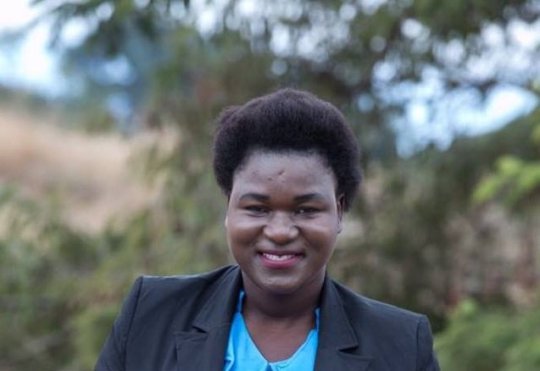
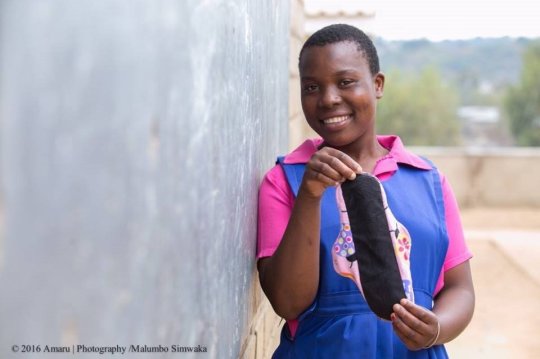
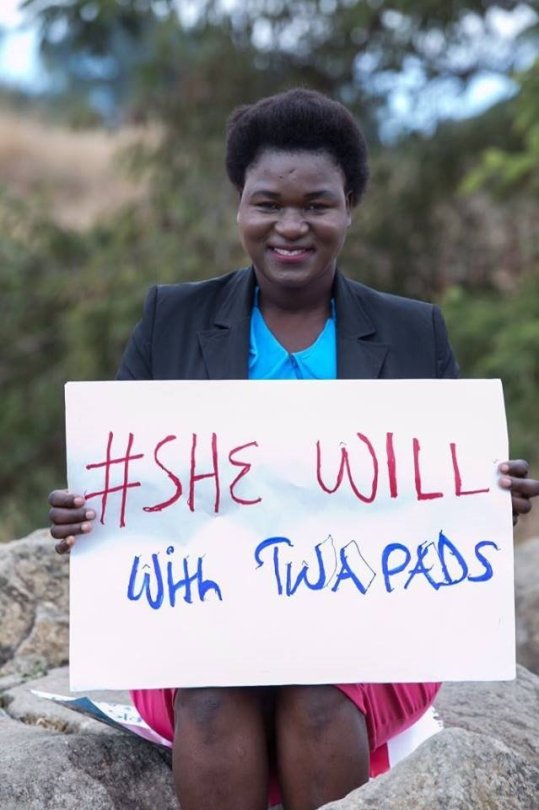
For Trinitas Kunashe, like many girls in Malawi, getting her period was unexpected, unexplained and a burden for her everyday life. Often, girls who do not have access to pads prefer to stay home and out of school for the duration of their periods.
But Trinitas is changing that with her amazing new invention:
Made from bright and comfortable locally-sourced fabrics, Tina Pads are a hit amongst girls in her community. They are waterproof, practical and fun – and most importantly reusable.
Determined to make sure no girl is forced to miss school because of her period, Trinitas is a passionate believer in the power of education to change lives.
I get so happy when i see people reblogging this version bc i had to dig through dozens of thousands of reblogs on mobile to make sure people find out about this incredible project… The world needs this!
Reusable pads should be a thing in our societies too because the regular ones are a big enviromental problem.
Shame, especially when it comes in the form of internalized ableism, is so difficult to shed. But I keep reminding myself that I am enough. — Kat (@Ask_anAspergirl) September 11, 2014 Before our se…
This is a response to the awful, pooooor aduuuuuuults Cracked article about working with “troubled children”. I worked in a classroom for kindergarten-4th graders with an educational classification of Behavior Disorder/Emotionally Disturbed. I loved them all, each and every one. Most of them had been through more by age 7 than anyone should be ever. This post is dedicated to them. I hope they are all safe & healing now.
This is for those who don’t understand what executive function is. Even I know what it is after reading this and I can relate to this so much, especially in organization, impulse, and self-monitoring!
It doesn’t mention autism, but I know autistic people tend to be poor at executive functioning.
Appreciation for all the Autistics out there who have executive functioning problems/issues with processing, remembering and organising information and as a result often feel like they frustrate others and themselves.
This is me, so much, and why I flunked high school despite testing as gifted. 😦
Thank you for this reminder. I’m stressing myself out tonight, can’t sleep, anxiety at maximum levels.
We started school this week.
Such a simple sentence. No big thing. Kids in many places did recently or will soon. But this doesn’t mark days of freedom, backpacks, books, and bullies. Because I homeschool three of my kids.
The two middle kids are profoundly gifted. They’re also neuroatypical. The youngest is also gifted, and different yet again. They just don’t “fit,” and there aren’t a lot of educational choices where I am. So I keep them home and work my tail off to keep up with their driving need to LEARN.
And it’s hard! Some days it’s the most rewarding thing I’ve ever done. A lot of days I hate it. I’ve given up most of my plans for my life beyond kids, because I’ve got more than a decade of this ahead of me (unless miracles happen, but being practical…).
I needed this reminder. That there’s nothing wrong with these gorgeous little people. That there’s nothing wrong with me. That they deserve to grow up never feeling off or outside or broken or wrong or damaged.
To everyone who grew up the way I did, to everyone who has struggled and fought and still not been “good enough,” you’re amazing. You’re strong, and you’re perfect, and you’re all the constant reminder of why, and your stories give me strength for one more day.
I think I would have thrived in a homeschool environment, mainly because my mother is a teacher who taught us kids to read using home-made phonics cards long before we went to kindergarten. Unfortunately, it wasn’t an option for us, especially in the era before Asperger’s studies were known about in the West. I wasn’t diagnosed until I was an adult.
I have so much respect for people who homeschool their neurodiverse kids. I have known multiple internet friends over the years who have made the choice to do it. They are raising such amazing kids in an environment so precisely tailored to their kids’ strengths and learning styles, I can’t help but feel awed (and not a little jealous). I know it doesn’t suit all kids or all families, but those who I know who are doing it are doing it well and for the right reasons and their kids are thriving in a way that they possibly wouldn’t (or didn’t) in a conventional setting.

 knitting in the dark