vanshira:

oatmealberrychipnutcookies:

snugglebunchesofeyes:

lifesgrandparade:

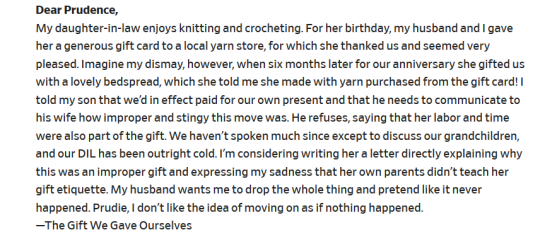
Imagine typing out this letter and not stopping halfway and thinking “Hmmm, this makes me sound like the worst human being in the world.”

I need prudence’s reply. I think we all need to hear Prudence’s reply.

THIS WAS PRUDENCE’S REPLY:

But nothing did happen. You received a thoughtful gift that cost more time than money. That’s it! If someone gives you a present you don’t like, you smile and say, “Thanks, how thoughtful,” and then stash it in the back of your closet. You don’t ask your kid to complain to the gift-giver via backchannel. It’s fine if you like to give expensive presents—and can afford to do so—but that’s not the only way to show someone that you care. Even if you don’t like knitwear, your daughter-in-law spent countless hours over the course of a half-year working on something very detailed for you, and you say yourself it was a lovely bedspread. Whether she got the yarn with the gift card you gave her or spent her own money is beside the point; you’re acting as if she re-gifted something when that clearly wasn’t the case. Your daughter-in-law’s gift was thoughtful and intricate; yours was financially generous and relatively generic. There would be no reason to compare the two if you hadn’t insisted on doing so in the first place.

You are grown adults with plenty of money; if there’s something you want for yourself, go ahead and buy it—this kind of petty scorekeeping around gift-giving is barely excusable when little children do it. Writing her a letter to express “sadness” that her own parents didn’t teach her proper etiquette would be wildly inappropriate, out of line, and an unnecessary nuclear option. And it’s a guaranteed ticket to make sure you see and hear about your grandchildren way less than you do now. You still have time to salvage this relationship—don’t die on this hill. Let it go, apologize for your churlishness, and take yourself shopping if you want a pricey gift this year.

Found it.

A reminder that knitters spend a long, long time and put a lot of thought into what they choose to make you. If you act like this woman, you’re not ‘knitworthy’. And example – I have a circular blanket I made, a red star in the centre with ridged silver grey surrounding it. A Bucky blanket, for my partner. She loves it. My sister-in-law, who also knits and crochets, asked if I could make one like it for her four year old, as he adored wrapping himself in it. I did, in Iron Man colours, to a diameter of almost two metres. Within a week or two of gifting it, their six year old had torn holes in it in three or four places, making it unusable. Six year old had also asked for ‘a green horse’ for Christmas. I found and purchased the crochet pattern, and reworked it twice until it was the right size and looked appealing. In less than a week, every single limb including the head had been torn from the body. I repaired the horse and returned it, but the blanket, which took hundreds of hours, I have more or less decided to use the yarn to make squares for blankets for the homeless instead. I will not knit or crochet for the kids until they’re teenagers, because the older child gleefully and remorselessly destroying something that took me so much time and effort (without parental intervention, no less) has made it not worth my time.

How can we help people with disabilities? For example, autistic people who see the world differently.*

iamshadow21:

* This question was posted on another social media site. What follows is my answer.

1) Treat us as people, not as less. An adult or an older child being talked to in a baby voice is not on, regardless of how their disability presents. Talk to us at age appropriate level. If we’re interested in something, get excited about it with us, rather than telling us we’re boring. Sharing our interest is our way of trying to communicate. We love a thing. We’re opening up ourselves to you. It might not be how you’re used to doing a conversation, but it is meaningful communication, and it means we want to share that excitement with you. That’s a big deal. Recognise it.

2) Our diagnosis is none of your business, unless we feel comfortable talking to you about it. It’s really none of your business if we were diagnosed as a kid, an adult, self-diagnosed, or questioning. It’s none of your business if our autism has changed its presentation as we’ve aged. It’s really none of your business if you think you know what autism looks like, and we don’t match up with your preconceptions. And please, if we’re verbal, dressed appropriately, out in public and unattended, it’s not a compliment to tell us how well we’re doing. We’re just as autistic when we’re ‘passing’ as when we really aren’t. Passing for normal is not an achievement, it’s a monumental effort that most of us feel long term health effects from if we have to do it daily. Allowing natural autistic behaviours is something a lot of us have to relearn in adulthood to manage our anxiety. An adult flapping, pacing, tapping, or playing with a stim toy isn’t being babyish or playing at autism, they’re trying to take care of themselves. Don’t stare or tut or tell us we’re embarrassing you. (Telling us our Tangle is awesome and you want one is totally okay, though.)

3) Our sex life is none of your business, unless we’re in a sexual relationship with you. Just because we’re autistic doesn’t mean we can’t consent. That said, if there’s someone being weird and intimate with us when we’re a minor and they’re in a position of authority, make sure we’re okay. Compliance based therapies heavily used with autistic children (like ABA) make autistic children very vulnerable to sexual abuse, because they teach children to do things that are uncomfortable, painful or unnatural to them to please adults for rewards.

4) Make a conscious choice to be okay with difference, be it physical, intellectual, neurological, whatever. This might be harder than it sounds. Disability can come with mobility needs, sensory needs, dietary needs and routine based needs. It might require communication devices or sign language, or a picture-based communication system, even if to you, the person ‘seems’ verbal. It’s rare for an autistic person to have no difficulties with verbal communication, and if you’ve only ever seen them happy or relaxed, you might not know they need to use their phone to communicate when they’re upset or overwhelmed. Also, non verbal autistics might have a couple of words, scripted speech, or echolalic phrases they can use when conditions are right, even though they primarily use AAC or sign. Verbal ability isn’t a fixed thing. It fluctuates. Be patient if we’re struggling. It’s more frustrating for us than for you.

5) Everyone’s disability is unique. No two autistic people are the same. Likes, dislikes, sensitivities, strengths, difficulties. An autistic person might be sensory seeking, non verbal, highly intelligent, low anxiety, highly organised. They might be highly verbal, high anxiety, low executive function, mild intellectual disability, dyslexic, supertaster. They could have any combination of interests and personality traits, and come combined with a whole array of other disabilities. Don’t think because you know one autistic person, you know every autistic person. We’re individuals.

6) Listen to us, not to Autism Speaks or ‘autism moms’. Our experience is unique to us. It cannot be fully understood by a neurotypical bystander, regardless of how close that relationship is. Read books by autistic people (there are a lot). Donate to the Autistic Self Advocacy Network or Autistic Women & Nonbinary Network. Don’t light it up blue, put puzzle pieces on your car, or spread anti-vax rhetoric (which is fake science and basically hinges on the fact that a lot of people would rather have dead kids than autistic ones). Watch documentaries produced by autistic people about their experiences. Check out neurowonderful’s Youtube series Ask An Autistic.

7) Don’t assume we’re straight. Don’t assume we’re cisgender. Don’t assume we don’t understand the complexities of our multifaceted identities. Gender and sexuality variance is present in autistic people, just as it is in neurotypical people. In fact, there’s actually evidence there is a higher proportion of transgender, nonbinary and genderqueer people in the autistic community than in the genpop. Our experience of sexuality and gender is also viewed through our lens of autistic experience, and there are terms created specifically by autistic people to encapsulate this (like gendervague).

8) Don’t assume we can’t have relationships, friendships, and families outside of our parents and siblings. Don’t assume we can’t be awesome parents. Don’t assume we can’t make informed choices about our bodies and procreation. Autistic people have been here as long as people have been here. I’m from a multigenerational family myself, with both male and female autistic people, stretching back at least five generations, anecdotally (further than that, highly probably, but we don’t have the information).

9) Don’t think we’d be better off dead. This is why adults and children are murdered by parents and caregivers every year without legal repercussions. Our lives have value. The next time you see a news article where a parent cries about killing their child, don’t rationalise that ‘it must be so hard’ to be taking care of us. That’s essentially saying we’re responsible for our own murder, and that it was justifiable homicide. MURDER IS MURDER. If you want to campaign for better respite and support in your area, GREAT, but don’t give parents who murder their children a free pass. Parenting is hard, but people have a choice, and we must stop allowing people who make the choice to kill to get away with murder. Whenever it happens, someone else, somewhere, thinks murder is an appropriate solution to the problem of a disabled person needing care in their life, and another irreplaceable, unique person dies.

10) We have the right to exist in public spaces. Yes, that autistic person having a meltdown might be disrupting your shopping and hurting your ears. I can guarantee their life is harder than yours right then. Have some compassion (not pity) and give them some space. We have the right to be in restaurants, in theatres, in libraries and in schools. If you think a person with a disability being in those spaces is going to have a negative effect on your children, maybe you should think about your parenting, rather than about segregation.
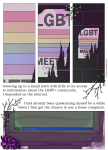
Hey it took less than twenty-four hours for me to get this as a reply. (This is only an excerpt. I didn’t include the link to the inspiration porn/curebie video he linked to, or him talking about his cousin’s four year old with Rett Syndrome.)

I totally agree with everything written to this thread (‘Iamshadow’, you are brilliant) but we must never forget the families, carers and supporters who, in many cases, put their lives on hold purely due to love.

What follows is my response.

I wasn’t suggesting forgetting the families and caregivers, I was saying that the voices of disabled people need to be amplified. If you go to a bookshop or a library, there are dozens of books by parents about their experiences with disabled children and family members. There are far fewer by disabled people themselves. This isn’t because the books aren’t being written, it’s because parental accounts get picked up by major publishing houses far more often than personal accounts do, and therefore, get much more exposure and larger print runs, and that’s wrong.

It should be possible for a disabled person to say ‘listen to me’ without nondisabled people around them chiming in to say ‘yes, but listen to us, too!’

Parents choose to put their lives on hold to parent every day. You don’t know, going in, if your child is going to be disabled (unless you choose to adopt an older, disabled child, as in the excellent parental account Reasonable People). Choosing to parent out of love shouldn’t be seen as this monumental thing if the child turns out to be disabled. You chose to parent. Why is love seen as a greater sacrifice when the kid has special needs? It’s ableism. As though loving us is naturally harder, because we’re different, because we take up more space in people’s lives.

How can you help us? Consciously question that. Question why there are books on the shelf about friendship aimed at autistic and other neurodiverse kids called things like It’s So Much Work to Be Your Friend. What kind of weight are you putting on the disabled person when so much of what parents and caregivers focus on is the effort, the ‘extra’ love they require? Believe me, disabled people know. Nondisabled people never let us forget.

How can we help people with disabilities? For example, autistic people who see the world differently.*

* This question was posted on another social media site. What follows is my answer.

1) Treat us as people, not as less. An adult or an older child being talked to in a baby voice is not on, regardless of how their disability presents. Talk to us at age appropriate level. If we’re interested in something, get excited about it with us, rather than telling us we’re boring. Sharing our interest is our way of trying to communicate. We love a thing. We’re opening up ourselves to you. It might not be how you’re used to doing a conversation, but it is meaningful communication, and it means we want to share that excitement with you. That’s a big deal. Recognise it.

2) Our diagnosis is none of your business, unless we feel comfortable talking to you about it. It’s really none of your business if we were diagnosed as a kid, an adult, self-diagnosed, or questioning. It’s none of your business if our autism has changed its presentation as we’ve aged. It’s really none of your business if you think you know what autism looks like, and we don’t match up with your preconceptions. And please, if we’re verbal, dressed appropriately, out in public and unattended, it’s not a compliment to tell us how well we’re doing. We’re just as autistic when we’re ‘passing’ as when we really aren’t. Passing for normal is not an achievement, it’s a monumental effort that most of us feel long term health effects from if we have to do it daily. Allowing natural autistic behaviours is something a lot of us have to relearn in adulthood to manage our anxiety. An adult flapping, pacing, tapping, or playing with a stim toy isn’t being babyish or playing at autism, they’re trying to take care of themselves. Don’t stare or tut or tell us we’re embarrassing you. (Telling us our Tangle is awesome and you want one is totally okay, though.)

3) Our sex life is none of your business, unless we’re in a sexual relationship with you. Just because we’re autistic doesn’t mean we can’t consent. That said, if there’s someone being weird and intimate with us when we’re a minor and they’re in a position of authority, make sure we’re okay. Compliance based therapies heavily used with autistic children (like ABA) make autistic children very vulnerable to sexual abuse, because they teach children to do things that are uncomfortable, painful or unnatural to them to please adults for rewards.

4) Make a conscious choice to be okay with difference, be it physical, intellectual, neurological, whatever. This might be harder than it sounds. Disability can come with mobility needs, sensory needs, dietary needs and routine based needs. It might require communication devices or sign language, or a picture-based communication system, even if to you, the person ‘seems’ verbal. It’s rare for an autistic person to have no difficulties with verbal communication, and if you’ve only ever seen them happy or relaxed, you might not know they need to use their phone to communicate when they’re upset or overwhelmed. Also, non verbal autistics might have a couple of words, scripted speech, or echolalic phrases they can use when conditions are right, even though they primarily use AAC or sign. Verbal ability isn’t a fixed thing. It fluctuates. Be patient if we’re struggling. It’s more frustrating for us than for you.

5) Everyone’s disability is unique. No two autistic people are the same. Likes, dislikes, sensitivities, strengths, difficulties. An autistic person might be sensory seeking, non verbal, highly intelligent, low anxiety, highly organised. They might be highly verbal, high anxiety, low executive function, mild intellectual disability, dyslexic, supertaster. They could have any combination of interests and personality traits, and come combined with a whole array of other disabilities. Don’t think because you know one autistic person, you know every autistic person. We’re individuals.

6) Listen to us, not to Autism Speaks or ‘autism moms’. Our experience is unique to us. It cannot be fully understood by a neurotypical bystander, regardless of how close that relationship is. Read books by autistic people (there are a lot). Donate to the Autistic Self Advocacy Network or Autistic Women & Nonbinary Network. Don’t light it up blue, put puzzle pieces on your car, or spread anti-vax rhetoric (which is fake science and basically hinges on the fact that a lot of people would rather have dead kids than autistic ones). Watch documentaries produced by autistic people about their experiences. Check out neurowonderful’s Youtube series Ask An Autistic.

7) Don’t assume we’re straight. Don’t assume we’re cisgender. Don’t assume we don’t understand the complexities of our multifaceted identities. Gender and sexuality variance is present in autistic people, just as it is in neurotypical people. In fact, there’s actually evidence there is a higher proportion of transgender, nonbinary and genderqueer people in the autistic community than in the genpop. Our experience of sexuality and gender is also viewed through our lens of autistic experience, and there are terms created specifically by autistic people to encapsulate this (like gendervague).

8) Don’t assume we can’t have relationships, friendships, and families outside of our parents and siblings. Don’t assume we can’t be awesome parents. Don’t assume we can’t make informed choices about our bodies and procreation. Autistic people have been here as long as people have been here. I’m from a multigenerational family myself, with both male and female autistic people, stretching back at least five generations, anecdotally (further than that, highly probably, but we don’t have the information).

9) Don’t think we’d be better off dead. This is why adults and children are murdered by parents and caregivers every year without legal repercussions. Our lives have value. The next time you see a news article where a parent cries about killing their child, don’t rationalise that ‘it must be so hard’ to be taking care of us. That’s essentially saying we’re responsible for our own murder, and that it was justifiable homicide. MURDER IS MURDER. If you want to campaign for better respite and support in your area, GREAT, but don’t give parents who murder their children a free pass. Parenting is hard, but people have a choice, and we must stop allowing people who make the choice to kill to get away with murder. Whenever it happens, someone else, somewhere, thinks murder is an appropriate solution to the problem of a disabled person needing care in their life, and another irreplaceable, unique person dies.

10) We have the right to exist in public spaces. Yes, that autistic person having a meltdown might be disrupting your shopping and hurting your ears. I can guarantee their life is harder than yours right then. Have some compassion (not pity) and give them some space. We have the right to be in restaurants, in theatres, in libraries and in schools. If you think a person with a disability being in those spaces is going to have a negative effect on your children, maybe you should think about your parenting, rather than about segregation.

rogueoftimeywimeystuff:

The belief that someone might be faking it means they don’t deserve help is one of the greatest social ills put upon us as a society.

Let me explain:

With every charity there will be at least 5% of people (more or less depending) that look like they don’t deserve to benefit from the charity due to their clothes, phone, ability to walk, looking cis or het, looking white or any outwards sign of privilege that they might seem to show.

In actuality, about 0.01% of these people either do not qualify for the charity in question or actually have the privilege that they look like they have.

An example:

You are at a food bank. Mrs. White come up in a shiny Escalade with 4 kids all piled in the back. She comes in to get food for her, her husband, and her 4 kids. Immediately after they leave, you hear one of the other volunteers criticizing the fact that these “obviously well off individuals” are coming in for food.

In reality: Mrs. White’s husband was in a car accident that cost him his ability to walk for long periods of time, the car, and his ability to work. The insurance company paid for the escalade (a dream car of the husband’s) and disability allows them to keep the house, but Mrs. White is barely able to work part time to take care of her husband and the kids. They rely on the donations at the food bank to get by.

Another example:

You see a pair of people walking in the pride parade that look cis and het and are being affectionate at Pride. You hear someone snarl about invaders.

In reality: They are both trans or Bi and this is their first Pride being out.

Another example:

A person on the internet talks about their experience with Autism and how it means they have a hard time working. They’re self-diagnosed.They’ve gotten jeering comments about how they’re faking it and making it hard for real Auties.

In Reality: They’re autistic but can’t afford a professional diagnosis because they have a hard time working and they showed atypical traits as a kid.

I could go on and on.

I’ve heard it all. From just about anyone. But mostly? Mostly I hear it from people who think that if you don’t fit the stereotype you don’t deserve help. That you must be in the very lowest place you can be before you get help. But that’s simply not how it should be.

We should reach kids before they’re on the verge of death, someone before they’re on the street, a person before they’re grasping at the end of their rope. And if we were able to do this, maybe more people would feel comfortable asking before they had no other option than to beg for the scraps that society can leave them.

Society’s greatest illness isn’t those who fake need, but those who think that that tiny bit of people who don’t need the help asking for it is worth forsaking everyone else who does.

commandtower-solring-go:

wolfendreams:

ajanigoldmane:

visibilityofcolor:

geek-baits:

visibilityofcolor:

i-want-cheese:

awkwardblacknerd:

I still think Moana deserved an Oscar for this part

To me, the moral of Moana is that only women can help other women heal from male violence. 

The movie starts with the idea that the male god who wronged Te Fiti must be the one to heal her. This seems to make a certain sort of intuitive sense in that I think we all believe that if you do something wrong you should try to make it right. But how does he try to right it? Through more violence. Of course that failed. 

It was only when another woman, Moana, saw past the “demon of earth and fire” that the traumatized Te Fiti had become (what a good metaphor for trauma, right?) and met her with love instead of violence that she was able to heal. Note that they do the forehead press before Moana restores the heart, while Te Fiti is still Te Kā. Moana doesn’t wait for her beautiful island goddess to appear in all her green splendor before greeting and treating her as someone deserving of love.

Moana is only able to restore the heart because Te Kā reveals her vulnerability and allows Moana to touch her there. Maui and his male violence could only ever have resulted in more ruin.

@i-want-cheese

This is a touching anaylisis but it’s extremely racist as
not only have you completely ignored the whole point of Maui’s character, but
have managed to incriminate a man of color on a tumblr wide scale.

First of all, Maui’s character does not represent male
violence—it represent human greed. Maui did not take the heart because he is a
man, and Te-Fiti is a woman. He took it because the humans asked him to. The humans asked Maui to do everything for them,
not caring how greedy or selfish their requests were and in the end it was Maui
who suffered for it. Maui is supposed to show the flaw of humanity.

This has nothing to do with sexism, it has everything to do
with the fact that Maui gave and gave to the humans who could never stop being
greedy. Moana giving the heart back wasn’t supposed to be her “making up” for
the male violence that Maui represents. It was her making up for the greed she
and her people represent. It was touching however because yes it was an
important moment between two women, but you missed the point and you’ve come off
racist and very disrespectful to a culture at that.

Yes, Moana is an empowering movie for women, especially
women of color. But the last thing this is about is Maui being an abuser/rapist
or whatever. That is not the point of Maui’s character.

And to assume so is racist. You are a white woman completely
dehumanizing a man of color and ruining his image because of how you see him. And other white girls here
on tumblr have happily picked up that image and interpretation and rolled with
it. Maui’s character is now seen as an abuser or as someone who is violently
because of white girls here on tumblr—which it doesn’t surprise me. (an in a
historical context this is even MORE racist because white women would always
make Maui’s people out to be savages and abusers etc., simply because of the
color of their skin and their culture so yea, this is bad).

You can see the morality of the movie however you want, but
do not be disrespectful toward a character and in this case a culture.

@i-want-cheese Please don’t write this off as another “butthurt comment” or
“male guilt”, because this is really messed up. I see how you’re brushing off
some other people’s comments and I honestly hope that you don’t see mine the
same way because this is an issue I think you need to face/realize. You are
being racist and brushing it off isn’t going to change that.

the 

@visibilityofcolor THANK YOU FOR THIS. As a Polynesian woman, reading that post and other replies painting Maui and even Tui as aggressive and violent men had me feeling some type of way, especially since White people have always regarded Polynesian men in such a manner.

I’ve thought about replying because I’m tired of seeing these kind of “Moana is a feminist movie” posts collect hundreds of notes despite the fact that these posts always conveniently fail to mention Pasifika people, but it always stressed me out, so thank you.

As an aside, Maui taking Te Fiti’s heart and Moana restoring it was symbolic of environmental preservation. Because the people who inspired Moana–Pasifika people, not just Polynesian–are always affected first when the environment is threatened. Our way of life is greatly influenced by the ocean and we believe that if you take care of the ocean, she will take care of you.

You’re very welcome.

This is insight for me as well (as I wasn’t aware that the movie also came fro the culture of the Pasifika people), and does give a very important perspective. I do agree with you, this movie is about environmental restoration, not some white fem bullshit.

I tried over and over again to explain to I-want-cheese about how she was being racist, but she responded by blocking me and other poc who called her out (even other polynesian people). People to this day are still trying to explain that she is being racist and culturally insensitive but she ignores us.

I’ve made a few posts about this, hoping that people realize how problematic it is to agree with i-want-cheese.  Explaining to her racist white ass that this was problematic was like explaining to a bird. She wouldn’t listen and neither would have of her racist friends.

Sorry you’ve had to see this on your dash every so often, but I’m glad my portion of the post is starting to get around. (reblogged to the wrong blog at first lols)

Also i-want-cheese is a transphobe and means trans women when she says male violence. All around bad post i-want-cheese and bless you ppl for giving us more cultural context for this.

Honestly, I was touched by
i-want-cheese’s post the first time I read it, but I admit, I had a hard time imagining Maui as essentially… a rapist… I never once imagined him as anything but someone who endlessly tried to please everyone, striving constantly to create a perfect impression of himself (much like many men of color I’ve met in my life). As a white person I also admit I have no context for Polynesian culture outside of what very, very little I researched after seeing this movie, but I recognize solid character writing, and Maui was just as much of a victim in this movie as
Te Fiti

was. I’ll always reblog this when it hits my dash.

What’s more the point falls apart when you identify the fact that the films frames no one as an antagonist. Tamatoa would meet this point traditionally since he’s a ‘bad guy’ but doesn’t play a big enough role in the film for it to really count. The three characters who fit the role of a typical antagonist (those who oppose the goals of the protagonist (the person who’s actions push the narrative forward)) would be Chief Tui on the Island, Maui in the opening scene, and Te Kā for the majority of the film. Even Maui after he steals Moana’s boat. However, each of them is misrepresented in some way. Tui just wants to ensure the safety of his people long into the future. Maui wants to be loved. Te Kā wants what was stolen. And ultimately each becomes resolved. There are no bad people in Moana, just conflicting motivations. And even in the case of

Te Kā, I don’t think her actions were voluntary.

Which I ultimately believe is the basis for the story outside of Moana’s know yourself. Moana is about the inter connectivity and complexity of growing up. Its about learning that the people who you think fit into simple archetypes don’t. Be it your parents, you heroes, or a literal God. There is complexity to everything. 

The use of Antagonist as a trope in film is used as a representation of a child’s perception of evil. But the film allows for nuance to be discovered as the film continues. And through Moana and the kindness and freedom she represents, each ‘antagonist’ is able to move on from their struggle and find their own piece.

So its absolutely unfair to label anything that happens in the film as a metaphor or symbol of male violence, because nothing that takes place in purely violence. Or something that isn’t resolved through complex characterisation. Maui didn’t take the heart knowing what it would do. He wanted to help the people who revered him and gave him the only validation he could get. But when we did realise it the error of his ways and found that validation within himself, he did everything in his power to make up for that mistake.