In one of the most interesting moments in his memoir, [jewelry thief Bill Mason] sees that architecture can be made to do what he wants it to do; it’s like watching a character in Star Wars learn to use the Force.
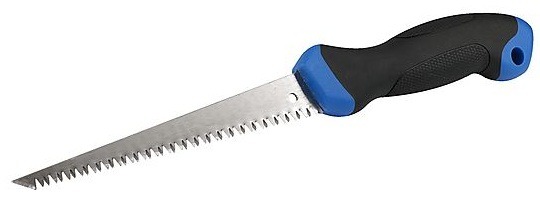
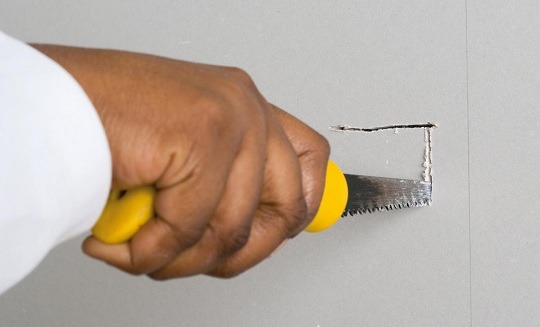
In a lengthy scene at a hotel in Cleveland that Mason would ultimately hit more than once in his career, he explains that his intended prize was locked inside a room whose door was too closely guarded for him to slip through. Then he realizes the obvious: he has been thinking the way the hotel wanted him to think—the way the architects had hoped he would behave—looking for doors and hallways when he could simply carve a new route where he wanted it. The ensuing realization delights him. “Elated at the idea that I could cut my own door right where I needed one,” he writes, Mason simply breaks into the hotel suite adjacent to the main office. There, he flings open the closet, pushes aside the hangers, and cuts his way from one room into the other using a drywall knife. In no time at all, he has cut his “own door” through to the manager’s office, where he takes whatever he wants—departing right back through the very “door” he himself made. It is architectural surgery, pure and simple.
Later, Mason actually mocks the idea that a person would remain reliant on doors, making fun of anyone who thinks burglars, in particular, would respect the limitations of architecture. “Surely if someone were to rob the place,” he writes in all italics, barbed with sarcasm, “they’d come in as respectable people would, through the door provided for the purpose. Maybe that explains why people will have four heavy-duty locks on a solid oak door that’s right next to a glass window.” People seem to think they should lock-pick or kick their way through solid doors rather than just take a ten-dollar drywall knife and carve whole new hallways into the world. Those people are mere slaves to architecture, spatial captives in a world someone else has designed for them.
Something about this is almost unsettlingly brilliant, as if it is nonburglars who have been misusing the built environment this whole time; as if it is nonburglars who have been unwilling to question the world’s most basic spatial assumptions, too scared to think past the tyranny of architecture’s long-held behavioral expectations.
To use architect Rem Koolhaas’s phrase, we have been voluntary prisoners of architecture all along, willingly coerced and browbeaten by its code of spatial conduct, accepting walls as walls and going only where the corridors lead us. Because doors are often the sturdiest and most fortified parts of the wall in front of you, they are a distraction and a trap. By comparison, the wall itself is often more like tissue paper, just drywall and some two-by-fours, without a lock or a chain in sight. Like clouds, apartment walls are mostly air; seen through a burglar’s eyes, they aren’t even there. Cut a hole through one and you’re in the next room in seconds.
~ Geoff Manaugh, A Burglar’s Guide to the City
@copperbadge, maybe a book to add to your to-read pile, if you haven’t read it already. Seems like your jam. 🙂
Would anyone like me to write up my mega spread? It’s a full deck spread applicable to both 78 and 79 card decks (I developed it using the Fountain tarot hence the extra position). I love big complex spreads and this is obviously my biggest!! Lmk if you’d like the positions written out!!
It is enormous. But the space it’s going into used to have a spa bath (broken) mounted in it, so we had space to get something we could stretch right out in.
My brother recently did his whole bathroom except for the electrical (which is illegal w/o an electrician license) the other month, while working, packing to move interstate, and preparing for our whole family New Zealand holiday. I think he learnt most stuff from youtube. I also think he was an idiot. If he wanted to do it, he should have done it six months earlier. Seems like he managed most things fine, though, even if he didn’t sleep for about a month.
Today we’re brunching on some of the most intricate and beautiful fruit pies we’ve ever seen. Seattle-based home baker Lauren Ko arranges long, thin strips of dough, finely sliced fruits, and nuts into complex lattices and other elaborate designs.
“I’m driven by color and pattern, so I’m constantly brainstorming color combinations and geometric patterns that I think I can replicate with pie dough [and] fruit,” she explains. “What I create during a particular baking session is also often informed by produce that is in season and what’s currently in my fridge. My final products are generally happy accidents.”
Follow Lauren Ko on Instagram to check out many more of her mouthwatering works of pie art.



 knitting in the dark