Tag: body image
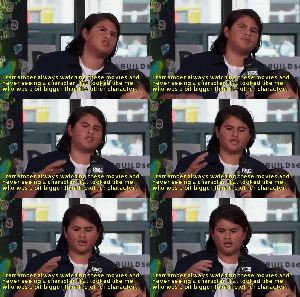
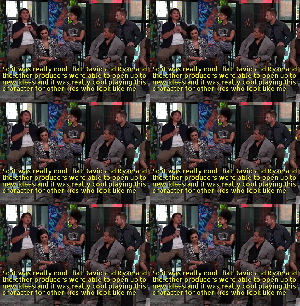
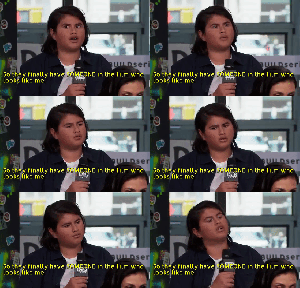
Julian Dennison is out here preaching about the importance of body diversity and representation in the media and I’m honestly so here for it.
“Deadpool is a quirky universe, which is all about being outside of the box, unlike a normal superhero film,” he says, adding that he’s always been confident and comfortable with his body image. “For me, personally, it’s really cool to play someone who other people can finally look at it and see that a bigger person can portray this awesome character.” [x]
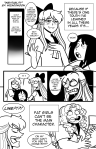
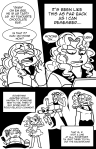
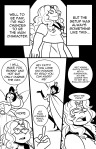
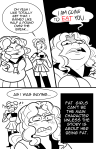

“Inevitability”A very bitter comic by me.
200 notes? I’m so proud
Hilda by Duane Bryers
I’ve always wanted to do shoot based on this!
Still my fave
I love how in the first pic she’s all, “awww it won’t fit anymore.”
And then in the next, “LOL JK BITCH I DO WHAT I WANT.”
The Histoire de Curbes, Pulp Fashion Week Show(lle-de-France, France)
it’s nice to see people who look more like me on my dash.
I love to see the celebration of all women’s bodies.
Gorgeous.
This photoset is dedicated to the people who have been sending me anonymous asks lately about how cute I am, about how nice my makeup looks in my videos, and about how they feel less-sparkly in comparison. The first two things are really nice to hear and I always appreciate sweet messages, but the last thing is sad to hear, especially from fellow chronically ill people and people with sensory issues.
These no-makeup selfies were all taken within the last twelve months. It’s important to keep in mind that I spend about an hour doing my makeup before filming my Ask an Autistic episodes, so the internet is really only ever seeing the prettiest, least-tired/sick looking version of myself. It’s the same way for lots of youtubers.
Most often I live in pyjamas, Marvin’s old t-shirts, and oversized sweatshirts, with messy hair and without a stitch of makeup to conceal the dark circles under my eyes or lengthen my eyelashes. And even in these selfies I am smiling and posed in a flattering way, so if we were speaking in person right now, I would look even farther from my appearance in my videos.
I am Amythest whether I am wearing makeup or not. Both versions are the “real me”, and I’m generally okay with how I look either way, but my youtube self is carefully crafted to be very feminine and fall in line with societal standards of beauty. I don’t look like that even three days out of the week. Please don’t compare yourself (or what kind of hygiene/beauty regime you can manage) to other people, especially not me. It’s so important to love yourself, or at least not be tearing yourself down. The world will do enough of that for us.
You are all super and great and cute, and I love you!
“Image Credit: Carol Rossetti
When Brazilian graphic designer Carol Rossetti began posting colorful illustrations of women and their stories to Facebook, she had no idea how popular they would become.
Thousands of shares throughout the world later, the appeal of Rosetti’s work is clear. Much like the street art phenomenon Stop Telling Women To Smile, Rossetti’s empowering images are the kind you want to post on every street corner, as both a reminder and affirmation of women’s bodily autonomy.
"It has always bothered me, the world’s attempts to control women’s bodies, behavior and identities,” Rossetti told Mic via email. “It’s a kind of oppression so deeply entangled in our culture that most people don’t even see it’s there, and how cruel it can be.”
Rossetti’s illustrations touch upon an impressive range of intersectional topics, including LGBTQ identity, body image, ageism, racism, sexism and ableism. Some characters are based on the experiences of friends or her own life, while others draw inspiration from the stories many women have shared across the Internet.
“I see those situations I portray every day,” she wrote. “I lived some of them myself.”
Despite quickly garnering thousands of enthusiastic comments and shares on Facebook, the project started as something personal — so personal, in fact, that Rossetti is still figuring out what to call it. For now, the images reside in albums simply titled “WOMEN in english!“ or ”Mujeres en español!“ which is fitting: Rossetti’s illustrations encompass a vast set of experiences that together create a powerful picture of both women’s identity and oppression.
One of the most interesting aspects of the project is the way it has struck such a global chord. Rossetti originally wrote the text of the illustrations in Portuguese, and then worked with an Australian woman to translate them to English. A group of Israeli feminists also took it upon themselves to create versions of the illustrations in Hebrew. Now, more people have reached out to Rossetti through Facebook and offered to translate her work into even more languages. Next on the docket? Spanish, Russian, German and Lithuanian.
It’s an inspiring show of global solidarity, but the message of Rossetti’s art is clear in any language. Above all, her images celebrate being true to oneself, respecting others and questioning what society tells us is acceptable or beautiful.
"I can’t change the world by myself,” Rossetti said. “But I’d love to know that my work made people review their privileges and be more open to understanding and respecting one another.””
From the site: All images courtesy Carol Rossetti and used with permission. You can find more illustrations, as well as more languages, on her Facebook page.
Oooh. I reblogged a partial version of this recently but I didn’t know how many more there were! I LOVE these!


“By far, one of the best scenes in the book is where Kaling writes about the photo shoot she and Office co-star Ellie Kemper did for People’s Most Beautiful issue. When the stylist brought a trailer full of size zero gowns, Kaling found herself crying in the children’s bathroom of the public school where the photo shoot was happening. In the bathroom stall, she discovered a smear of what looked like excrement and a child’s graffiti: “This school is bulls–t!” which made her a) laugh and b) demand that the stylist alter one of the gowns to fit her. In the end photo, she’s smiling in a gorgeous fuchsia dress that the stylist had to rip down the back and alter with canvas. Looking at beautiful Kaling, though, you’d never know. It’s a sweet moment of chubby girl victory.” (via afterellen)
This is the story that truly made her my hero.
 knitting in the dark