things I wish autism research actually tried to figure out:

acemindbreaker:

fictions-stranger:

adventures-in-asexuality:

absynthe–minded:

  • why caffeine works for some of us, but not all, and even then it often depends on the way you take it and the dosage
  • how come all of us have gastrointestinal problems?
  • addendum to the above: what exactly are our gastrointestinal problems? are we genetically more likely to have autism be comorbid with gluten sensitivity/colitis/IBS/lactose intolerance/whatever else or is it something completely different? is it psychosomatic? the fuck
  • okay but how does being sensory-seeking work. and what does stimming do to your brain. what neurological function are we facilitating with flapping hands and rocking back and forth and spinning? wouldn’t it be great if we had a serious long-term study of the brain on stimming?
  • are you more likely to be autistic and LGBT?
  • what are things we do better than neurotypicals?

but no it’s always “how do we train the animals to be something they’re not” or “but what made you this way??” or “Time To Find A Cure”

  • why do we all have sleep disorders
  • what’s up with the joint problems
  • and the faceblindness
  • what are the communication patterns here? how come I can meet one autistic person and immediately grok how they communicate, and be confused by another, but all neurotypicals are confusing? what’s going on with that?
  • how much of what we currently recognise as ‘autistic symptoms’ are actually ptsd symptoms? or autistic ptsd symptoms?

ALL. OF. THIS.

OK, so I decided to check out which of these had been researched and what they found.

Caffeine – not much, but this study looks interesting. It suggests that if you’re not a regular caffeine consumer, caffeine might temporarily make you act less autistic.

Oh, hey, this study has a potential answer to both caffeine response and sleep problems! There’s apparently an enzyme that affects both caffeine and melatonin metabolism.

GI issuesthis study didn’t find a link. The rate of GI issues was 9% for both autistic and NT children. The most common GI issues for both groups were food intolerance, usually lactose intolerance.

This study found a much higher prevalence of GI issues in autistic kids (17%), although they didn’t compare them with NTs. They also suggest that there may be a link between regression and GI issues, and confirm yet again that the MMR vaccine has nothing to do with autism. The most common GI issue they found was constipation, followed by diarrhea and food allergies.

This study compared GI issues between autistic kids and NT siblings. They found that 83% of the autistic sample and 28% of their siblings had at least one possibly-GI-related symptom. They also give data on specific GI symptoms, such as gaseousness (54% of autistics and 19% of siblings), abdominal discomfort (44% of autistics and 9% of siblings), and so forth. They found 20% of autistics and 2% of siblings had three or more poops per day, 32% of autistics and 2% of siblings had consistently watery poops, and 23% of autistics and none of their siblings had large changes in consistency. Also, apparently parents felt that 49% of the autistics and none of the siblings had particularly foul-smelling poops. And another for the sleep question – this study found 51% of autistics and 7% of siblings had sleep problems, with sleep problems being more common in autistic kids with GI issues.

Stimming and Sensory-Seeking – I couldn’t find much. This study I found is interesting, but it’s about more OCD-like compulsions, not actually stimming.

Oh, here’s something. A big detailed review of neurophysiological findings of sensory processing in autism.

LGBT – I’ve written up stuff about this elsewhere, but in short, autistic people, especially AFAB autistics, are definitely more likely to be asexual, bisexual, kinky and trans. Some relevant studies here, here, here, here, here, here, and here, and there’s plenty more to be found.

Autistic Strengths – Well, Laurent Mottron and his team, including autistic rights advocate Michelle Dawson, have done a lot of research on what they term ‘enhanced perceptual functioning’, which they theorize explains the Block Design peak sometimes seen in autistic people. (Block Design is one of the subtests of the Weschler’s IQ test, and autistic people often show a relative strength on this test relative to other subtests on this test.) In general, I highly recommend looking at their research. It really shows what can happen when an autistic person gets involved in autism research.

This study by a different research team finds that children gifted in realistic still-life drawing have higher rates of repetitive behavior typical of autism (though none of their sample were actually autistic), and show similar visuospatial profiles to autistic kids.

This study finds that perfect pitch is associated with autistic traits. On the AQ, musicians with perfect pitch scored higher on the imagination and attention-switching subscales than musicians without perfect pitch and non-musicians. This study found a subset of autistic kids have extremely good pitch perception, with no relationship to musical training.

People in STEM fields are more likely to be autistic or have autistic relatives, especially mathematicians. (Which probably comes as no surprise to anyone who’s spent time in the math department of any university.) This study also finds that autistic kids tend to be better at math.

Sleep – as a couple studies above mentioned, sleep issues in autism could be related to melatonin metabolism or GI issues. This study found that 53% of autistic kids, 46% of kids with intellectual disabilities and 32% of NT kids have sleep problems. Autistic kids are both slower to fall asleep and more likely to wake up early than NT kids.

This study found a correlation between autistic traits and sleep problems in autistic kids. Repetitive behavior is related with being slower to get to sleep and not getting as many hours of sleep per night; communication problems are related to being slower to get to sleep, not getting as much sleep, and parasomnias (night terrors, restless leg syndrome, etc); and social differences are related to being slower to get to sleep, not getting as much sleep, waking up at night, parasomnias and breathing problems while sleeping.

This study found a strong correlation between sleep problems and sensory hypersensitivity among autistic kids. And this study found that autistic and/or intellectually disabled kids showed strong correlations between poor sleep, anxiety and behavior problems.

And this study found that 67.9% of autistic kids have sleep problems, and parents of kids with sleep problems were under more stress. Boys and younger children had more sleep problems.

Joint problemsThis study found that people with Ehlers-Danlos Syndrome, a connective tissue disorder that causes joint hypermobility, were more likely to be autistic. (And also to have mood disorders and attempt suicide.)

This study suggests that people with joint hypermobility have larger amygdala and various other brain structural differences, which was correlated with anxiety and higher sensitivity to internal body sensations. And this study found that 31.5% of people with ADHD and 13.9% of NTs have benign joint hypermobility syndrome.

FaceblindnessThis study confirms that prosopagnosia (faceblindness) is more common among autistic people, with 67% having some degree of facial recognition difficulties.

This study reviews three theories about why autistic people have prosopagnosia, and concludes that the most likely of the three theories is the idea that avoiding eye contact impairs face recognition.

This study found that autistic people are slower to notice faces in scenes, and pay less attention to faces.

The last two questions I’m not really sure where to start.

growing up autistic / growing up gaslit

theoriginalmkp:

I.

this is the first lesson you learn:
you are always wrong.

there is no electric hum buzzing through the air.
there is no stinging bite to the sweetness of the mango.
there is no bitter metallic tang to the water.

there is no cruelty in their laughter, no ambiguity in the instructions, no reason to be upset.
there is no bitter aftertaste to your sweet tea, nothing scratchy about your blanket.

the lamps glow steadily. they do not falter.

II.

this is the second lesson you learn:
you are never right.

you are childish, gullible, overly prone to tears.
you are pedantic, combative, deliberately obtuse.
you are lazy, unreliable, never on time.

you’re always making up excuses, rudely interrupting, stepping on people’s shoes.
you’re always trying to get attention, never thinking about anyone else, selfish through and through.

it’s you that’s the problem. the lamps are fine.

III.

this is the third lesson you learn:
you must always give in.

mother knows best. father knows best.
doctor knows best. teacher knows best.
this is the proper path. do not go astray.

listen to your elders, respect your betters, accept what’s given to you as your due.
bow to the wisdom of experience, the education of the professional, the clarity of an external point of view.

what do you know about lamps, anyway?

autasticanna:

“uwu but if there was a cure for autism nobody would force you to-

Bullshit. Yes the fuck they would.

Want to get hired? Oh, you have autism? Well, we can’t hire you unless you get cured.

Want to get paid? Oh, we’re legally allowed to pay you less because you’re autistic. We can pay you a reasonable amount when you get cured!

Need accommodations? Why don’t you just get cured instead? 

You know, you wouldn’t need all this therapy and assistance if you just got cured. You should just get cured!

We don’t need special care programs for autism! There’s a cure available! Just get it!

This isn’t covered by your healthcare because autism is a pre-existing condition, sorry!

My child was autistic and we didn’t want him to be, so we cured him! He didn’t want or ask for it, but we did! 

Look, autism can’t be cured. But if it could, that cure would would absolutely not be a choice. It would just be disguised as optional. 

Look at the danger already for people of colour, disabled people, women, nonbinary people, transpeople, etc. if they are labelled noncompliant by medical or benefits services. Tell me not consenting to be ‘cured’ wouldn’t land you in it. Tell me that they wouldn’t make being ‘cured’ conditional for lighter sentencing in the court system, the way some courts still, in 2018, make sterilisation an ‘option’ for people charged with repeat offences. Tell me they wouldn’t exclude uncured autistic people from public housing, education and support services. Tell me again, and then go and look at history. See if you can convince yourself it won’t happen again, when we have Nazis marching in the streets and eugenicists running for election who openly call for murder of disabled people because they’re a drain on resources. Tell me that if there was a cure, it wouldn’t become a genocide.

Heads up minors with Autism on this website

strangerdarkerbetter:

insertgempunhere:

The Stimming tag is full of Porn.

Please be aware.

Since this stuff doesn’t bother me too much, I went through the tag and reported as many posts as I can.

Unfortunately, as I’ve discovered when searching for stim toys online, stim is used in a pornographic sense to refer to electric stimulation so we may continue to see porn infiltrating the tag.

I would suggest finding other tags to use

This is an unfortunate case of dual usage, not an appropriation, so please don’t give hate to porn or adult blogs over this. It’s been a word commonly used in the kink communities for at least a decade, probably longer. It’s something to be aware of, but not a territory where there can only be one. Kink has an equal claim. Tag your stuff accordingly.

rogueoftimeywimeystuff:

The belief that someone might be faking it means they don’t deserve help is one of the greatest social ills put upon us as a society.

Let me explain:

With every charity there will be at least 5% of people (more or less depending) that look like they don’t deserve to benefit from the charity due to their clothes, phone, ability to walk, looking cis or het, looking white or any outwards sign of privilege that they might seem to show.

In actuality, about 0.01% of these people either do not qualify for the charity in question or actually have the privilege that they look like they have.

An example:

You are at a food bank. Mrs. White come up in a shiny Escalade with 4 kids all piled in the back. She comes in to get food for her, her husband, and her 4 kids. Immediately after they leave, you hear one of the other volunteers criticizing the fact that these “obviously well off individuals” are coming in for food.

In reality: Mrs. White’s husband was in a car accident that cost him his ability to walk for long periods of time, the car, and his ability to work. The insurance company paid for the escalade (a dream car of the husband’s) and disability allows them to keep the house, but Mrs. White is barely able to work part time to take care of her husband and the kids. They rely on the donations at the food bank to get by.

Another example:

You see a pair of people walking in the pride parade that look cis and het and are being affectionate at Pride. You hear someone snarl about invaders.

In reality: They are both trans or Bi and this is their first Pride being out.

Another example:

A person on the internet talks about their experience with Autism and how it means they have a hard time working. They’re self-diagnosed.They’ve gotten jeering comments about how they’re faking it and making it hard for real Auties.

In Reality: They’re autistic but can’t afford a professional diagnosis because they have a hard time working and they showed atypical traits as a kid.

I could go on and on.

I’ve heard it all. From just about anyone. But mostly? Mostly I hear it from people who think that if you don’t fit the stereotype you don’t deserve help. That you must be in the very lowest place you can be before you get help. But that’s simply not how it should be.

We should reach kids before they’re on the verge of death, someone before they’re on the street, a person before they’re grasping at the end of their rope. And if we were able to do this, maybe more people would feel comfortable asking before they had no other option than to beg for the scraps that society can leave them.

Society’s greatest illness isn’t those who fake need, but those who think that that tiny bit of people who don’t need the help asking for it is worth forsaking everyone else who does.

I got my copy of this yesterday, watched it this evening, and I loved it. It’s not a film with an overblown, fantasy finale. It’s a film about having the freedom to live your best life, and the freedom to explore exactly what that means, in your own time. There’s a quiet kind of triumph to Michelle’s journey, and that’s more real and precious than any artificial ableist narrative of normality.

allstoriesarereal:

puddlecomic:

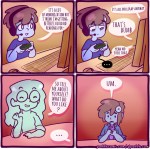
if you’ve been trained to to dislike yourself for enjoying anything due to years of being told you’re annoying clap your hands 👏👏👏

if I listed out every particular instance that was met with negativity enough for me to stop feeling comfortable talking about it, this comic would be like 50 panels.

[ more comics | Patreon | Tapastic ]

Okay so this is so important. Please don’t ignore this post if you think it doesn’t apply to you, because even if it doesn’t, it could be happening to someone you care about. And it may seem like nothing, it feels like it’s nothing for a while but after hearing people say just how boring or dumb something you love is… well, you start to believe it. Before you realise it you find yourself not finishing stories or sentences because there’s a voice in your head saying “shut up, no one cares” and just like that those things you used to love so much lose their spark. They no longer make you as happy as before, everything is tainted and you hate yourself for not fitting in, for not being as interesting as everyone else. Because if everyone says you aren’t then they must be right?
But no! It’s not true and you tell yourself that everytime, but it’s not enough. You have to learn to love the things you used to love again.

In my case, I’ve missed out on so many experiences because of this. I had given up trying to make people see the things I like aren’t a waste of time. But I’m slowly trying to claim them back.

So please, if someone you know ever tells you something about them or about what they like please listen to them. Even if you don’t really enjoy the thing they are telling you about, if they matter to you please listen. That simple action could mean the whole world to them.

This happens to so many people, but especially to autistic people. We are told this, often daily, by those around us, that we are boring, that our interests are boring or inappropriate or ‘too intense’. That we should be other than we are to be interesting to other people, or we’ll never be acceptable or have friends. This is done by family, friends, teachers and medical professionals ‘for our own good’, and is seen by society as benevolent, not abusive.

Guess what.

Our interests are great. They give us joy. They often enable us to have friends all over the world. They make a messed up, scary existence less horrible.

And being acceptable to neurotypical bullies just isn’t the grand prize they seem to think it is. We are wonderful just the way we are.