In the Italian city of Verona, local street artist Cibo paints colorful wall art full of appetizing food over neo-nazi graffiti (x)
“It’s my civic duty, and my right … honestly I feel like have a right to cover [erase] these kinds of things. Since I’m doing a public form of art, I have to take care of my city and … it’s like my own art gallery. How do you explain a swastika to a child? How do you do it? It’s impossible. It’s a racist message. And it’s not okay .”
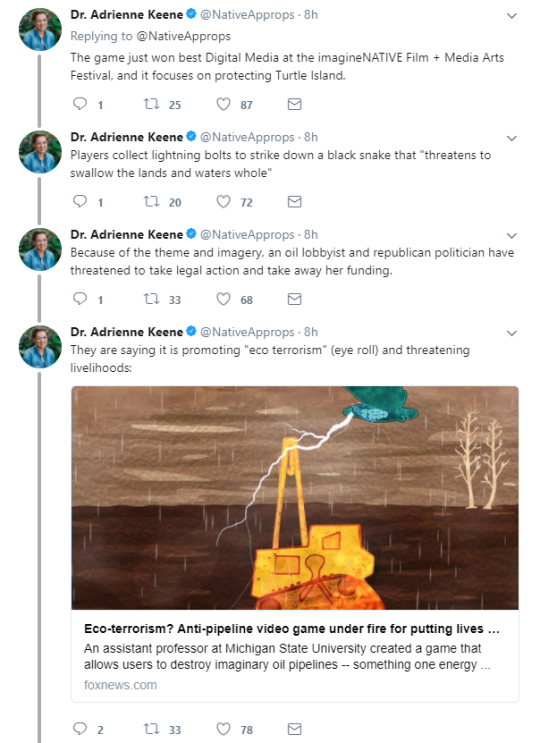
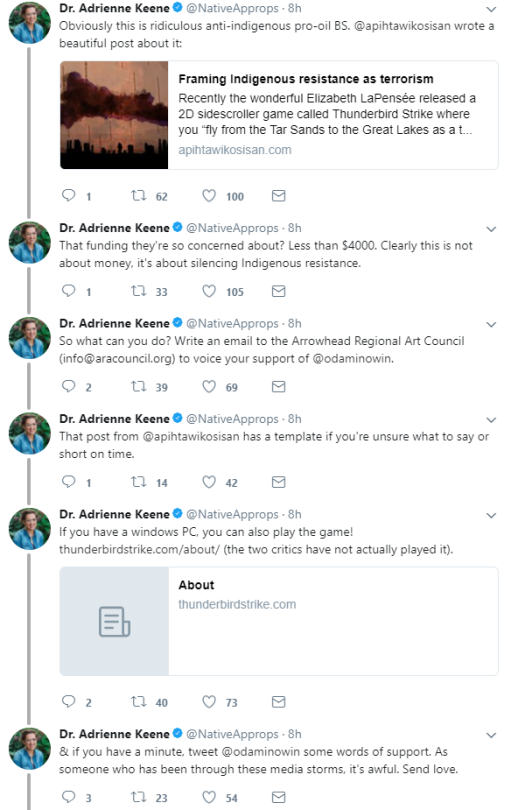
In Thunderbird Strike, a new side-scrolling game that launches at the ImagineNATIVEfestival this week in Toronto, players can control a thunderbird—a symbol in several Indigenous cultures—that destroys as much of the oil industry’s machinery and pipelines as it possibly can. And it’s so satisfying.
The game was created by Elizabeth LaPensée, an Anishinaabe, Métis, and Irish games developer, and assistant professor of media and information at Michigan State University. She told me in an interview that she wanted to create a game where Indigenous players could reclaim some agency around oil pipelines, even if through a video game.
“Especially when we’re talking in the context of pipelines, and the oil industry, there are some wins we can have. But ultimately protectors will be pushed out and the processes are going to move forward. It’s happening with mining and it’s happening with pipelines,” LaPensée told me over the phone.
The creator of this game is getting attacked and defamed by oil lobbyists and racists
(and let’s be honest, the venn diagram circle of “oil lobbyists” is just a small circle in the larger circle of “racists”) and could really use support and advocacy:

 knitting in the dark