Today, the Centers for Disease Control released the Autism and Developmental Disabilities Monitoring (ADDM) Network report, which estimates the prevalence of autism in certain areas. The results indicate that better recognition of autism, and an encouraging reduction of racial and gender disparities in diagnosis, have caused rates of diagnosis to rise slightly in the communities surveyed. There is more work to do to address the diagnostic disparities that remain, and to ensure that autistic people in all communities receive the supports we need.
The report released today shows that the rate of autism diagnoses in the survey’s sample has increased to 1 in 59 children, or about 1.7% of the survey’s population. This new data is based on analysis of research done in 2014, which administered diagnostic tests to 8-year-old children in 11 communities across the United States. This is consistent with previous studies showing that autistic people make up 1-3% of the population. It is also consistent with 2014’s National Health Interview Survey (NHIS), which found an estimated autism prevalence of 2.24% for that same year. The ADDM Network study is meant to be a deep dive look at autism diagnoses in a few specific communities, rather than a nationally representative sample – it is worth keeping in mind that the CDC does not intend the report as an estimate of autism prevalence in the general population.
As in previous years, the CDC found that better identification of autistic people contributed to an increased rate of diagnosis in the ADDM Network communities. In particular, the CDC attributes much of the increase found in this report to narrowing racial disparities in autism diagnosis. In the previous ADDM Network report, white children were about 20% more likely than black children, and 50% likelier than latinx children, to be diagnosed as autistic. The data released today shows that those disparities have been cut in half, to 7% and 22% respectively. The disparity in diagnosis between boys and girls was also reduced, from from 4.5:1 in the previous study to 4:1 in the most recent report.
While this progress is encouraging, there is still much work to be done. For instance, we recognize that clinicians are more likely to mistake autism for behavioral issues in children of color, particularly black and latino boys. These misconceptions can push children of color into the school-to-prison pipeline. Autistic women and girls also remain shockingly underdiagnosed, leaving many without needed services and supports. We must keep working to ensure equitable access to culturally- and gender-competent diagnosis. We expect that rates of diagnosis will continue to rise until diagnostic processes can accurately identify autistic people from all communities.
The findings of today’s report also underscore the need for a study on the prevalence of autism among adults. Autistic people of color, and autistic women and girls, are more likely to have a later diagnosis, so even as the disparities narrow, a survey of of 8-year-olds will not give us a complete picture. Many autistic people need access to long term supports and services into adulthood, and surveying autistic adults would help us better provide those services. It would also counter myths and help to show that autism is as common among adults as among children.
Autism is not a bad thing, and autistic people—of all ages, races, and genders—have always been here. The CDC’s research shows that our data is beginning to catch up to that fact. We encourage researchers, advocates, and the general public to join us in using this new data to ensure that all autistic people are accepted, included, and supported in our communities. Acceptance is an action – we invite you to take it with us.
The Autistic Self Advocacy Network seeks to advance the principles of the disability rights movement with regard to autism. ASAN believes that the goal of autism advocacy should be a world in which autistic people enjoy equal access, rights, and opportunities. We work to empower autistic people across the world to take control of our own lives and the future of our common community, and seek to organize the autistic community to ensure our voices are heard in the national conversation about us. Nothing About Us, Without Us!
Our updated Tumblr URL name reflect the steps we’re taking toward our official name change on July 1, 2018. We will also be releasing a new mission statement, and transitioning to our new website URL. Here’s a snippet of what one of our moderators and community members, Court Alison, has to say:
“…As a person who is both non binary and autistic, I am really excited about this change. It re-affirms our commitment to the work we do and the community we serve. I didn’t have the names to put to my feelings and experiences when I was growing up. It was really challenging not knowing what made me, me.
As a young adult, with relief and pride I realized that I am autistic. Soon after, I learned what it means to be non binary. That happily fit perfectly too. It is my personal hope that the name change will ensure autistic non binary and transgender women of all ages will come to us for support and resources.
Not only does our name change express the ongoing inclusive nature of our work, but also that of the members of the community we serve. The name change is demonstrative of our commitment to inclusivity. This announcement is the first in the steps we are taking towards our legal name change.”
The next time somebody gives you shit about your late autism diagnosis, remember that Anthony Hopkins was diagnosed as autistic when he was 70 years old.
People can go almost their whole lives and never know they’re autistic, but recognize they feel different from their peers.
And BTW Anthony Hopkins stims by rubbing his hands together, and being autistic is exactly why he’s such a good actor. He studies people’s mannerisms with an analytical mind, adopts those mannerisms for characters and turns out awesome performances. He’s a chameleon.
And he’s one of us, autistic community.
I didn’t know he’s Autistic! That’s so cool!!!
I didn’t know this either! Welcome, Sir Anthony Hopkins!
Image description: [pale purple and yellow background with dark text] This April, don’t support an organization that harms autistic people. [crossed out logo for Autism Speaks] Support one built by autistic people, for autistic people. [logos for the Autistic Self Advocacy Network and the Autism Women’s Network]
1) I am autistic. There is nowhere that I end and autism begins.
2) Ordinary sights, sounds or touches may be difficult or painful for me. Please be understanding if I ask you to turn the volume down, turn the light off, or not to touch me without warning.
3) If I didn’t catch what you said, it may not be because I’m not listening. I sometimes have trouble processing spoken language, especially when there is background noise.
4) I like routines because I know what to expect. It’s best to not spring surprises on me.
5) Don’t ask me, “Everybody else can do X, so why can’t you?” I am not like “everybody else.” I may not even be like other autistic people.
6) I may have difficulty asking for what I need due to difficulties getting the words out or even just due to anxiety. I don’t mind if you ask me if I need something; just don’t do it every five minutes.
7) I learn better when I can learn MY way. Most people do, even those who aren’t autistic.
8) Just because I’m not making eye contact doesn’t mean I’m not paying attention.
9) Just because I’m autistic doesn’t mean I don’t want to have friends. However, I’m an introvert, and I need time alone to recharge.
10) Ask me about my special interest, but be prepared for a monologue.
The framing around autistic people not wanting to do things because their autism makes the things unpleasant is really fucking weird.
I don’t like going to nightclubs.
The main reason I don’t like it is that the noise causes me to meltdown.
And allistics see this as this huge, evil thing.
“Omg, poor Lucy, how will she ever live?”
And I’m just like,
Bitch, if you don’t like spicy food, because you were born with a low tolerance for spicy food, no one’s crying their fucking eyes out like
“Poor baby, how ever will she cope with only being able to order mild curries?”
People don’t like shit.
People don’t have to like shit.
And this weird thing where if the reason I don’t like something can be seen to be to do with my autism, I MUST BE FORCED TO ENJOY IT is fucking annoying and needs to stop.
Yeah but this only applies if you’re disabled.
If you’re allistic and you’re like “eh, don’t like clubs” nobody gives a shit but if you’re autistic and you’re like “eh, don’t like clubs” suddenly everybody thinks you’d be better off having never been born
As an autistic person, I agree with this in general, but there’s also this whole culture of shaming/bullying introverted (not necessarily autistic) people into doing things for their own good. I wasn’t DXed with autism until I was an adult, and I have a bunch of introverted friends who’ve experienced this too. I know one who had to leave her job because management kept making her do presentations ‘for her own good’ despite her only being hired to do data entry. Her stress got so severe she was having panic attacks in the car park. There’s this idea that being an extrovert is the right way to be and that all introverts should strive to be extroverts despite it being really toxic for us to try to be ‘on’ and ‘out there’ all the time against our nature. So, yes, it happens a huge amount to us autistics, but our introverted friends cop it too.
My laptop died last week and I’m raising money to help get a new laptop that is more reliable.
I am an autistic stay-at-home parent with multiple disabilities and no means to save money, and I need a laptop to stay connected to my friends, manage my media library, and do android development.
If all my followers donated 0.50 USD, I’d have more than enough. Please consider contributing and signal boosting.
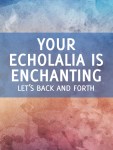
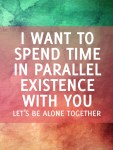
They’re here! Because you demanded it, and because I love you – more neurodivergent/Autistic Valentine’s Day cards! Please feel free to use and share these as you will. Just do remember to give me credit, please ❤
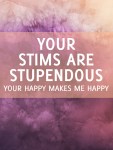
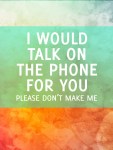
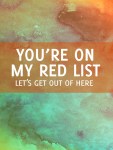
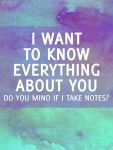
[Image description: A series of six Valentine’s Day cards featuring bright watercolor backgrounds with complimentary coloured bars containing white text. The cards read:
Your stims are stupendous; your happy makes me happy
I would talk on the phone for you; please don’t make me
You’re on my red list; let’s get out of here
I want to know everything about you; do you mind if I take notes?
I want to spend time in parallel existence with you; let’s be alone together
Your echolalia is enchanting; let’s back and forth
One of the largest autism journals has opted to remove the puzzle piece from their cover.
This editorial is really good. It’s been written with great care and respect and openness to a future where autistic and non-autistic people collaborate equally in the future, and #ownvoices will be heard.


 knitting in the dark