this local woman who has a tomboy kid reached out to my butch group to see if a few of us wouldn’t mind having brunch with her family and a couple more of the girls tomboy friends, cuz she read that it’s important for your development to have adult versions of “people like you” in your life when you’re growing up. which is definitely true. so we’re going over tomorrow. can you believe that? like, I’m gonna cry.
Op how did it go if I may ask?
Hi! Figure I’ll answer everyone at once here. It was kinda incredible… it was three little tomboy kids, 5 adult butch pals, and a couple of the parents, eating pancakes and muffins and playing games for a few hours. Learned a lot about each other and told each other stories, both good and bad. We lent the kind of advice that these good natured straight parents just don’t have the frame of reference for, and we talked about what we did for work and school, learned about what sports they play, suggested reading Tamora Pierce. Colored some protest posters too — the kids came up with all the words on their own, stuff like “were here whether you like it or not!”
It is awful to think about all the BS that these children have had to go through already — weird to think that we (the adult butches) know these stories of exclusion and hostility so VISCERALLY from our own and each other’s lives and childhoods, but hearing them come out of the mouth of a 10 year old girl is… something else. they have had to learn how to stand up for themselves, and they’ve got such thick skin now, but… most of us learn that so much later, or lose it as we leave childhood, and I’m so confident that at least THESE KIDS have a very real support system, parents who love them for who they are and want to encourage them to be happy and healthy even if it means life in the outside world will be harder. I dunno. I feel really hopeful.
This is one of the best interactions I’ve ever had.
Two school age kids: “Oh look at the big white puppy!”
Their mother: “Come here, let me explain something to you. That dog is a Service Dog. Whenever you see a dog in a store like this you can’t distract it cause it’s working.”
Two kids: “What do you mean he’s working?”
Mom: “He helps that girl. You know how at school your teacher tells you to be quite so you don’t get distracted doing your work? It’s the same thing with that dog. You can’t distract him.”
Two kids: “What does he help her with?”
Mom: “That’s her business. Your business is to not distract him so he can work.”
If children can understand so can you.
This is so sweet.
This is how you educate, destigmatise and support people with service dogs in a way that isn’t othering or ‘inspirational’. It’s giving able people a useful role, which is often where they struggle with interactions with disabled people. Your business is to let service dogs do their job. Why they need the dog is not your business.
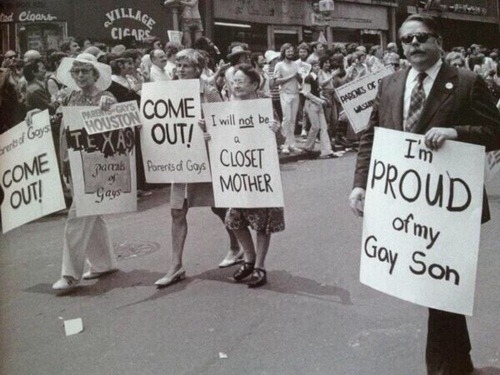
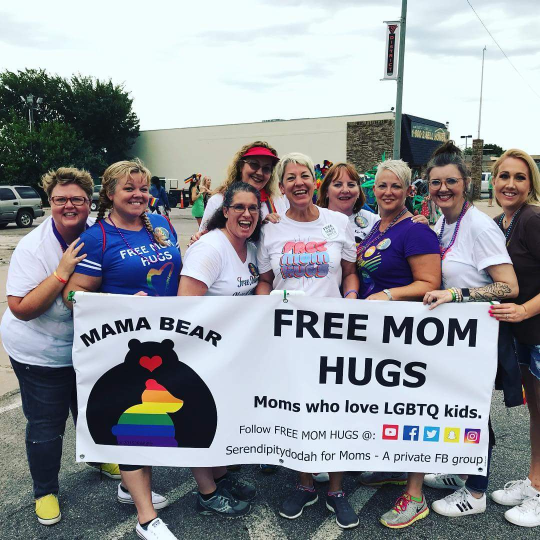
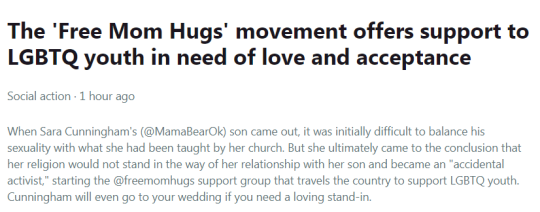
a bunch of moms are making letters+audio recordings of affirming, validating letters to queer/trans* people who don’t get that kind of support from their moms
i would say more about it but
im kind of busy in this puddle of tears on the floor so
In case any of my followers don’t have this kind of support from home…
Once the children were asleep, Sajjad headed out on an urgent shopping mission. “We are Muslims and we’d never had a Christmas tree in our home. But these children were Christian and we wanted them to feel connected to their culture.”
The couple worked until the early hours putting the tree up and wrapping presents. The first thing the children saw the next morning was the tree.
“I had never seen that kind of extra happiness and excitement on a child’s face.“ The children were meant to stay for two weeks – seven years later two of the three siblings are still living with them.
this is a beautiful article and i just want to include a few other highlights from the above family as well as another profiled:
…she focuses on the positives – in particular how fostering has given her and Sajjad an insight into a world that had been so unfamiliar. “We have learned so much about English culture and religion,” Sajjad says. Riffat would read Bible stories to the children at night and took the girls to church on Sundays. “When I read about Christianity, I don’t think there is much difference,” she says. “It all comes from God.”
The girls, 15 and 12, have also introduced Riffat and Sajjad to the world of after-school ballet, theatre classes and going to pop concerts. “I wouldn’t see many Asian parents at those places,” she says. “But I now tell my extended family you should involve your children in these activities because it is good for their confidence.” Having the girls in her life has also made Riffat reflect on her own childhood. “I had never spent even an hour outside my home without my siblings or parents until my wedding day,” she says.
Just as Riffat and Sajjad have learned about Christianity, the girls have come to look forward to Eid and the traditions of henna. “I’ve taught them how to make potato curry, pakoras and samosas,” Riffat says. “But their spice levels are not quite the same as ours yet.” The girls can also sing Bollywood songs and speak Urdu.
“I now look forward to going home. I have two girls and my wife waiting,” says Sajjad. “It’s been such a blessing for me,” adds Riffat. “It fulfilled the maternal gap.”
[…]
Shareen’s longest foster placement arrived three years ago: a boy from Syria. “He was 14 and had hidden inside a lorry all the way from Syria,” she says. The boy was deeply traumatised. They had to communicate via Google Translate; Shareen later learned Arabic and he picked up English within six months. She read up on Syria and the political situation there to get an insight into the conditions he had left.
“It took ages to gain his trust,” she says. “I got a picture dictionary that showed English and Arabic words and I remember one time when I pronounced an Arabic word wrong and he burst out laughing and told me I was saying it wrong – that was the breakthrough.”
The boy would run home from school and whenever they went shopping in town, he kept asking Shareen when they were going back home. She found out why: “He told me that one day he left his house in Syria and when he had come back, there was no house.” Now he’s 18, speaks English fluently and is applying for apprenticeships. He could move out of Shareen’s home, but has decided to stay. “He is a very different person to the boy who first came here,” she says, “and my relationship with him is that of a mother to her son.”
This father consoling his baby son at the doctor’s office is SO CUTE 😍😍😍
Awwwww😂😂😂
This father is doing SO much more than consoling his infant son …
• this father is showing up as a pillar of safety; he’s told his son he acknowledges and believes in the boy’s strength.
• the father is completely present and accepting of his son’s story and helps him tell it. When the son recognizes that his father was fully present and heard the story of his experience of pain, the boy calms completely.
This piece of video will now be at the very top of my teaching tools when training parents and caretakers to work with shock and trauma in infants. It’s one of the finest examples of exemplary parenting I have ever seen in my 35-year healing career. ❤️



 knitting in the dark