fallingforkonoha:

dateanonbinarysuggestion:

jdtheamazing:

National Coming Out Day is coming up (October 11) and I just want to remind everyone:

1) Please do not out anyone (even if you “think you are doing them a favor.” Trust me when I say you aren’t) and make sure you don’t accidentally do so.

2) It is okay to be in the closet. Please do not feel pressure to/obligated to come out because there so happens to be a Coming Out Day. (Do it for you if it’s what you want).

3) don’t “come out” as LGBT+ as a joke. Don’t “come out” as kinky/a furry/whatever, either.

4) Don’t force/coerce your friends and/or loved ones to come out, and do not get mad at them if they choose to stay closeted.

5) don’t come out as an ally

6) It’s okay to come out even if you don’t know for sure what you identify as yet, or if you’ve decided you don’t want a label.

7) It’s okay to come out again if your identity has changed. Coming out as gay is different to coming out as bi, for example, and coming out as trans is different to coming out as butch lesbian, and coming out as one of the flavours of queer is different to coming out as a label people have a more concrete understanding of. You are you, and who you are grows and changes over time. Doing it again doesn’t mean you were wrong or lying the previous time/s.

8) What you come out as is up to you. I use queer these days, but I have used lesbian in the past, because it’s shorthand and easier than saying ‘biromantic gender-nonconforming demisexual woman in a committed relationship with another woman’. I don’t have to lay out that though I’m probably on the bi or pan spectrum, I don’t identify as either of those because men are ‘unsafe’ for various reasons for me, and if I was dating rather than in a long-term relationship, if I was looking for a partner, I would be looking at pretty much any gender but male. I don’t have to explain that attraction for me is a fluctuating thing, and my sex drive is, too. I don’t have to explain that I don’t identify as transgender, but I feel that most of the construct of what people think of as ‘female’ doesn’t work for me either. I just say queer. And for those who don’t or won’t understand queer, I say lesbian, and that makes most people happy because I’ve put myself in a box they can understand, even if it’s not strictly true. If calling yourself a label like ‘gay’ when you come out makes it easier or safer for you, then use it. It’s a tool, not a shackle.


stultiloquentia:

downthepub:

stultiloquentia:

stultiloquentia:

I am reading scholarly works about Jane Austen and having hearteyes about obscure details in the Pemberley chapters of P&P that indicate Mr. Darcy’s sustainable land management praxis.

Okay, let’s talk about Pemberley!

Austen, as a rule, doesn’t spend many paragraphs describing locations. There’s often information to be gleaned from their names (Sense and Sensibility is full of lurking references to sexual scandals and Mansfield Park to slavery), but Longbourn just means “long stream” or “long boundary,” Netherfield means “lower field,” and Rosings’ original owner was a redhead. Meryton, a pun on “merry town,” is kind of fascinating, given the installment of the militia and the threat to stability and serenity they represent. Partying and shenanigans. Possibly a Shakespeare ref.

Longbourn barely gets any description at all. From the get-go, everyone who lives there is obsessed with other places, with getting out (except Mr. Bennet, who never wants to leave his library, never mind the house). Lady Catherine deems it small and mildly uncomfortable, which is in keeping with the theme of confinement, but also it’s Lady Catherine talking. Netherfield can’t tell us much about Bingley, who is only a tenant. Rosings is expensively, ostentatiously modern and gaudily furnished, though it has a handsome park that Lady Catherine and her stifled daughter never set foot in but Elizabeth and Darcy both frequently escape to during their stays.

So it’s notable and wonderful that Austen goes out of her way to describe Pemberley as an old-fashioned, highly successful, working estate. Its practical old Anglo-Saxon name means “Pember’s clearing.” A pember is a man who grows barley. Darcy most likely still does. As Elizabeth and the Gardiners approach and tour the house, they notice and admire its beautiful surrounding woods, and then when they wander outside, the specific word Austen uses is coppice woods. A coppice is a woodland filled with tree species that grow new shoots from their stumps when you chop them down. Darcy probably has oaks on a fifty-year cycle as well as faster-growing species such as hawthorn and hornbeam for firewood, timber and cattle fodder. Coppice forestry is functional and sustainable, and provides habitat for beasts and birds.

Darcy is the anti-John Dashwood (Dashwood, srsly), the brother in Sense and Sensibility who inherits Elinor and Marianne’s childhood estate of Norland, whose wife immediately starts making plans to hack down trees (not even coppice trees, but big, gorgeous, venerable hardwoods) to make way for a folly. Jane Austen hated follies. Also, it ought to be noted that timber was so valuable in Britain at the time that estates often had inheritance clauses that detailed who was and wasn’t allowed to chop down what.

Darcy’s a food producer and land conservator, prefers nature over fussy, ornamental landscape design, his servants and tenants like him, he gives money to the poor… and… he’s a trout fisherman! He shoots, too, as do Bingley and Hurst and Mr. Bennet, but it’s a particular mark in his favour that Austen singles him and Mr. Gardiner out as anglers. It’s a pastime that signifies a taste for contemplation and quietness and appreciation of nature, as blissfully described in The Compleat Angler; or, The Contemplative Man’s Recreation, a hugely popular travel book first published in the 1600s and reprinted often for 18th C libraries. The plot of The Compleat Angler is about the conversion of a hunter (pastime of the ultra-rich) to a fisherman who learns to love the peaceful sport. We receive ample evidence elsewhere that Darcy is a man capable of swift, decisive action and formidable effectiveness. But at Pemberley, Austen takes care to show us how he’s balanced.

Most of the information in this post comes from Margaret Doody’s Jane Austen’s Names

I didn’t know any of this!  I always thought it was a bit odd how her viewing the estate changed her views of the man himself, as if it was about how big the place was.  Instead it was how he cared for the land / people.  Fascinating!  Completely missed that.

It’s literally his character reference! Most women at the time had to marry for financial security, yet marriage was horribly risky, because divorce was almost impossible. If you married someone you didn’t know well, and he turned out to be lazy, irresponsible, or abusive, you were stuck. 

This is why so many Austen heroes are mature, almost frumpy men the heroines have known for years. Local fellows with family ties. They don’t offer breathless romances; the happy endings they offer are happy because they are safe.

Darcy is not a local boy.

Darcy is not a fully formed, baggable Austen hero when he proposes at Hunsford, not just because he’s rude af, but because Lizzy doesn’t know him well enough yet. She has no real way of knowing how he would treat her. Austen sends Lizzy to Pemberley not to dazzle her with Darcy’s wealth, but to provide her with good, hard evidence of his treatment of the people under his protection, including his tenants, his sister, and the intelligent, dignified housekeeper who has known him since he was a toddler.

Character references established, we may proceed with the romance.

(n.b. He doesn’t know her either, until she’s rejected him. He proposes, despite his giant pile of reservations, because he’s so horny for her he can’t stand it (at least, to his credit, he’s turned on by her brains as much as her hot little bod), but only after her refusal does he realize how completely he has failed to understand this woman or make himself worthy of her. He falls in love for real only after she has demanded that he live up to his own high standards. Refreshing, ain’t it?)

garrettauthor:

narpas:

enchanted-phoenix:

eveninglottie:

skull-bearer:

english-history-trip:

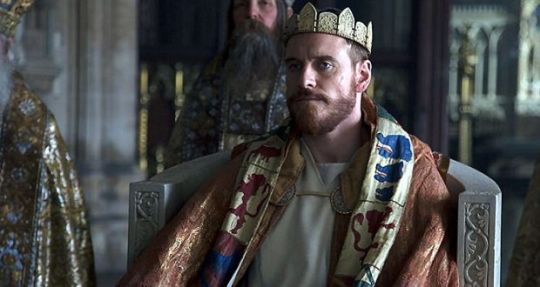
Macbeth:

I legitimately just laughed for five minutes straight. Tears are leaking from mine eyes. My stomach is burning. I actually cannot stop. 

Oh my gawd, I laughed so hard my face hurts.

@cedrwydden

FRIENDLY REMINDER THAT TREES LITERALLY ATTACK ISENGARD BECAUSE TOLKIEN WAS SO FUCKING PISSED OFF THAT SHAKESPEARE PROMISED MOVING TREES AND ALL HE GOT WAS DUDES HOLDING BRANCHES

thesnadger:

I had a surprisingly coherent dream during that accident-nap, that contained an interesting idea for a campaign. 

I say interesting because I’m not sure if it’s a good idea or a bad one, honestly. It would definitely require some careful handling and at least one player who’s 300% on the same page narratively as the DM, but it was definitely interesting.

There was a D&D campaign in this dream where one of the players knew their schedule would make them miss a lot of sessions. So instead of playing one of the main party, they played a recurring villain.

When the

villain

player was free they’d show up to taunt or bother or try to win over the main party. If the session ended with them still involved in the action, the DM just narrated them slipping away at the start of the next one. The DM would talk with the villain player between sessions about what their character was doing, and brief them on things they might know. 

This particular villain was the “gain ultimate power and become a god” type. The climax of the campaign involved them seeking out some artifact of ultimate power. When it was clear the party would fail to stop them from acquiring it, the DM and the villain player gave each other a look. Both of them seemed to get really excited.

The DM narrated the villain reaching for the artifact, up to the point where their fingers actually touched it, then went suddenly quiet. The villain player grinned and said, “you sense a great and terrible shift in the structure of the universe. Someone new is in charge. Roll initiative.”

americangods:

For everyone that keeps asking “Is American Gods coming back?” “Are you making a second season?” “When do I get to see Jinn and Salim (aka the only ship that matters on television) again?” and “What snack pairs best with this teaser trailer?”

It is.   We are.   2019.   Red Vines. 

savage-america:

But the real reason I had to chime in was that Steve Rogers is my favorite superhero. Why? Because unlike other patriotism-themed characters, Steve Rogers doesn’t represent a genericized America but rather a very specific time and place – 1930’s New York City. We know he was born July 4, 1920 (not kidding about the 4th of July) to a working-class family of Irish Catholic immigrants who lived in New York’s Lower East Side.[1] This biographical detail has political meaning: given the era he was born in and his class and religious/ethnic background, there is no way in hell Steve Rogers didn’t grow up as a Democrat, and a New Deal Democrat at that, complete with a picture of FDR on the wall.

Steve Rogers grew up poor in the Great Depression, the son of a single mother who insisted he stayed in school despite the trend of the time (his father died when he was a child; in some versions, his father is a brave WWI veteran, in others an alcoholic, either or both of which would be appropriate given what happened to WWI veterans in the Great Depression) and then orphaned in his late teens when his mother died of TB.[2] And he came of age in New York City at a time when the New Deal was in full swing, Fiorello LaGuardia was mayor, the American Labor Party was a major force in city politics, labor unions were on the move, the Abraham Lincoln Brigade was organizing to fight fascism in Spain in the name of the Popular Front, and a militant anti-racist movement was growing that equated segregation at home with Nazism abroad that will eventually feed into the “Double V” campaign.

Then he became a fine arts student. To be an artist in New York City in the 1930s was to be surrounded by the “Cultural Front.” We’re talking the WPA Arts and Theater Projects, Diego Rivera painting socialist murals in Rockefeller Center, Orson Welles turning Julius Caesar into an anti-fascist play and running an all-black Macbeth and “The Cradle Will Rock,” Paul Robeson was a major star, and so on. You couldn’t really be an artist and have escaped left-wing politics. And if a poor kid like Steve Rogers was going to college as a fine arts student, odds are very good that he was going to the City College of New York at a time when an 80% Jewish student body is organizing student trade unions, anti-fascist rallies, and the “New York Intellectuals” were busily debating Trotskyism vs. Stalinism vs. Norman Thomas Socialism vs. the New Deal in the dining halls and study carrels.

Steven Attewell: Steve Rogers Isn’t Just Any Hero – Lawyers, Guns & Money

gotta love a well-researched takedown of such lazy, hoary tropes as “Captain America is a monolithic aryan crypto-fascist”