I still think Moana deserved an Oscar for this part
To me, the moral of Moana is that only women can help other women heal from male violence.
The movie starts with the idea that the male god who wronged Te Fiti must be the one to heal her. This seems to make a certain sort of intuitive sense in that I think we all believe that if you do something wrong you should try to make it right. But how does he try to right it? Through more violence. Of course that failed.
It was only when another woman, Moana, saw past the “demon of earth and fire” that the traumatized Te Fiti had become (what a good metaphor for trauma, right?) and met her with love instead of violence that she was able to heal. Note that they do the forehead press before Moana restores the heart, while Te Fiti is still Te Kā. Moana doesn’t wait for her beautiful island goddess to appear in all her green splendor before greeting and treating her as someone deserving of love.
Moana is only able to restore the heart because Te Kā reveals her vulnerability and allows Moana to touch her there. Maui and his male violence could only ever have resulted in more ruin.
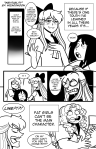
This is a touching anaylisis but it’s extremely racist as
not only have you completely ignored the whole point of Maui’s character, but
have managed to incriminate a man of color on a tumblr wide scale.
First of all, Maui’s character does not represent male
violence—it represent human greed. Maui did not take the heart because he is a
man, and Te-Fiti is a woman. He took it because the humans asked him to. The humans asked Maui to do everything for them,
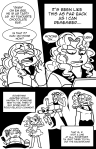
not caring how greedy or selfish their requests were and in the end it was Maui
who suffered for it. Maui is supposed to show the flaw of humanity.
This has nothing to do with sexism, it has everything to do
with the fact that Maui gave and gave to the humans who could never stop being
greedy. Moana giving the heart back wasn’t supposed to be her “making up” for
the male violence that Maui represents. It was her making up for the greed she
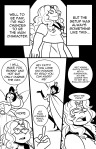
and her people represent. It was touching however because yes it was an
important moment between two women, but you missed the point and you’ve come off
racist and very disrespectful to a culture at that.
Yes, Moana is an empowering movie for women, especially
women of color. But the last thing this is about is Maui being an abuser/rapist
or whatever. That is not the point of Maui’s character.
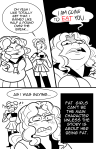
And to assume so is racist. You are a white woman completely
dehumanizing a man of color and ruining his image because of how you see him. And other white girls here
on tumblr have happily picked up that image and interpretation and rolled with
it. Maui’s character is now seen as an abuser or as someone who is violently
because of white girls here on tumblr—which it doesn’t surprise me. (an in a
historical context this is even MORE racist because white women would always
make Maui’s people out to be savages and abusers etc., simply because of the
color of their skin and their culture so yea, this is bad).
You can see the morality of the movie however you want, but
do not be disrespectful toward a character and in this case a culture.
@i-want-cheese Please don’t write this off as another “butthurt comment” or
“male guilt”, because this is really messed up. I see how you’re brushing off
some other people’s comments and I honestly hope that you don’t see mine the
same way because this is an issue I think you need to face/realize. You are
being racist and brushing it off isn’t going to change that.
the
@visibilityofcolor THANK YOU FOR THIS. As a Polynesian woman, reading that post and other replies painting Maui and even Tui as aggressive and violent men had me feeling some type of way, especially since White people have always regarded Polynesian men in such a manner.
I’ve thought about replying because I’m tired of seeing these kind of “Moana is a feminist movie” posts collect hundreds of notes despite the fact that these posts always conveniently fail to mention Pasifika people, but it always stressed me out, so thank you.
As an aside, Maui taking Te Fiti’s heart and Moana restoring it was symbolic of environmental preservation. Because the people who inspired Moana–Pasifika people, not just Polynesian–are always affected first when the environment is threatened. Our way of life is greatly influenced by the ocean and we believe that if you take care of the ocean, she will take care of you.
You’re very welcome.
This is insight for me as well (as I wasn’t aware that the movie also came fro the culture of the Pasifika people), and does give a very important perspective. I do agree with you, this movie is about environmental restoration, not some white fem bullshit.
I tried over and over again to explain to I-want-cheese about how she was being racist, but she responded by blocking me and other poc who called her out (even other polynesian people). People to this day are still trying to explain that she is being racist and culturally insensitive but she ignores us.
I’ve made a few posts about this, hoping that people realize how problematic it is to agree with i-want-cheese. Explaining to her racist white ass that this was problematic was like explaining to a bird. She wouldn’t listen and neither would have of her racist friends.
Sorry you’ve had to see this on your dash every so often, but I’m glad my portion of the post is starting to get around. (reblogged to the wrong blog at first lols)
Also i-want-cheese is a transphobe and means trans women when she says male violence. All around bad post i-want-cheese and bless you ppl for giving us more cultural context for this.
Honestly, I was touched by
i-want-cheese’s post the first time I read it, but I admit, I had a hard time imagining Maui as essentially… a rapist… I never once imagined him as anything but someone who endlessly tried to please everyone, striving constantly to create a perfect impression of himself (much like many men of color I’ve met in my life). As a white person I also admit I have no context for Polynesian culture outside of what very, very little I researched after seeing this movie, but I recognize solid character writing, and Maui was just as much of a victim in this movie as
Te Fiti
was. I’ll always reblog this when it hits my dash.
What’s more the point falls apart when you identify the fact that the films frames no one as an antagonist. Tamatoa would meet this point traditionally since he’s a ‘bad guy’ but doesn’t play a big enough role in the film for it to really count. The three characters who fit the role of a typical antagonist (those who oppose the goals of the protagonist (the person who’s actions push the narrative forward)) would be Chief Tui on the Island, Maui in the opening scene, and Te Kā for the majority of the film. Even Maui after he steals Moana’s boat. However, each of them is misrepresented in some way. Tui just wants to ensure the safety of his people long into the future. Maui wants to be loved. Te Kā wants what was stolen. And ultimately each becomes resolved. There are no bad people in Moana, just conflicting motivations. And even in the case of
Te Kā, I don’t think her actions were voluntary.
Which I ultimately believe is the basis for the story outside of Moana’s know yourself. Moana is about the inter connectivity and complexity of growing up. Its about learning that the people who you think fit into simple archetypes don’t. Be it your parents, you heroes, or a literal God. There is complexity to everything.
The use of Antagonist as a trope in film is used as a representation of a child’s perception of evil. But the film allows for nuance to be discovered as the film continues. And through Moana and the kindness and freedom she represents, each ‘antagonist’ is able to move on from their struggle and find their own piece.
So its absolutely unfair to label anything that happens in the film as a metaphor or symbol of male violence, because nothing that takes place in purely violence. Or something that isn’t resolved through complex characterisation. Maui didn’t take the heart knowing what it would do. He wanted to help the people who revered him and gave him the only validation he could get. But when we did realise it the error of his ways and found that validation within himself, he did everything in his power to make up for that mistake.
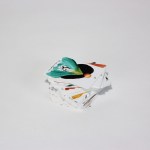
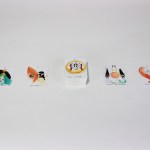
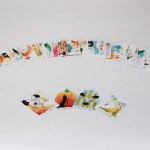
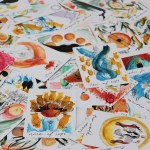
planning on selling printed copies of this tarot deck me and my dear friend lucy created by hand, let me know if you’re interested in purchasing because we’re trying to gauge demand before we print! :’)
remember being little and thinking dandelions were fun or a pretty color or something and every adult in an 80 mile radius wouldn’t let you say that without screaming ITS A WEED
also like:
dandelions are edible, easy to grow, and are rich in vitamins a, c, k, beta-carotene, calcium, iron, manganese, and potassium
dandelions can be made into wine, tea, soft drinks, and a coffee substitute
they are used in herbal remedies to treat liver and digestive problems and as a diuretic
they’re good for bees!
they make good companion plants for various herbs and tomatoes; their long taproot helps bring up nutrients in the soil and they release ethylene gas which ripens fruit
dandelions secrete latex which means they can be used to make natural rubber
they make great flower crowns
Why ARE they considered a weed? They’re a good flower? Who decided they were bad? =(
You can also make beautiful jelly from the blossoms!
They’re considered weeds because they were a poor person resource and not having them was a status symbol.
Let’s back up.
In Europe dating back to the 1500’s and even earlier, you could only have immaculate manicured lawns if you had just pots of money and were able to own land. So, rich nobility had swaths of land, and they demonstrated their wealth and power by hiring people to physically cut the grass and keep their gardens and dig weeds out of the turf by hand. It was a demonstration of money and power. It said “I can afford to have eight people employed full time just to dig things that aren’t grass out of my grass. I can afford to have all of this land doing nothing. It’s not producing food. People don’t farm it or live on it. I can afford to just grow grass, and have someone tend to that wholly useless crop.”
Fast forward a few hundred years. Europeans come to America. Many of them are from the poorer classes in Europe. Many have never owned land before, and now all of a sudden they can (because they stole it from the Native Americans but that’s a whole other rant.)
Now, at first you see little cottage gardens like the lower classes in Europe always had around their homes; places where they grew food and herbs and kept chickens or other livestock. Dandelions were welcome here; they were eaten and brewed into wine and used for medicine, just as they’d been for centuries.
But then people start making a little money, and we have the whole phenomenon of people who can demonstrate that they are Moving Up In The World by buying all of their food and medicine, just like the old landed gentry back in the Old Country. So they do. What goes in the place of those cottage gardens? Why, the same thing that went in the place of productive land back in the Earl of Chatsworth’s front lawn; a lawn.
So. Dandelions were a symbol. They were a throwback to the old days. They were a sign that you were somehow less prosperous than your neighbors, or lazier. (A Mortal Sin in America.) But, many Americans work, and can’t afford to hire a gardener just to grub dandelions out of the yard with a trowel all day.
Enter the lawn care industry, which began to market a dizzying array of poisons and fertilizers aimed at making your lawn a sterile moonscape where only grass grew with minimum effort from the homeowner. This continues to this day and is a multibillion dollar industry that has huge negative impacts on the environment and human health, but we can’t seem to shake that old ideal of a manicured lawn.
We pour water on deserts and poison on native wildflowers to attain it. We expose our children to poisons. We poison pollinators and pets. The days where we recognized a well kept lawn as a symbol of aristocratic leisure are gone, but we’ve been successfully fed a lie that some dandelions and chickweed are Bad by the lawn care industry in their ads for decades. They, obviously, want to keep it going because they’re making fat $$$$$$$ off of us.
THAT’S why dandelions are viewed as weeds.
Also yeah dandelions are really good for bees, and beloved by native bees and honeybees alike. So please, leave them blooming!! You can support bees and do your bit to smash capitalistic exploitation of the working class and the environment all in one go!
Lawns are terrible things, a redundant status symbol (‘I don’t need to grow food on my land’ is no longer a proud boast), boring verging on ugly and vastly consuming of water and labour. Let the dandelions grow!
I can’t believe dandelions suffered classism.
Oh my god IM SO SHOOK I ALWAYS LOVED DANDELIONS AND GOT SO EXCITED TO LET THEM GET SO TALL AND LOVE THEM TO DEATH. TIME TO MAKE MY YARD A GODDAMN BOTANY EXPERIMENT
Dandelions are so useful! They’re delicious healthy greens for sure, I don’t like dandelion flavored beverages but that’s just a personal preference. 🙂
Dandelion greens have more vitamin A than carrots, and are also rich in vitamin B, potassium, iron, zinc, and vitamin C. The leaves are used as a diuretic and appetite stimulant. In traditional Chinese medicine, dandelion is used to help with breastfeeding, stomach upset, and appendicitis.
I met a traveller from an antique land Who said: “Two vast and trunkless legs of stone Stand in the desert. Near them, on the sand, Half sunk, a shattered visage lies, whose frown, And wrinkled lip, and sneer of cold command, Tell that its sculptor well those passions read Which yet survive, stamped on these lifeless things, The hand that mocked them and the heart that fed: And on the pedestal these words appear: ‘My name is Ozymandias, king of kings: Look on my works, ye Mighty, and despair!’ Nothing beside remains. Round the decay Of that colossal wreck, boundless and bare The lone and level sands stretch far away.”
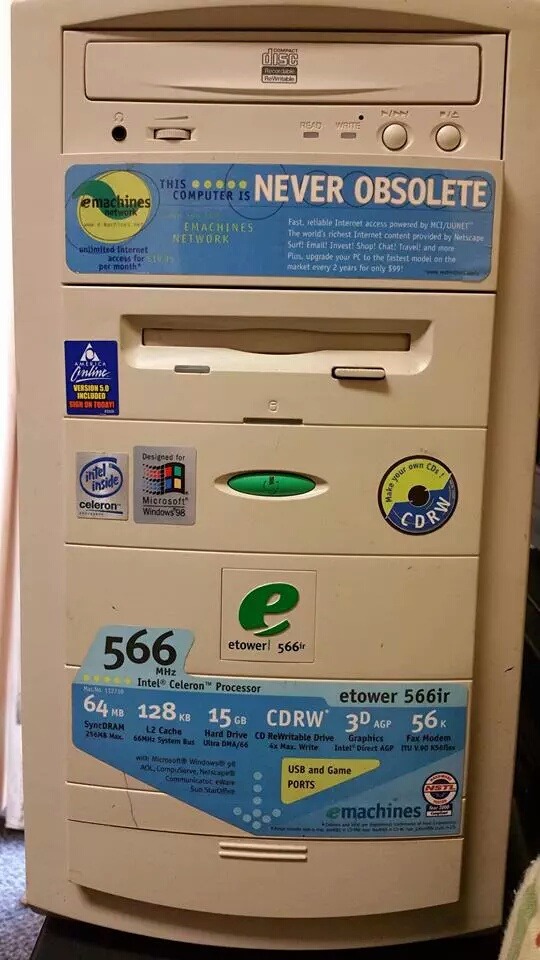
I met a programmer the other day Who said “A vast and blocky plastic box Stands in my workspace; in it, so they say Half-dead, a chip from Intel lies, which clocks 566 M-hertz; the CD drive And fifteen gigs, and bundled AOL Must have seemed neat when Reagan was alive But now the stickers on its lifeless shell Seem only fit sad memories to revive And on the light beige case are words that say: “THIS COMPUTER IS NEVER OBSOLETE SURF! INVEST! EMAIL! TYPE! SHOP! TRAVEL! PLAY!” The monitor is dark; near its defeat My new and shiny MacBook whirs away
Appalachian Beekeeping Collective is headquartered at an old camp that was once owned and operated by coal mining companies that saw thousands of kids of coal miners go through the camp from different mining states.
“These people are so tied to this place. When I was there over the summer, at least twice a week somebody would drive by and say, ‘I went to camp here 50 years ago. This place means so much to me’ so it’s a really special spot,” said Delaney. “There’s so much rich history there.”
Because the people are tied to the land and invested in the history of the area, Delaney said that it made sense to get them involved in beekeeping.
“They’re native and they’ve been there for generations and they know every mountain, every hill has a name even though it might not be on a map. Because they’re so tied to the land, this operation had to be something that was sustainable and that was also very connected to the environment and beekeeping is definitely both of those things,” said Delaney.
The area also has a rich history of beekeeping as Delaney said she would find antique beekeeping equipment at area flea markets.
“Everybody’s grandfather had bees. It’s because it’s all hardwood forests there, which all produce nectar and pollen and so it’s a really good area for beekeeping, really high quality forage. I think both of those things make it ideal,” said Delaney.
The plan is for those beekeepers to keep their own apiaries but get bees raised by the Appalachian Bee Keeping Collective.
“We’re trying to raise a strain of Appalachian honey bee that is mite resistant and that’s a big piece of what Debbie is doing,” said Asquith. “She’s really skilled with natural beekeeping methods and has been a really big help for us.”
Asquith said that the first class of beekeepers, who will be trained over fall and winter, will number around 35 but next year the program will ramp up to include 85 beekeepers.






 knitting in the dark